

Commercial debris is piling up faster than ever in Connecticut and the numbers prove it. Businesses across the United States generated a staggering 600 million tons of construction and demolition debris in just one year. Most people assume tossing waste is as simple as calling a hauler and moving on. It turns out the real challenge is what happens next and the hidden risks and regulations every business faces if they want to stay compliant and truly protect their operations.
Table of Contents
- Understanding Commercial Debris And Its Types
- Safe And Efficient Debris Removal Methods
- Choosing A Reliable Debris Removal Service In Connecticut
- Emergency And Same-Day Debris Removal Solutions
Quick Summary
| Takeaway | Explanation |
|---|---|
| Understand types of commercial debris | Familiarize yourself with debris types like construction and hazardous waste to manage effectively. |
| Implement efficient debris removal methods | Adopt planning strategies and compliance protocols for a safer, smooth debris removal process. |
| Choose a reliable debris removal service | Vet service providers for compliance, capabilities, and reputation to protect your interests. |
| Prepare for emergency debris scenarios | Develop rapid response plans for unexpected waste management challenges to minimize disruptions. |
| Leverage technology in waste management | Use modern tools for tracking and sorting debris, enhancing efficiency and compliance. |
Understanding Commercial Debris and Its Types
Commercial debris represents a complex ecosystem of waste materials generated by businesses across various industries. Learn more about our debris management strategies to understand the critical nature of proper disposal and environmental responsibility.
Types of Commercial Debris
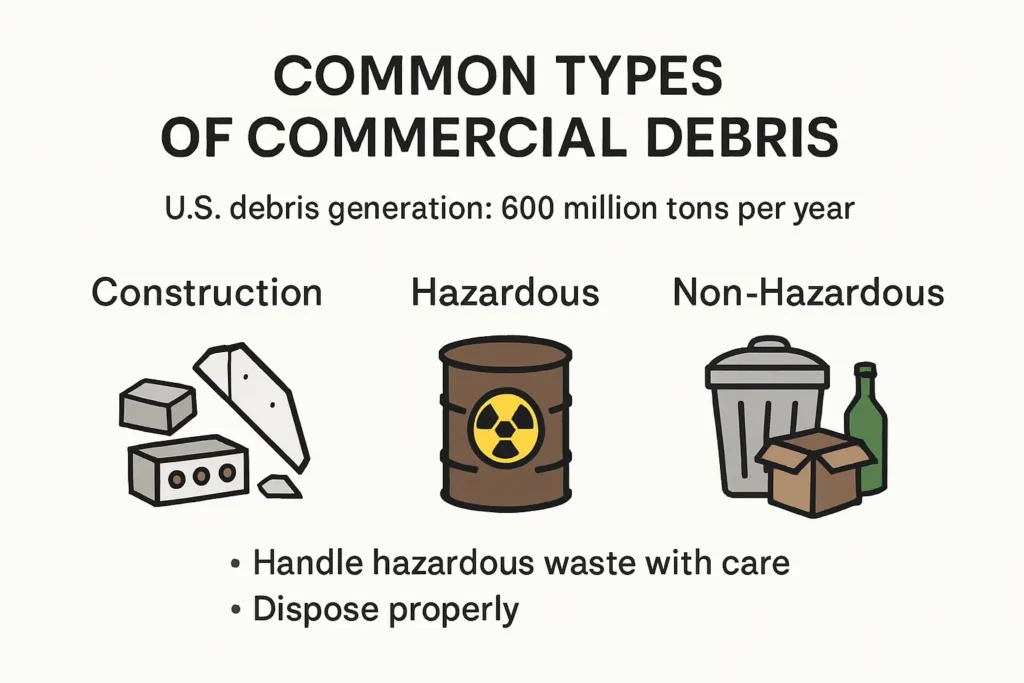
Commercial debris encompasses a wide range of materials that businesses generate during their regular operations. According to the U.S. Environmental Protection Agency, the United States produced approximately 600 million tons of construction and demolition debris in 2018 alone. This staggering figure highlights the critical need for effective waste management strategies.
Construction and Demolition Debris represents a significant portion of commercial waste, including:
- Structural Materials: Concrete, steel, wood, brick, and asphalt
- Renovation Waste: Drywall, plaster, ceramic tiles, and glass
- Mechanical Components: Pipes, electrical wiring, and architectural elements
Industrial Waste Streams
Businesses generate multiple waste streams that require specialized handling. The North Central Texas Council of Governments identifies several critical categories of commercial debris that demand careful consideration:
Hazardous Commercial Debris
Some commercial waste requires specialized disposal due to potential environmental and health risks. This category includes:
- Chemical waste from manufacturing processes
- Electronic equipment with toxic components
- Contaminated materials from industrial operations
Non Hazardous Commercial Debris
Most businesses generate substantial volumes of recyclable and non toxic materials, such as:
- Office furniture and equipment
- Packaging materials
- Landscaping and maintenance waste
- Obsolete inventory and promotional materials
Waste Management Considerations
Proper commercial debris management goes beyond simple disposal. The EPA emphasizes the importance of recycling, reuse, and responsible waste stream management. Businesses must consider:
- Environmental impact of waste disposal
- Potential for material recycling and repurposing
- Compliance with local and federal waste management regulations
- Cost effective waste reduction strategies
Understanding the nuanced landscape of commercial debris is crucial for businesses seeking to minimize their environmental footprint and optimize waste management processes. Each type of debris requires specific handling, sorting, and disposal techniques to ensure maximum efficiency and minimal environmental impact.
To help businesses better understand the various commercial debris types and waste streams described above, the table below summarizes key examples and handling notes.
| Debris Category | Examples | Handling Considerations |
|---|---|---|
| Construction & Demolition | Concrete, steel, wood, drywall, glass, pipes | On-site sorting, recycling, proper disposal |
| Hazardous Commercial Debris | Chemicals, electronic waste, contaminated materials | Specialized disposal, follow regulations |
| Non-Hazardous Commercial Debris | Office furniture, packaging, landscaping waste, obsolete inventory | Reuse, recycling, landfill if necessary |
Safe and Efficient Debris Removal Methods
Safe and efficient debris removal is a critical process for businesses seeking to maintain clean, compliant, and productive work environments. Learn more about our specialized debris removal techniques to understand the comprehensive approach required for effective waste management.
Planning and Assessment Strategies
Successful debris removal begins with meticulous planning and comprehensive assessment. According to the National Academies Press Debris Management Handbook, developing a robust debris management plan is essential for protecting public safety and ensuring operational efficiency. This process involves several key steps:
Pre Removal Assessment
- Conduct a thorough inventory of debris types
- Identify potential environmental and safety hazards
- Determine appropriate segregation and disposal methods
- Evaluate equipment and resource requirements
Compliance and Safety Protocols
Businesses must prioritize safety and regulatory compliance during debris removal. The U.S. Environmental Protection Agency recommends implementing comprehensive waste management strategies that include:
- Employee safety training
- Personal protective equipment requirements
- Proper handling and transportation protocols
- Documentation and tracking of waste streams

Practical Debris Removal Techniques
Effective debris removal requires a systematic approach tailored to specific waste types and business needs. Construction Placements highlights several critical techniques for efficient waste management:
Source Segregation Methods
- Implement on site sorting stations
- Use color coded containers for different waste categories
- Separate recyclable materials from general waste
- Minimize cross contamination of debris streams
Professional Removal Strategies
Professional debris removal services offer specialized expertise in handling complex waste management challenges:
- Advanced sorting and recycling technologies
- Specialized equipment for different debris types
- Compliance with local and federal waste disposal regulations
- Environmentally responsible disposal and recycling solutions
Technology and Innovation in Debris Removal
Modern debris removal has evolved beyond traditional approaches, incorporating advanced technologies and sustainable practices. Businesses can now leverage:
- Digital waste tracking systems
- Real time inventory management
- Automated sorting technologies
- Data driven waste reduction strategies
The future of commercial debris removal lies in integrated solutions that balance efficiency, safety, and environmental responsibility. By adopting comprehensive approaches that combine careful planning, advanced technologies, and professional expertise, businesses can transform waste management from a challenging necessity into a strategic operational advantage.
Choosing a Reliable Debris Removal Service in Connecticut
Selecting the right debris removal service is a critical decision for Connecticut businesses seeking efficient and responsible waste management. Explore our comprehensive debris hauling solutions to understand the key factors in making an informed choice.
Regulatory Compliance and Credentials
Navigating the complex landscape of debris removal requires careful consideration of legal and professional standards. According to the Connecticut Solid Waste Management Services Act, businesses must ensure their waste management partners adhere to state regulations focused on resource recovery and environmental protection.
Essential Credentials to Verify
- State licensing and permits
- Insurance coverage
- Environmental compliance certifications
- Proof of professional training and safety protocols
The Housatonic Resources Recovery Authority emphasizes the importance of thoroughly vetting potential debris removal services to protect your business’s interests and environmental responsibilities.
Evaluating Service Capabilities
A reliable debris removal service should offer comprehensive capabilities that match your specific business needs. Key considerations include:
Service Range and Flexibility
- Ability to handle multiple debris types
- Specialized equipment for different waste streams
- Scalable service options
- Rapid response and emergency removal capabilities
Environmental Responsibility
Top tier debris removal services demonstrate commitment to sustainable practices:
- Comprehensive recycling programs
- Minimal landfill waste
- Advanced sorting and processing technologies
- Transparent waste management reporting
Reputation and Reliability Assessment
Beyond technical capabilities, businesses should conduct thorough due diligence. The Better Business Bureau provides valuable resources for evaluating service providers:
Reputation Evaluation Strategies
- Check customer reviews and testimonials
- Verify business accreditation
- Request detailed service references
- Assess years of operational experience
- Compare pricing and service packages
Businesses in Connecticut must approach debris removal as a strategic partnership. The right service provider offers more than simple waste disposal they become an extension of your operational efficiency and environmental commitment. By carefully evaluating regulatory compliance, service capabilities, and professional reputation, businesses can select a debris removal partner that meets their unique requirements while supporting broader sustainability goals.
Ultimately, the most effective debris removal service will combine technical expertise, regulatory knowledge, environmental responsibility, and a customer focused approach. Take time to research, ask detailed questions, and choose a provider that aligns with your business’s operational and environmental standards.
The following comparison table summarizes key criteria when selecting a reliable debris removal service, helping Connecticut businesses make informed decisions.
| Selection Criteria | What to Look For | Importance |
|---|---|---|
| Regulatory Compliance | State licenses, permits, environmental certifications | Legal adherence, risk management |
| Service Capabilities | Handles multiple debris types, rapid response, specialized equipment | Comprehensive solutions |
| Environmental Responsibility | Recycling programs, minimal landfill, transparent reporting | Supports sustainability |
| Reputation & Reliability | Customer reviews, accreditation, years in business | Trust and accountability |
| Insurance & Credentials | Proper insurance, safety training, credential verification | Protection and professionalism |
Emergency and Same-Day Debris Removal Solutions
Emergency debris removal represents a critical service for businesses facing unexpected waste management challenges. Discover our rapid response debris hauling techniques to understand how swift action can mitigate potential operational disruptions.
Understanding Emergency Debris Scenarios
Emergency debris removal encompasses a wide range of urgent situations that demand immediate professional intervention. Businesses must be prepared for scenarios that can unexpectedly disrupt operations and create significant safety risks.
Critical Emergency Scenarios
- Natural disaster cleanup
- Sudden construction or renovation waste
- Equipment failure resulting in massive debris generation
- Unexpected site clearance requirements
- Hazardous material containment and removal
The Federal Emergency Management Agency (FEMA) highlights that rapid debris removal is crucial for minimizing secondary environmental and safety risks during unexpected events. Businesses must develop proactive strategies to address potential emergency waste management challenges.
Rapid Response Strategies
Effective emergency debris removal requires a comprehensive and flexible approach. Key strategies include:
Immediate Assessment Protocols
- 24/7 emergency contact systems
- Rapid site evaluation capabilities
- Specialized equipment for quick deployment
- Trained response teams with immediate mobilization
Safety and Compliance Considerations
Emergency debris removal demands strict adherence to safety and regulatory standards:
- Immediate hazard identification
- Personal protective equipment requirements
- Compliance with local and state emergency management regulations
- Documentation of removal and disposal processes
Technology and Coordination in Emergency Debris Management
Modern emergency debris removal leverages advanced technologies and coordination mechanisms to ensure rapid and efficient response. The National Disaster Recovery Framework emphasizes the importance of integrated response systems.
Technological Innovations
- Real time communication platforms
- GPS tracking for response vehicles
- Digital waste assessment tools
- Advanced sorting and containment technologies
Businesses must recognize that emergency debris removal is more than a service its a critical operational safeguard. The right removal partner provides not just waste management but comprehensive risk mitigation. By investing in preparedness, businesses can transform potential disruptions into manageable challenges.
Successful emergency debris removal requires a combination of technological capability, professional expertise, and strategic planning. Companies must develop comprehensive contingency plans that include rapid response mechanisms, ensuring minimal operational downtime and maximum safety during unexpected waste management scenarios.
Frequently Asked Questions
What types of commercial debris are generated by businesses?
Commercial debris includes construction and demolition materials like concrete, steel, wood, drywall, as well as hazardous waste such as chemicals and electronic equipment. Non-hazardous debris typically consists of office furniture, packaging materials, and landscaping waste.
How can businesses ensure compliance with debris removal regulations in Connecticut?
To ensure compliance, businesses should partner with licensed debris removal services, verify their credentials, and stay updated on both state and federal waste management regulations. It’s crucial to implement safety and disposal protocols during debris handling.
What methods are effective for the safe removal of commercial debris?
Effective debris removal methods include thorough planning and assessment, source segregation of materials, and utilizing professional removal services that adhere to safety protocols and sustainable practices.
How can technology improve commercial debris removal processes?
Technology can enhance debris removal through digital waste tracking systems, automated sorting technologies, and real-time inventory management, improving efficiency and compliance with waste disposal regulations.
Fast, Local Help for Every Commercial Debris Challenge in Connecticut
Struggling with complex commercial debris, strict compliance demands, or the threat of costly downtime from surprise waste emergencies? You are not alone. As highlighted in our 2025 Commercial Debris Removal Guide, today’s Connecticut businesses face more pressure than ever to quickly clear demolition waste, hazardous materials, and general junk while staying compliant and eco-friendly. Delays or mistakes can lead to mounting piles of debris, safety risks, and expensive fines. At C&M Carting Solutions, we understand your world. Our team specializes in handling every type of business waste, including construction debris, urgent site cleanups, and even those difficult, hazardous removals. With full licensing, flexible scheduling, and a commitment to responsible disposal, we help transform stressful situations into smooth, worry-free solutions.
Ready to move from overwhelm to order? Take action now to keep your business both safe and compliant. Get a personalized quote for your debris removal project in Litchfield County today through our easy online form. For property owners and managers seeking more information, learn about our full debris hauling solutions or review demolition debris removal basics. C&M Carting Solutions delivers the local expertise and fast response your business deserves. Don’t let waste slow you down—contact us now to reclaim your space and peace of mind.
Recommended
- Top Yard Debris Removal Tips for Connecticut in 2025 – C&M Carting Solutions
- What Is Debris Hauling? Complete Guide for CT in 2025 – C&M Carting Solutions
- Yard Debris Disposal in Connecticut | Easy 2025 Guide
- 2025 Guide to Demolition Debris Removal in CT
- Pest Control Regulations Texas 2025 – Pest Control Van Alstyne, TX – Pestico Pest Control
- Cleaning Tips Melbourne | Onyx Removals