



Appliance removal in Connecticut sounds simple, but the process is packed with regulations and surprises. Here is something you probably did not expect. Improper appliance disposal can lead to legal penalties and serious environmental hazards according to state law. That means tossing out your old fridge or washing machine without following the correct steps could actually cost you — and the environment — much more than you imagined.
Table of Contents
- Understanding The Appliance Removal Process
- Preparing Your Space And Scheduling A Pickup
- Safe And Responsible Appliance Disposal Options
- Tips For Emergency And Same-Day Appliance Removal
Quick Summary
| Takeaway | Explanation |
|---|---|
| Follow Connecticut’s Electronic Recycling Law | Adhere to regulations banning certain electronic appliances from trash disposal, requiring proper recycling processes to avoid legal penalties and environmental damage. |
| Evaluate Appliance Condition Before Removal | Assess if appliances can be donated or sold before considering disposal, to minimize waste and promote reuse. |
| Prepare Your Space for Safe Pickup | Ensure proper disconnection, cleaning, and documentation of the appliance to facilitate safe and efficient removal while complying with local safety standards. |
| Utilize Local Disposal Resources | Explore municipal collection programs, retailer trade-in options, and professional removal services that align with environmental and legal requirements. |
| Plan for Emergency Appliance Removals | In urgent situations, quickly document appliance conditions and follow established local protocols to ensure safe and efficient disposal under emergency circumstances. |
Understanding the Appliance Removal Process
Navigating the appliance removal process can be complex, especially when considering environmental regulations and proper disposal methods. Connecticut residents face specific guidelines and considerations when removing old or unwanted appliances.
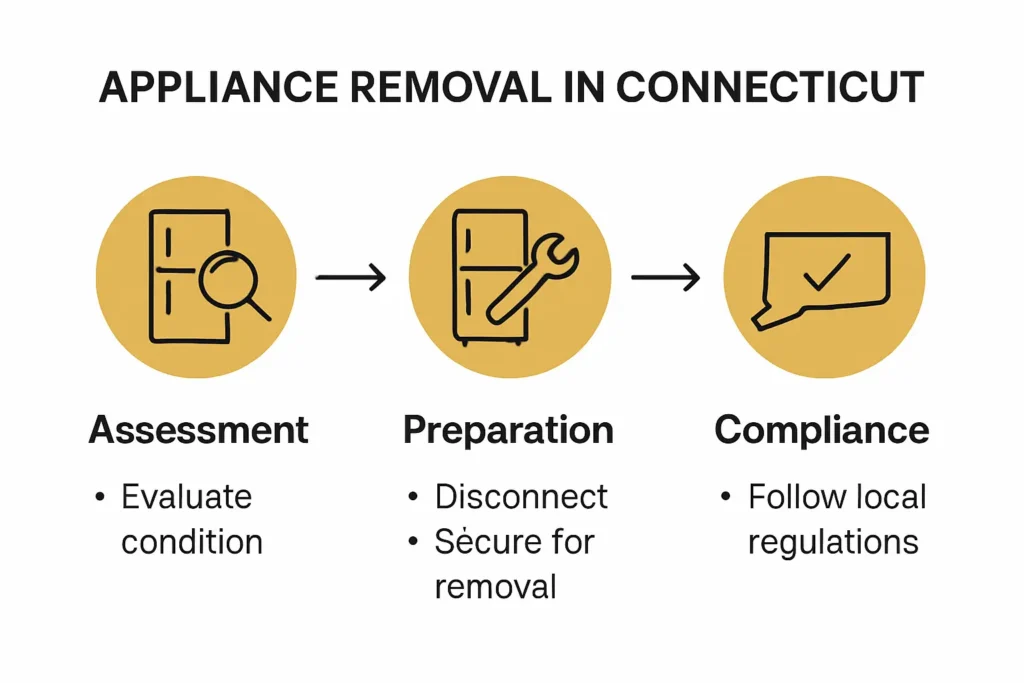
Legal and Environmental Considerations
Removing appliances isn’t as simple as tossing them to the curb. Connecticut’s Electronic Recycling Law mandates specific procedures for disposing of electronic devices and large appliances. Since January 2011, the state has banned certain electronic items from traditional trash disposal, requiring residents to follow strict recycling protocols.
Specifically, appliances containing refrigerants like refrigerators and air conditioners demand careful handling. Improper disposal can lead to significant environmental hazards. The Connecticut Department of Energy & Environmental Protection (DEEP) emphasizes that scrap metal and electronic items must be recycled, with potential legal consequences for incorrect disposal.
Preparing for Appliance Removal
Before initiating the appliance removal process, homeowners should take several preparatory steps. First, assess the condition of the appliance. Is it completely non-functional, or might it still have value? Research from waste management experts suggests evaluating whether the appliance could be donated, sold, or recycled before considering complete disposal.
Key preparation steps include:
- Disconnecting the appliance from power sources safely
- Cleaning out internal compartments
- Removing any personal items or attachments
- Checking local municipal guidelines for specific disposal requirements
Disposal and Recycling Options
Connecticut offers multiple avenues for responsible appliance removal. Residents can explore several environmentally friendly options:
- Municipal Collection Programs: Many local municipalities provide free collection sites for electronic devices and large appliances
- Retailer Trade-In Programs: Some appliance retailers offer trade-in services when purchasing new equipment
- Professional Removal Services: Specialized junk removal companies can handle complex appliance disposal safely and legally
When selecting a disposal method, consider factors like environmental impact, potential recycling value, and compliance with state regulations. Professional services often provide the most comprehensive and legally compliant removal process.
The appliance removal process requires careful planning, understanding of local regulations, and a commitment to environmental responsibility. By following proper procedures, Connecticut residents can ensure their old appliances are disposed of safely and sustainably.
Remember that each appliance type may have unique removal requirements. Refrigerators with refrigerants, electronic devices with sensitive components, and large metal appliances all demand specific handling to minimize environmental impact and comply with state guidelines.
Here is a table summarizing the main appliance disposal and recycling options available in Connecticut, along with their key features:
| Disposal Option | Description | Key Advantages |
|---|---|---|
| Municipal Collection Programs | Free drop-off or collection by local municipality | No cost, local accessibility |
| Retailer Trade-In Programs | Trade-in old appliance when buying a new one | Convenience, may receive store credit |
| Professional Removal Services | Specialized companies handle pickup and compliance | Handles all steps, ensures legal process |
| Donation Centers | Give working items to charity/community organizations | Promotes reuse, benefits community |
| Manufacturer Take-Back Programs | Free recycling by appliance manufacturer | Environmental compliance, ease of use |
Preparing Your Space and Scheduling a Pickup
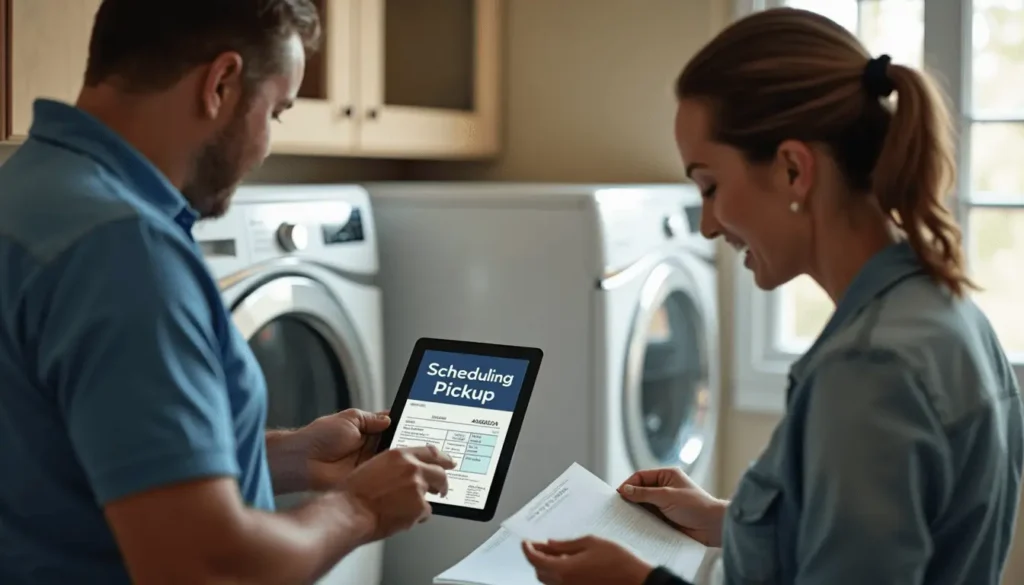
Preparing for appliance removal requires strategic planning and understanding of local regulations. Homeowners must take specific steps to ensure a smooth and compliant disposal process.
Safety and Preparation Protocols
Before scheduling an appliance pickup, several critical safety measures must be implemented. Connecticut law mandates that refrigerators, iceboxes, and similar airtight containers with a capacity of 1.5 cubic feet or more must have their doors removed to prevent potential entrapment hazards. Proper preparation minimizes risks and ensures efficient removal.
Key preparation steps include:
- Clearing a direct path to the appliance
- Disconnecting electrical and water connections
- Removing any loose components or attachments
- Ensuring the area around the appliance is clean and accessible
Scheduling and Documentation
When scheduling an appliance pickup, documentation and communication are essential. Our comprehensive guide to bulk garbage pickup can help streamline the process. Residents should gather relevant information such as appliance type, dimensions, and potential hazardous materials like refrigerants.
Recommended documentation includes:
- Photographs of the appliance
- Measurements and weight estimates
- Detailed description of the appliance’s condition
- Any manufacturer or model information
Compliance with Electronic Waste Regulations
Connecticut has strict regulations regarding electronic waste disposal. The state’s Electronic Recycling Law prohibits placing covered electronic devices in solid waste facilities. This includes computers, monitors, printers, and televisions.
To ensure compliance:
- Separate electronic devices from other appliances
- Check with local recycling centers for specific disposal requirements
- Consider manufacturer take-back or recycling programs
- Verify that your removal service understands and follows state regulations
The appliance removal process demands attention to detail, safety protocols, and regulatory compliance. By carefully preparing your space and understanding local guidelines, you can ensure a smooth and environmentally responsible disposal experience.
Remember that each municipality might have unique requirements, so always confirm specific local guidelines before scheduling your appliance pickup.
Below is a checklist table summarizing the key steps to prepare your space and schedule a compliant appliance removal in Connecticut:
| Preparation Step | Status (Yes/No) | Notes |
|---|---|---|
| Disconnected appliance from all power sources | ||
| Cleaned out all internal compartments | ||
| Removed all personal items and attachments | ||
| Cleared a direct, accessible path to appliance | ||
| Removed doors (if required by law) | For fridges over 1.5 cu. ft | |
| Photographed and documented appliance details | ||
| Verified local municipal guidelines |
Safe and Responsible Appliance Disposal Options
Disposing of appliances requires careful consideration of environmental impact, local regulations, and potential recycling opportunities. Connecticut residents have multiple responsible options for managing old or unwanted appliances.
Environmental Considerations for Appliance Disposal
The U.S. Environmental Protection Agency highlights the critical importance of proper appliance disposal, especially for older models containing harmful refrigerants. Refrigerators manufactured before 1998 often contain ozone-depleting substances and potent greenhouse gases that can cause significant environmental damage if not handled correctly.
Key environmental concerns include:
- Preventing refrigerant gas releases
- Recovering recyclable materials
- Minimizing landfill waste
- Reducing potential chemical contamination
Recycling and Donation Strategies
Connecticut offers several environmentally friendly disposal methods. Learn about the most cost-effective junk removal strategies to maximize both economic and environmental benefits. The Connecticut Department of Energy and Environmental Protection recommends multiple approaches:
- Municipal Recycling Programs: Many local municipalities offer specialized appliance collection events
- Manufacturer Take-Back Programs: Some manufacturers provide free recycling for their products
- Donation Centers: Functional appliances can be donated to local charities or community organizations
- Certified Recycling Facilities: Professional services that specialize in environmentally responsible appliance disposal
Specialized Disposal for Hazardous Appliances
Certain appliances require extra precautions. The Southeastern Connecticut Regional Resources Recovery Authority provides free household hazardous waste collection events for items with complex disposal requirements.
Special handling is necessary for:
- Refrigerators with refrigerant gases
- Air conditioning units
- Dehumidifiers
- Electronic devices with potentially toxic components
Recommended Safety Steps:
- Contact local municipal recycling coordinators for guidance
- Remove doors from refrigerators before disposal
- Disconnect electrical components safely
- Verify local regulations before disposal
Responsible appliance disposal goes beyond simply removing an old item. It involves understanding environmental impacts, leveraging local resources, and making choices that protect both community health and ecological systems.
By selecting the most appropriate disposal method, Connecticut residents can ensure their old appliances are handled safely, potentially recycled, and processed in an environmentally conscious manner. Each small decision contributes to broader sustainability efforts and helps protect our local environment.
Tips for Emergency and Same-Day Appliance Removal
Emergency appliance removal situations demand quick action, strategic planning, and understanding of local regulations. Connecticut residents facing urgent disposal needs must navigate multiple considerations to ensure safe and efficient removal.
Identifying Emergency Removal Scenarios
Connecticut’s State Disaster Debris Management Plan outlines critical scenarios requiring immediate appliance disposal. Emergency situations might include:
- Natural disaster damage
- Sudden appliance failure
- Urgent property cleanouts
- Unexpected home renovations
- Water or fire damage compromising appliance functionality
Immediate Action Steps:
- Document appliance condition with photographs
- Disconnect electrical and water connections
- Clear surrounding area for quick access
- Contact local waste management authorities
Navigating Rapid Disposal Protocols
Understanding efficient removal strategies becomes crucial during time-sensitive situations. The Connecticut Department of Energy and Environmental Protection emphasizes the importance of following specific guidelines even during emergency removals.
Key rapid disposal considerations include:
- Verifying local municipality emergency disposal protocols
- Checking for potential hazardous material containment
- Identifying authorized emergency waste collection points
- Understanding potential additional fees for expedited services
Safety and Legal Compliance in Urgent Removals
Connecticut General Statutes authorize emergency waste management procedures, ensuring residents can safely dispose of appliances during critical times. Professional removal services can help navigate complex regulatory requirements.
Critical safety protocols for emergency appliance removal:
- Wear protective personal equipment
- Avoid handling potentially contaminated appliances alone
- Seal refrigerant-containing units to prevent environmental hazards
- Follow recommended quarantine procedures for damaged electronic equipment
Emergency appliance removal requires a balanced approach of speed, safety, and regulatory compliance. By understanding local guidelines and preparing in advance, Connecticut residents can manage unexpected disposal needs efficiently.
Whether facing a sudden breakdown or dealing with post-disaster cleanup, having a clear strategy and knowing your local resources can transform a stressful situation into a manageable process. Always prioritize personal safety and environmental responsibility during urgent removal scenarios.
Frequently Asked Questions
What should I do before scheduling an appliance removal in Connecticut?
Before scheduling appliance removal, ensure that you disconnect the appliance from power sources, clean out internal compartments, and check local municipal guidelines for specific disposal requirements.
Are there any legal regulations for disposing of appliances in Connecticut?
Yes, Connecticut’s Electronic Recycling Law mandates specific procedures for disposing of certain electronic appliances to prevent environmental hazards. Improper disposal may result in legal penalties.
What are the options for recycling or donating old appliances in Connecticut?
Connecticut residents can utilize municipal collection programs, retailer trade-in programs, donation centers, and certified recycling facilities to dispose of or recycle old appliances responsibly.
How can I prepare my home for emergency appliance removal?
To prepare for emergency appliance removal, document the appliance’s condition, ensure a clear access path, disconnect electrical and water connections, and check for hazardous materials that may need special handling.
Make Appliance Removal Stress-Free and Compliant with Local Experts
If the idea of navigating Connecticut’s strict appliance removal laws and handling hazardous items leaves you feeling overwhelmed, you’re not alone. Many homeowners and businesses worry about legal penalties, surprise fees, or accidentally harming the environment. You learned in this guide just how important it is to follow proper disposal steps, prepare appliances safely, and keep up with evolving recycling regulations. Safety, convenience, and following the law are always top priorities—but you do not have to manage it all by yourself.
Why risk mistakes or waste hours looking for the right pickup and recycling options? With our professional team at your side, you get local expertise, guaranteed compliance, and a hassle-free experience from start to finish. Our easy online quote request puts you just a click away from reliable help. Act now to keep your home safe, avoid fines, and protect Connecticut’s environment. Get a fast estimate and experience the peace of mind that comes with using a trusted, community-focused service. Your appliance removal just got a whole lot easier.