


Demolition projects in Connecticut are on the rise and the sheer volume of debris generated is staggering. Up to 75 percent of materials from demolition sites can actually be recovered for reuse or recycling. That sounds like a win for the environment, right? Most people assume tossing everything in a landfill is the easy solution, but that option often costs more money and creates bigger headaches than you might think. It turns out, Connecticut’s eco-friendly waste management strategies are not just simple to implement, they are packed with real savings and surprising incentives for both homeowners and businesses.
Table of Contents
- What Is Demolition Waste Management?
- Best Practices For Safe Waste Disposal
- Connecticut Services For Fast Junk Removal
- Eco-Friendly Solutions For Homeowners And Businesses
Quick Summary
| Takeaway | Explanation |
|---|---|
| Proper waste management reduces landfill use. | Effective strategies can divert waste from landfills, minimizing environmental impact and conserving resources. |
| Segregate materials for recycling. | Accurate waste classification helps determine recycling and disposal methods, promoting responsible waste handling. |
| Deconstruction maximizes material reuse. | Selective dismantling of structures can salvage valuable components, reducing waste and supporting sustainability goals. |
| Follow legal regulations for waste disposal. | Adhering to local guidelines ensures environmental compliance and safe handling of hazardous materials. |
| Adopt eco-friendly practices for cost savings. | Sustainable waste management strategies can lower disposal costs and may provide tax incentives for homeowners and businesses. |
What Is Demolition Waste Management?
Demolition waste management represents a critical environmental strategy for handling debris generated during the destruction of buildings, infrastructure, and other structures. At its core, this process involves systematically collecting, sorting, recycling, and disposing of materials produced during demolition activities to minimize environmental impact and maximize resource recovery.
Understanding the Scope of Demolition Waste
Demolition waste encompasses a wide range of materials generated when structures are dismantled or torn down. According to the US Environmental Protection Agency, these materials typically include concrete, wood, metal, bricks, glass, asphalt, and various salvaged building components. In Connecticut, the Department of Energy & Environmental Protection defines demolition waste as the debris produced during the destruction of residential, commercial, and industrial structures.
The composition of demolition waste can vary significantly depending on the type of structure being demolished. A residential home demolition might generate different materials compared to an industrial facility teardown. Common materials in demolition waste include:
- Concrete and masonry: Broken bricks, concrete blocks, and cement
- Wooden materials: Lumber, plywood, and structural timber
- Metal components: Steel beams, copper wiring, aluminum fixtures
- Roofing materials: Shingles, tiles, and insulation
Here is a table summarizing the common materials found in demolition waste and typical examples:
| Material Type | Examples |
|---|---|
| Concrete & Masonry | Bricks, concrete blocks, cement |
| Wood | Lumber, plywood, structural timber |
| Metals | Steel beams, copper wiring, aluminum fixtures |
| Roofing Materials | Shingles, tiles, insulation |
| Glass | Windows, glass panels |
| Asphalt | Pavement, roofing material |
| Salvaged Components | Doors, windows, architectural elements |
The Environmental and Economic Importance of Proper Management
Proper demolition waste management goes beyond simple disposal. Connecticut’s state regulations emphasize the critical role of material recovery and environmental protection. By implementing effective waste management strategies, contractors and property owners can significantly reduce landfill usage, lower greenhouse gas emissions, and conserve natural resources.
The process involves several key steps: initial waste assessment, careful separation of materials, recycling and salvage operations, and responsible disposal of non-recyclable components. Advanced demolition waste management techniques can recover up to 75% of materials for reuse or recycling, transforming what was once considered waste into valuable resources for new construction projects.
For those looking to understand more about the practical aspects of demolition debris removal, check out our comprehensive guide on demolition debris strategies that provides detailed insights into local Connecticut practices.
By prioritizing systematic waste management, property owners and contractors not only comply with environmental regulations but also contribute to a more sustainable approach to construction and demolition activities. The goal is to create a circular economy where materials are continuously recycled and repurposed, reducing the overall environmental footprint of construction and demolition projects.
Best Practices for Safe Waste Disposal
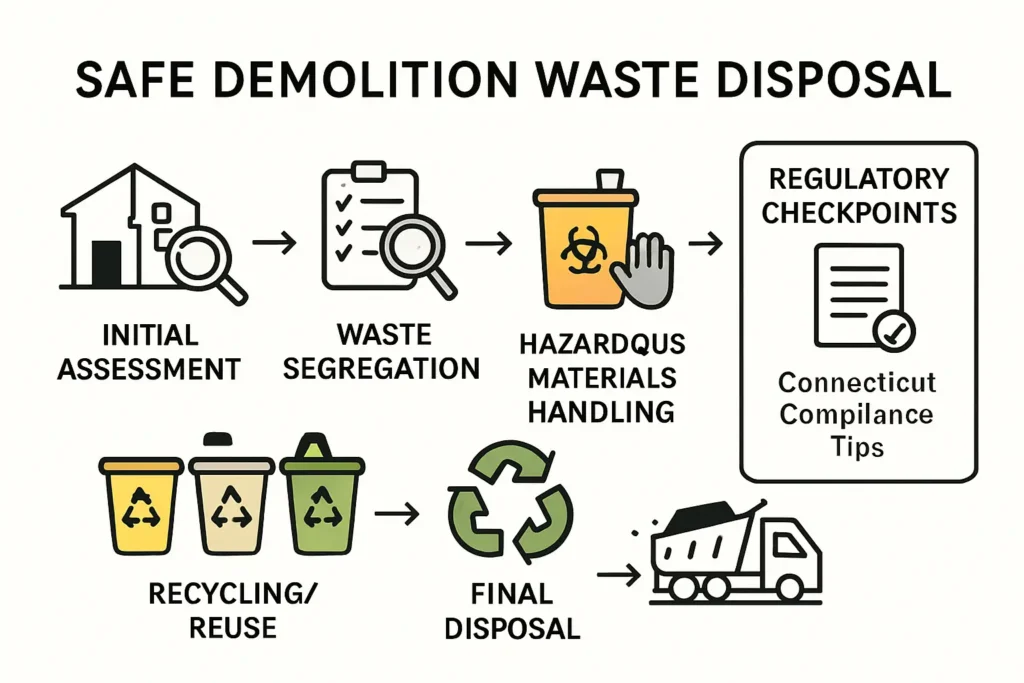
Safe demolition waste disposal requires strategic planning, compliance with local regulations, and a comprehensive understanding of environmental protection protocols. Property owners and contractors in Connecticut must adopt multiple layers of waste management techniques to ensure responsible debris handling and minimize potential environmental risks.
Waste Segregation and Classification
Effective waste disposal begins with precise material segregation. According to the Connecticut Department of Energy & Environmental Protection, proper waste classification is critical for determining appropriate disposal or recycling methods. Contractors should establish dedicated sorting zones that separate materials like:
- Inert materials: Concrete, brick, and asphalt
- Recyclable metals: Steel, copper, aluminum
- Wooden debris: Untreated and treated lumber
- Hazardous waste: Paint, solvents, asbestos
Professional waste management requires understanding each material’s unique disposal requirements. Some materials demand specialized handling to prevent environmental contamination and ensure worker safety.
Below is a table outlining common demolition waste categories and their handling requirements:
| Category | Examples | Handling Requirement |
|---|---|---|
| Inert Materials | Concrete, brick, asphalt | Standard sorting, recycling allowed |
| Recyclable Metals | Steel, copper, aluminum | Segregate for recycling |
| Wooden Debris | Untreated/treated lumber | Assess for reuse or recycling |
| Hazardous Waste | Paint, solvents, asbestos | Special handling and regulated disposal |
Environmental Compliance and Safety Protocols
Connecticut enforces strict environmental regulations for waste disposal. State guidelines mandate comprehensive safety protocols for managing potentially harmful materials. This includes proper identification, containment, and disposal of hazardous substances like lead-based paint and asbestos.
Key safety considerations include:
- Conducting thorough pre-demolition environmental assessments
- Using personal protective equipment
- Following approved hazardous material removal procedures
- Maintaining detailed documentation of waste streams
For more comprehensive insights into managing construction debris effectively, explore our detailed removal strategies that align with Connecticut’s latest environmental standards.
Sustainable Disposal and Recycling Strategies
Modern demolition waste management prioritizes sustainability. The goal is not just safe disposal but maximizing material recovery and reducing landfill contributions. Advanced recycling techniques can transform waste into valuable resources for future construction projects.
Strategies include:
- Partnering with certified recycling facilities
- Implementing on-site material processing
- Using recovered materials in new construction
- Tracking and reporting waste diversion rates
By adopting these best practices, contractors and property owners can transform waste management from a regulatory requirement into an opportunity for environmental stewardship and resource conservation. Proactive planning, rigorous safety protocols, and commitment to sustainable practices define modern demolition waste disposal in Connecticut.
Connecticut Services for Fast Junk Removal
Connecticut offers diverse and efficient junk removal services designed to meet the unique needs of residential and commercial clients dealing with demolition and construction debris. These services provide streamlined solutions for managing waste quickly, safely, and environmentally responsibly.
Professional Waste Collection Options
Professional junk removal services in Connecticut provide comprehensive solutions for handling various types of demolition and construction waste. According to the Connecticut Department of Energy & Environmental Protection, waste management companies must adhere to strict state guidelines when collecting and disposing of materials.
Typical service offerings include:
- Residential debris removal: Handling household renovation and demolition waste
- Commercial site clearance: Managing large-scale construction and demolition projects
- Specialized material handling: Processing hazardous and non-hazardous waste streams
- On-site sorting and recycling: Separating materials for environmental compliance
Deconstruction and Advanced Removal Techniques
State regulations encourage advanced waste management techniques like deconstruction. This method systematically disassembles buildings to maximize material salvage and reuse. Professional services now offer:
- Careful dismantling of structures
- Precise material identification
- Salvage and recycling of building components
- Minimized environmental impact
For those seeking detailed insights into the junk removal process, learn about our comprehensive removal strategies that ensure efficient and responsible waste management.
Legal and Environmental Compliance
Connecticut’s waste management services must comply with Chapter 446d of the General Statutes, which outlines strict protocols for solid waste disposal. Professional services navigate these regulations by:
- Obtaining necessary permits
- Following state-approved disposal methods
- Documenting waste streams
- Ensuring environmental protection
By leveraging professional junk removal services, property owners can efficiently manage demolition waste while maintaining legal and environmental standards. These services transform complex waste management challenges into straightforward, sustainable solutions tailored to Connecticut’s unique regulatory landscape.
Eco-Friendly Solutions for Homeowners and Businesses
Eco-friendly demolition waste management represents a critical approach for Connecticut property owners seeking sustainable and responsible waste disposal strategies. By implementing innovative techniques, homeowners and businesses can significantly reduce environmental impact while potentially lowering disposal costs and supporting local recycling initiatives.
Sustainable Deconstruction Strategies
Deconstruction offers a transformative alternative to traditional demolition methods. According to Sustainable Westport, this approach carefully dismantles structures to salvage materials, potentially diverting up to 600 million tons of construction and demolition waste annually. The process involves methodical material recovery, focusing on:
- Architectural element salvage: Saving doors, windows, and fixtures
- Structural material recycling: Repurposing lumber, metals, and concrete
- Material value assessment: Identifying reusable components
- Minimizing landfill contributions: Reducing waste stream volumes
Homeowners can benefit from potential tax deductions and reduced disposal fees by choosing deconstruction over traditional demolition methods.
Here is a summary table comparing traditional demolition and deconstruction based on the benefits and practices described:
| Feature/Aspect | Traditional Demolition | Deconstruction |
|---|---|---|
| Process Speed | Fast | Slower (methodical disassembly) |
| Material Recovery | Low | High |
| Environmental Impact | Higher (more landfill use) | Lower (waste diverted/recycled) |
| Potential Cost Savings | Limited | Greater (tax incentives, reduced fees) |
| Salvaged Materials | Minimal | Maximum |
| Complexity | Simple | More complex |
Comprehensive Waste Management Planning
The Connecticut Department of Energy & Environmental Protection emphasizes the importance of developing comprehensive waste management plans. These strategic approaches help protect the environment and promote sustainable community development. Key components include:
- Precise waste stream identification
- Material recovery and recycling protocols
- Minimizing environmental impact
- Tracking and reporting waste diversion metrics
For property owners looking to streamline their eco-friendly waste management approach, explore our detailed yard debris removal strategies that align with Connecticut’s environmental standards.
Economic and Environmental Benefits
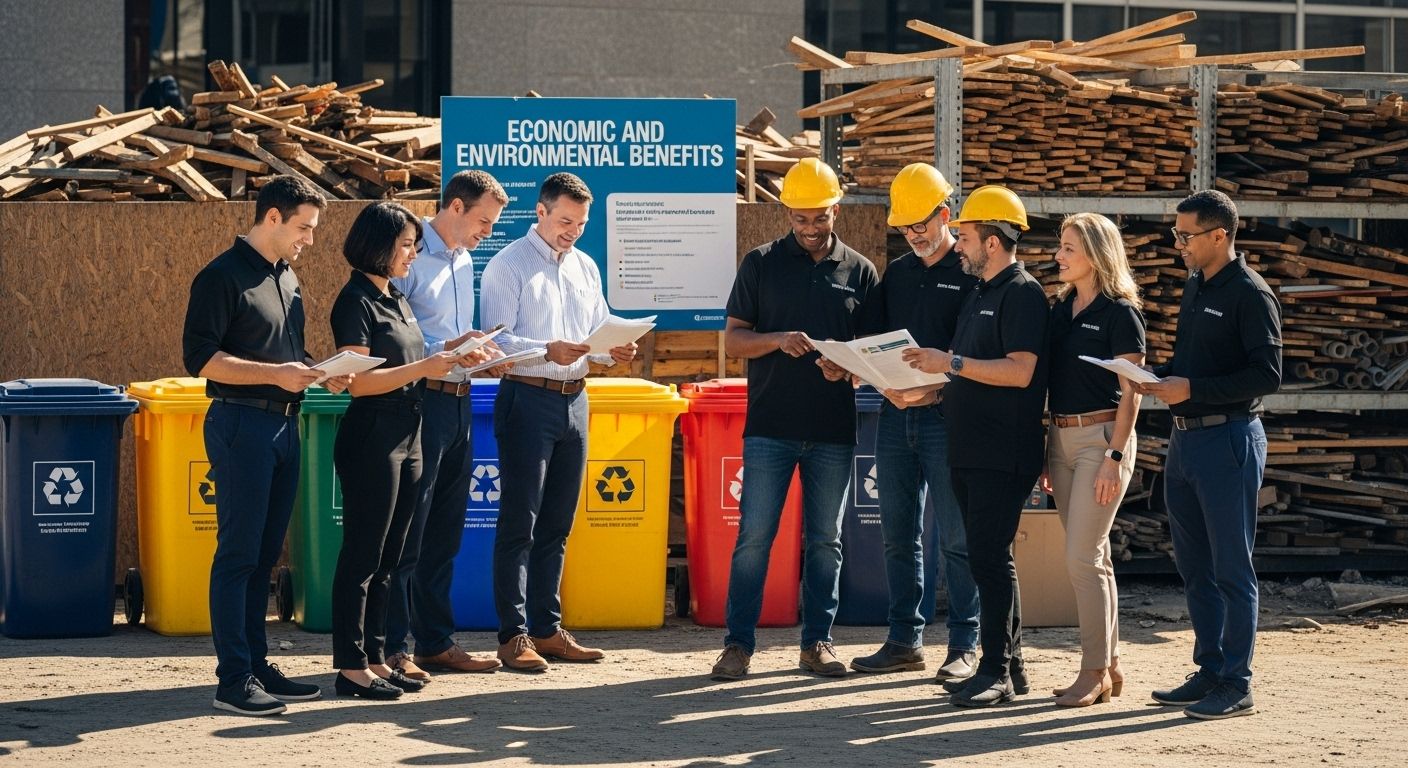
Eco-friendly demolition waste management extends beyond environmental considerations. Property owners can realize significant economic advantages by adopting sustainable practices. Benefits include:
- Reduced disposal costs
- Potential tax incentives
- Lower environmental compliance expenses
- Enhanced property value through responsible waste management
By embracing these eco-friendly solutions, Connecticut homeowners and businesses transform waste management from a regulatory requirement into an opportunity for environmental stewardship. The approach demonstrates a commitment to sustainability, resource conservation, and responsible property development, creating a positive impact on both local ecosystems and community resources.
Frequently Asked Questions
What is demolition waste management?
Demolition waste management is the process of collecting, sorting, recycling, and disposing of materials generated during the demolition of structures. It aims to minimize environmental impact and maximize resource recovery.
How can I effectively segregate demolition waste?
Effective waste segregation involves setting up dedicated sorting zones for different materials such as concrete, wood, metals, hazardous waste, and inert materials to determine appropriate recycling or disposal methods.
What environmental benefits does proper demolition waste management provide?
Proper demolition waste management can reduce landfill use, lower greenhouse gas emissions, and conserve natural resources by recovering materials for reuse and recycling.
What are the economic benefits of adopting eco-friendly demolition practices in Connecticut?
Adopting eco-friendly demolition practices can lead to reduced disposal costs, potential tax incentives, and enhanced property values as a result of responsible waste management.
Transform Your Demolition Waste Headache Into a Simple Solution
Struggling with overwhelming amounts of demolition debris or worried about meeting strict Connecticut environmental regulations? The article highlighted how improper waste management can lead to higher costs, increased landfill use, and complicated legal compliance. If you are feeling burdened by project delays, clutter, or the uncertainty of dealing with hazardous materials, you are not alone. In fact, one of the biggest pain points is finding a reliable partner who can quickly sort, remove, and recycle demolition waste while helping you stay eco-friendly and compliant.
Let C&M Carting Solutions take the stress out of your demolition project. We offer fast junk removal, safe material handling, and responsible recycling options that keep your property clear and your project on track. Want an even smoother process? Schedule a hassle-free pickup or request a dumpster right now with our easy online quote form. For extra guidance on demolition debris strategies, check out our demolition debris removal basics guide or discover construction debris removal tips. Take the next step today and let us help you transform demolition waste challenges into quick, eco-friendly solutions—get your project moving by visiting C&M Carting Solutions.