


Getting rid of an old appliance might seem simple at first. But nearly 60 percent of appliances in the US end up in landfills instead of being recycled or donated. Most people miss out on safer, cheaper, and even profitable disposal options because of quick decisions. There is a smarter way to do it, and it starts long before you call a junk pickup service.
Table of Contents
- Step 1: Evaluate Your Appliance Disposal Needs
- Step 2: Research Local Disposal Regulations
- Step 3: Prepare Your Appliances For Disposal
- Step 4: Choose A Disposal Method
- Step 5: Schedule The Removal Service
- Step 6: Confirm Completion And Recycle Properly
Quick Summary
| Key Point | Explanation |
|---|---|
| 1. Evaluate your appliance condition | Inspect appliances for functionality and damage to determine disposal options and potential resale value. |
| 2. Research local disposal regulations | Understand specific municipal guidelines to avoid legal issues and ensure responsible disposal of appliances. |
| 3. Prepare appliances before removal | Disconnect, clean, and empty appliances to facilitate safe and efficient disposal processes. |
| 4. Choose the best disposal method | Consider selling, donating, recycling, or hiring professionals based on appliance condition and local regulations. |
| 5. Confirm disposal completion and recycle | Obtain documentation from removal services to verify proper disposal and environmental compliance. |
Step 1: Evaluate Your Appliance Disposal Needs
Disposing of appliances requires careful assessment to ensure safe, responsible, and efficient removal. Your initial evaluation determines the entire disposal strategy, influencing everything from logistics to potential recycling or donation opportunities. This step helps you understand the condition, size, and potential value of your appliance while preparing for its next phase.
Begin by conducting a thorough visual and functional inspection of the appliance. Look for signs of damage, wear, or malfunction that might impact its disposal options. Check electrical components, structural integrity, and overall condition. Working appliances have different disposal pathways compared to broken or non-functional units. Consider factors like age, brand, and current market demand for used appliances.
Measure the appliance’s dimensions carefully, noting its height, width, and depth. These measurements are crucial for determining transportation requirements and potential removal challenges. Larger appliances like refrigerators or commercial ovens might need specialized removal services, while smaller units could be more straightforward to handle. Take photographs documenting the appliance’s condition, which can be helpful if you plan to sell, donate, or seek professional removal assistance.
Learn more about local appliance removal options that can help streamline your disposal process. Assess whether the appliance contains hazardous materials like refrigerants in older cooling units, which require special handling. Some key evaluation points include:
- Functional status of the appliance
- Age and overall condition
- Potential resale or donation value
- Presence of specialized components requiring professional disposal
Ultimately, your evaluation will guide subsequent disposal steps. A comprehensive assessment ensures you choose the most environmentally responsible and cost-effective method for removing your unwanted appliance. By understanding its specific characteristics and condition, you’ll be well-prepared to make informed decisions about its final destination.
Step 2: Research Local Disposal Regulations
Local disposal regulations form a critical foundation for responsible appliance removal, varying significantly between municipalities and counties. Understanding these specific guidelines ensures you avoid potential fines, environmental penalties, and complex legal complications. Proper research prevents unnecessary challenges during the disposal process and helps you make informed decisions about your appliance’s final destination.
Start by contacting your local municipal waste management department or visiting their official website. Many communities have specific protocols for large appliance disposal, including designated collection days, required preparation steps, and potential restrictions on certain types of equipment. Pay close attention to regulations concerning appliances with hazardous components like refrigerators, air conditioners, and older electrical systems that might contain environmentally sensitive materials such as refrigerants or mercury.
Explore safe disposal guidelines for your area to ensure you’re following local environmental standards. Some municipalities require pre-registration for bulky item pickup, while others mandate professional disconnection of electrical or gas connections before removal. Check if your local waste management offers specialized recycling programs or designated drop-off locations for different appliance types. Understanding these nuances can help you navigate the disposal process more efficiently.
Key research points to verify include:
- Specific municipal guidelines for appliance removal
- Required preparation steps before disposal
- Potential fees or permits needed
- Recycling or donation program availability
Verify your research by documenting the specific regulations you’ve discovered, including contact information for local waste management and any relevant procedural requirements. This preparation ensures a smooth, compliant appliance disposal process that meets all local environmental and safety standards.
Step 3: Prepare Your Appliances for Disposal
Preparing appliances for disposal involves careful planning and systematic steps to ensure safe, environmentally responsible removal. This critical phase protects both the environment and the individuals handling the equipment, preventing potential hazards and facilitating smoother disposal or recycling processes.
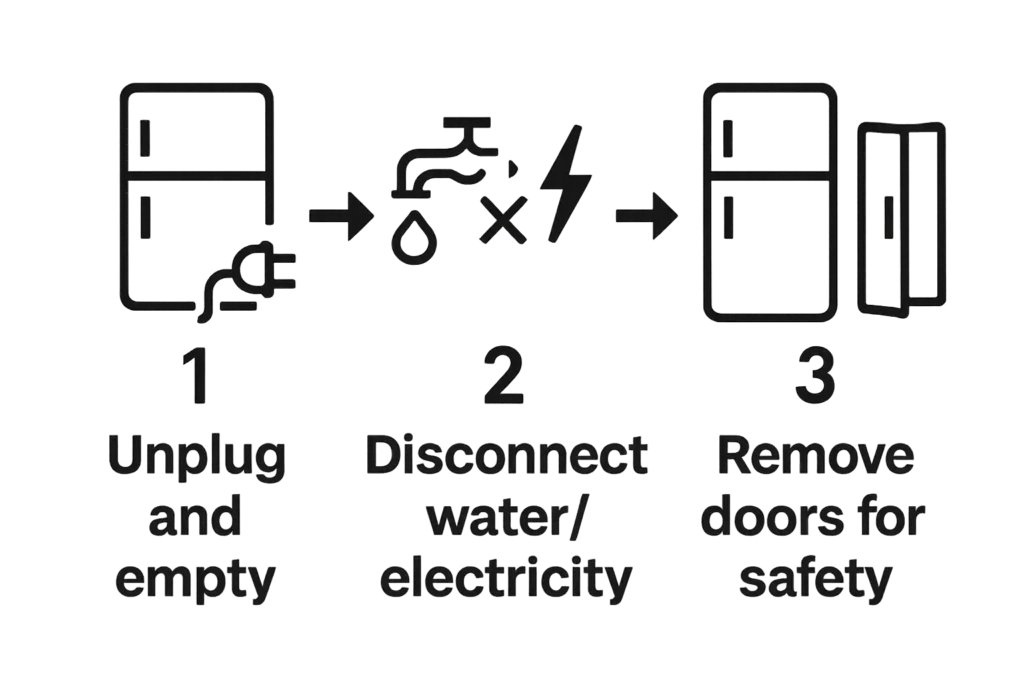
Disconnecting and cleaning the appliance thoroughly is your first priority. For electrical units, safely unplug the device and carefully remove any attached cords or accessories. If the appliance is hardwired, consider hiring a professional electrician to ensure proper disconnection. Clean the entire surface inside and out, removing food residue, dust, and debris. This preparation not only makes the appliance more appealing if donation is possible but also prevents potential contamination during disposal.
Check out our comprehensive removal preparation guide to streamline your disposal process. Carefully inspect the appliance for any hazardous materials or components that require special handling. Refrigerators and air conditioning units, for instance, contain refrigerants that must be professionally extracted. Older appliances might have mercury switches or other environmentally sensitive components that need specialized removal. Take photographs documenting the appliance’s condition and any unique features, which can be helpful if seeking donation or professional removal services.
Essential preparation steps include:
- Completely empty all compartments and removable parts
- Disconnect electrical and water connections safely
- Remove doors from large appliances to prevent potential entrapment
- Gather all original manuals, warranties, and relevant documentation
Finalize your preparation by creating a clear pathway for removal. Measure doorways and hallways to ensure the appliance can be safely transported. If you’re using a professional removal service, clear the surrounding area and ensure easy access. By meticulously preparing your appliance, you simplify the disposal process and increase the likelihood of environmentally responsible recycling or donation.
Below is a checklist summarizing key steps to prepare your appliance for safe and efficient disposal.
| Preparation Step | Description | Verified (Yes/No) |
|---|---|---|
| Disconnect from power/water | Ensure appliance is unplugged and all water connections are disconnected | |
| Empty all contents | Remove all food, items, and accessories from the appliance | |
| Clean inside and outside | Thoroughly wipe down all surfaces and remove residue or debris | |
| Remove doors (if required) | Take off doors from large appliances to prevent entrapment risks | |
| Check for hazardous materials | Identify and note any refrigerants or hazardous components | |
| Gather documentation | Collect manuals, warranties, and necessary paperwork | |
| Ensure clear removal pathway | Measure pathways and clear obstacles for appliance removal |
Step 4: Choose a Disposal Method
Selecting the appropriate disposal method for your appliance requires careful consideration of its condition, local regulations, and environmental impact. This critical step determines whether your appliance will be recycled, donated, sold, or professionally removed, ultimately influencing both your financial outcome and ecological footprint.
Working appliances present multiple disposal opportunities that can potentially offset removal costs. Consider selling functional units through local marketplace platforms or online marketplaces, which can generate extra income while giving the appliance a second life. Donation represents another excellent option for appliances in good condition. Local charities, community centers, and nonprofit organizations often welcome functional household equipment, providing support to families in need while preventing unnecessary waste.
Explore local appliance disposal solutions that match your specific needs and circumstances. For non-functional or damaged appliances, professional recycling services become the most responsible choice. These specialized services ensure proper handling of hazardous components, safely extracting valuable materials while minimizing environmental impact. Some professional services even offer pickup options, reducing the logistical burden on homeowners.
Key disposal method considerations include:
- Potential resale value of the appliance
- Cost of professional removal services
- Local donation program availability
- Environmental impact of each disposal method
- Condition and age of the appliance
Verify your chosen disposal method by confirming all logistical details, including potential fees, pickup schedules, and any required preparation. By thoughtfully evaluating your options, you can select a disposal approach that balances economic considerations with environmental responsibility, ensuring your appliance reaches its most appropriate final destination.
The table below compares common appliance disposal methods, highlighting their main characteristics and considerations to help you select the best option for your situation.
| Disposal Method | Suitable Appliance Condition | Key Benefits | Main Considerations |
|---|---|---|---|
| Sell | Working, good condition | Earn money, promotes reuse | Time to find buyer, may need cleaning |
| Donate | Working, fair/good condition | Supports community, eco-friendly | Must meet donation criteria |
| Recycle (Professional) | Broken/damaged/non-working | Safest for hazardous components | Possible service fees |
| Professional Removal | Any condition | Convenient, handles regulations | Service fees may apply |
Step 5: Schedule the Removal Service
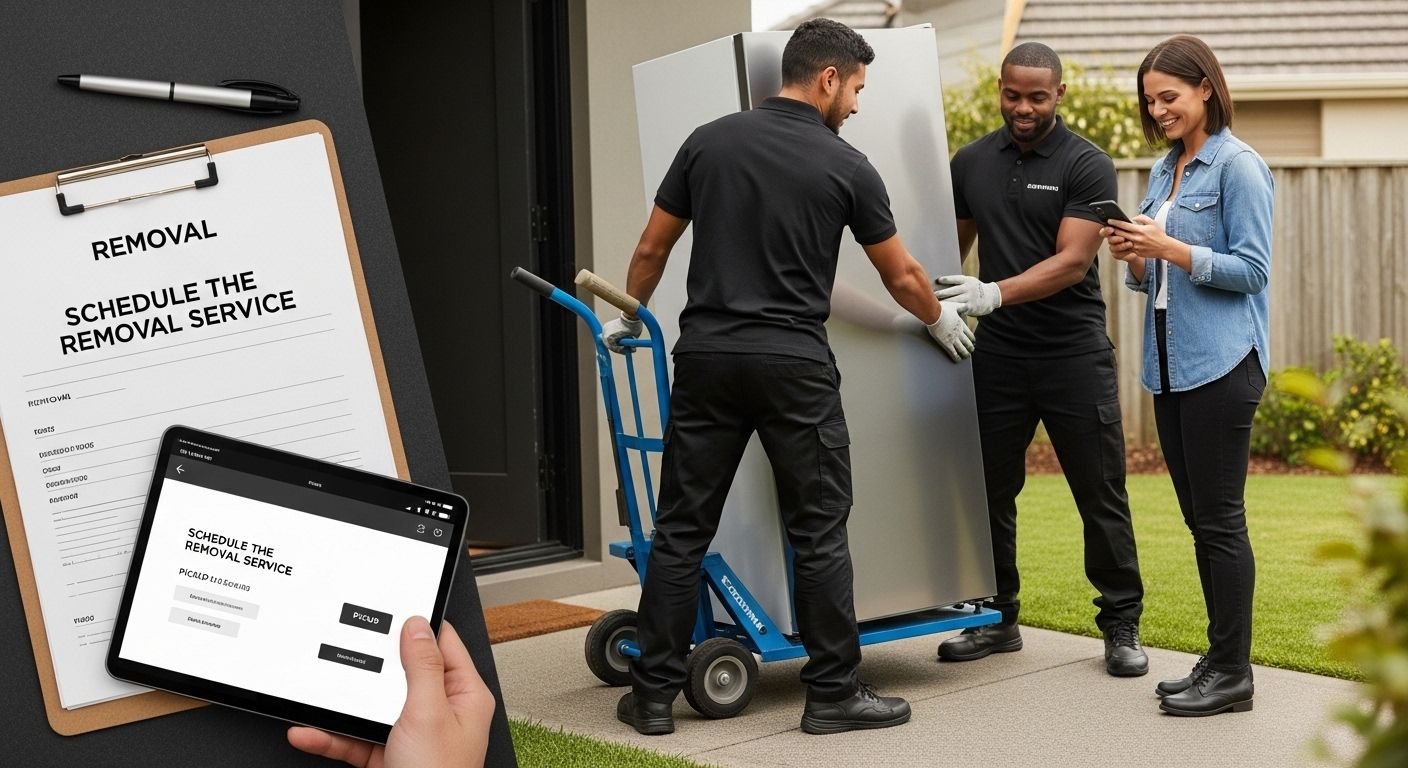
Scheduling a professional removal service transforms your appliance disposal from a potentially complicated task into a streamlined, efficient process. This critical step bridges the gap between your preparation and final disposal, ensuring your appliance is handled safely, legally, and environmentally responsibly.
Contact multiple removal services to compare pricing and availability. When reaching out, provide detailed information about the appliance, including its type, size, condition, and any special handling requirements. Professional services typically need specifics like whether the appliance contains refrigerants, its current location in your home, and potential access challenges. Some companies offer online booking platforms, while others prefer direct phone consultations. Requesting quotes from multiple providers helps you understand market rates and service offerings.
Discover comprehensive removal solutions tailored to your specific needs. Verify the removal service’s credentials, including proper licensing for handling hazardous materials and environmental certifications. Many professional services provide transparent pricing structures, with costs varying based on appliance type, weight, and complexity of removal. Some companies offer additional value-added services like on-site assessment, immediate removal, and guaranteed environmentally responsible disposal.
Essential scheduling considerations include:
- Availability of convenient appointment times
- Total removal service cost
- Specific handling requirements for your appliance
- Service provider’s environmental disposal practices
- Estimated time for complete removal
Finalize your removal service scheduling by confirming all details in writing. Request a formal confirmation that includes the pickup date, estimated arrival time, total cost, and specific disposal method. By meticulously scheduling your appliance removal, you ensure a smooth, stress-free disposal process that aligns with environmental best practices and local regulations.
Step 6: Confirm Completion and Recycle Properly
Confirming the proper completion of your appliance disposal ensures environmental responsibility and provides peace of mind that your equipment has been handled safely and sustainably. This final step validates all previous preparation and removal efforts, guaranteeing that your appliance reaches its most appropriate end-of-life destination.
Request and carefully review the disposal documentation from your removal service. Legitimate professional services will provide a detailed receipt or certificate of disposal that outlines the specific recycling or disposal method used. This documentation serves as proof that your appliance was processed according to environmental regulations. Pay close attention to details such as the recycling facility’s credentials, the specific handling procedures for hazardous components like refrigerants, and any environmental certification associated with the disposal process.
Learn about responsible recycling practices to understand the broader impact of proper disposal. Follow up with the removal service if you have any questions about the recycling process or need additional documentation. Many professional services can provide detailed information about how different components of your appliance will be recycled or responsibly disposed of, including metals, plastics, and potentially hazardous materials.
Key verification steps include:
- Obtaining and storing disposal documentation
- Confirming the recycling facility’s environmental credentials
- Verifying the specific recycling methods used
- Checking for any potential environmental certifications
- Maintaining records for personal or potential tax purposes
Complete the disposal process by updating your personal records and filing the disposal documentation. This final step not only provides a sense of closure but also contributes to your personal environmental responsibility. By carefully managing the entire disposal process, you’ve ensured that your appliance is handled in the most environmentally conscious manner possible, minimizing waste and supporting sustainable recycling practices.
Make Appliance Disposal Stress-Free in Connecticut
Struggling with old appliances and confusing disposal steps? The guide above highlights how easily you can feel overwhelmed by strict local rules, complicated preparations, and the stress of finding the right recycling option. At C&M Carting Solutions, we understand your goal is a hassle-free process that guarantees safe, legal, and eco-friendly removal. Our team tackles every obstacle you face, from confirming local disposal guidelines to ensuring proper recycling of hazardous parts. With deep roots in Litchfield County, we turn your worries into relief by offering transparent quotes, professional service, and genuine peace of mind.
Ready to say goodbye to clutter and uncertainty? Visit our online quote page to see how simple appliance removal can be. Prefer a walkthrough? Check out our process overview for step-by-step guidance tailored to Connecticut homes and businesses. Act now and let our local experts manage the heavy lifting, while you enjoy a simplified, environmentally responsible solution. Get started today at cmcartingsolutions.com/get-a-quote/.
Frequently Asked Questions
How do I evaluate my appliance before disposal?
Begin by conducting a thorough inspection for any damage, wear, or malfunction. Assess the appliance’s functional status, age, overall condition, and potential resale or donation value.
What local disposal regulations should I research for appliance removal?
Contact your local waste management department to learn about specific guidelines for appliance disposal, including collection days, preparation steps, and restrictions regarding hazardous materials.
What steps should I take to prepare my appliance for disposal?
Disconnect and clean the appliance thoroughly, emptying all compartments and removing any doors if necessary. Check for hazardous components that require special handling, and gather relevant documentation like manuals.
What are my options for disposing of an old appliance?
You can sell or donate working appliances, or contact professional recycling services for non-functional ones. Each option has different environmental impacts and may also offer financial benefits depending on the appliance’s condition.