


Yard debris cleanup can feel never-ending, with piles of leaves, branches, and tangled garden waste cropping up every season. Most people grab whatever trash bags they have and hope for the best, figuring any plastic sack will do the trick. Yet, choosing the right methods for sorting, bagging, and disposing yard waste can slash cleanup time and cut disposal headaches in half. The real difference comes down to a few surprisingly simple steps that most homeowners totally overlook.
Table of Contents
- Step 1: Assess Your Yard Debris Situation
- Step 2: Choose The Right Bags For Your Yard Debris Needs
- Step 3: Gather Necessary Tools And Equipment
- Step 4: Bag Your Yard Debris Efficiently
- Step 5: Securely Seal And Label Each Bag
- Step 6: Schedule Disposal Or Pick-Up Service
Quick Summary
| Key Point | Explanation |
|---|---|
| 1. Assess yard debris thoroughly | Conduct a visual inventory of your yard waste to understand volume and type before cleanup begins. |
| 2. Select suitable yard debris bags | Choose between paper and plastic bags based on the type of waste and local disposal regulations. |
| 3. Gather right tools and safety gear | Use essential tools like rakes and gloves to enhance efficiency and safety during yard cleanup. |
| 4. Bag debris efficiently to prevent overflow | Layer materials strategically in bags to maximize capacity while keeping them manageable and easy to carry. |
| 5. Schedule local disposal services properly | Contact municipal services early to confirm disposal guidelines and collection schedules for your yard waste. |
Step 1: Assess Your Yard Debris Situation
Successful yard debris management starts with a thorough and strategic assessment of what you’re dealing with. Before grabbing bags or calling for removal services, understanding the volume, type, and complexity of your yard waste will streamline your entire cleanup process. Yard debris can range from simple fallen leaves to complex branches, landscaping remnants, and seasonal plant trimmings.
Begin by walking through your entire yard and making a comprehensive visual inventory. Take note of the different materials you’ll need to manage: Are there pine needles scattered across your lawn? Large tree branches from recent storms? Overgrown shrub clippings? Old garden waste? Each type of debris requires slightly different handling and may impact your bagging and disposal strategy.
Carefully examine the condition and size of your yard waste. Larger branches might need cutting into manageable sections, while smaller twigs and leaves can be collected more easily. Pay special attention to potentially wet or decomposing materials, as these can be heavier and more challenging to bag. Wet leaves and organic matter can quickly become compacted and significantly increase the weight of your debris bags.
Consider the seasonal context of your yard cleanup. Spring and fall typically generate more yard waste due to pruning, leaf fall, and garden maintenance. Explore our local yard debris removal solutions to understand regional disposal guidelines and potential service options that might simplify your cleanup process.
To effectively assess your yard debris, gather these essential tools before beginning:
- Sturdy work gloves
- Pruning shears or loppers
- Rake
- Measuring tape (optional)
- Notebook or smartphone for taking notes
By meticulously assessing your yard debris beforehand, you’ll create a targeted cleanup strategy that saves time, reduces physical strain, and ensures efficient waste management. Your careful evaluation sets the foundation for a smooth, organized yard cleanup process.
Step 2: Choose the Right Bags for Your Yard Debris Needs
Selecting the appropriate bags for yard debris is more complex than simply grabbing the first trash bag you see. The right bag can make the difference between a smooth cleanup and a frustrating, messy experience. Your choice depends on multiple factors including the type of yard waste, local disposal regulations, and your specific cleanup goals.
Paper yard waste bags are often the most environmentally friendly and municipal-friendly option. These heavy-duty kraft paper bags are specifically designed to handle organic materials and are typically accepted by local waste management services. They’re particularly excellent for leaves, grass clippings, and smaller garden trimmings. Pay close attention to the bag’s weight capacity to prevent tearing or splitting during collection and transport.
Plastic contractor bags provide an alternative solution for heavier or more challenging yard debris. These thick, durable bags can handle branches, wet leaves, and more substantial landscaping waste. Look for bags rated at least 3-mil thickness to ensure they can withstand the weight and potential moisture of yard waste. Check out our recommended yard debris disposal methods for additional guidance on bag selection and local requirements.
Consider these key factors when selecting your yard debris bags:
- Total volume of yard waste
- Weight of materials
- Local municipal regulations
- Disposal method (curbside pickup or personal transport)
- Environmental considerations
For most homeowners, a combination of paper and heavy-duty plastic bags works best. Pro tip: Always have a few extra bags on hand, as yard waste can often be more voluminous than initially estimated. Avoid overfilling bags, which can make them too heavy to lift or cause them to break during transport. Aim to keep each bag at a manageable weight, typically around 40-50 pounds for easy handling.
Below is a comparison table to help you evaluate the differences between paper yard waste bags and plastic contractor bags as discussed in the article.
| Bag Type | Best For | Pros | Cons |
|---|---|---|---|
| Kraft Paper Yard Bags | Leaves, grass, small trimmings | Environmentally friendly, accepted by municipalities | Can tear if overloaded, less suitable for wet debris |
| Plastic Contractor Bags | Branches, wet/heavy debris | Durable, handles moisture and sharp materials | Not always accepted curbside, less eco-friendly |
| Both (Combination) | Mixed debris cleanup | Flexible, covers all types of yard waste | May require sorting, more storage needed |
By carefully selecting the right bags, you’ll streamline your yard debris cleanup, make transportation easier, and ensure compliance with local waste management guidelines. Your thoughtful bag selection is a critical step in creating an efficient and successful yard waste removal process.
Step 3: Gather Necessary Tools and Equipment
Preparing for yard debris cleanup requires more than good intentions and bags. Gathering the right tools transforms a potentially overwhelming task into an efficient, manageable project. Your equipment selection directly impacts the speed, safety, and thoroughness of your yard waste removal process.
Start with essential hand tools that provide precision and control. A sturdy rake with flexible tines works perfectly for collecting leaves, pine needles, and light debris. Garden gloves protect your hands from potential cuts, splinters, and dirt while providing grip and comfort during extended cleanup sessions. Pruning shears or loppers become crucial for cutting larger branches into manageable sections, ensuring they fit easily into your selected yard waste bags.
For more substantial yard cleanup jobs, consider additional power equipment. A leaf blower can quickly gather loose debris into concentrated piles, making collection significantly faster than manual raking. Lightweight electric or battery-powered models work well for smaller yards, while gas-powered versions handle larger properties more efficiently. Explore our comprehensive yard debris removal solutions for professional insights on equipment selection and usage.
Personal safety equipment is non-negotiable during yard cleanup. Invest in high-quality protective gear to prevent potential injuries. This includes:
- Safety glasses to protect against flying debris
- Sturdy work gloves with good grip
- Closed-toe shoes or work boots
- Long pants to shield legs from scratches
- Ear protection when using loud equipment
Before beginning your cleanup, perform a quick equipment check. Ensure all tools are clean, functional, and readily accessible. Sharpen cutting tools, check power equipment fuel levels, and have extension cords or spare batteries nearby. Organize your tools in a wheeled cart or portable container for easy transportation around your yard, minimizing unnecessary trips and conserving energy.
By methodically gathering the right tools and safety equipment, you’ll set yourself up for a successful, efficient yard debris removal experience. Your preparation transforms a potentially daunting task into a systematic, manageable project.
The following table summarizes key tools and equipment needed for efficient and safe yard debris cleanup, including their primary purposes based on article recommendations.
| Tool/Equipment | Purpose |
|---|---|
| Work gloves | Protects hands from cuts, splinters, debris |
| Rake | Collects leaves, pine needles, and light debris |
| Pruning shears/loppers | Cuts branches into smaller, manageable sizes |
| Leaf blower | Gathers loose debris into piles efficiently |
| Safety glasses | Shields eyes from flying debris |
| Closed-toe shoes | Protects feet from injury |
| Long pants | Prevents scratches, offers added protection |
Step 4: Bag Your Yard Debris Efficiently
Efficient yard debris bagging is an art that combines strategic planning with practical technique. Your goal is to maximize bag capacity while maintaining manageability and preventing potential injuries. Start by creating designated staging areas where you’ll collect and bag your yard waste, minimizing unnecessary movement and conserving your energy.
Begin with lighter materials like dry leaves and small twigs. These items compress easily and can form a foundational layer in your bags. Gradually add heavier materials like wet grass clippings or small branches on top, ensuring the bag remains balanced and not too heavy to lift. Avoid overfilling bags, which can lead to tears, spills, and potential back strain. A good rule of thumb is to keep each bag under 40 pounds for safe and easy handling.
For branches and larger woody debris, use pruning shears to cut materials into shorter, more manageable sections before bagging. This technique not only helps you fit more debris into each bag but also makes transportation and disposal significantly easier. Learn more about our efficient yard waste removal techniques to streamline your cleanup process.
Consider these strategic bagging tips for optimal efficiency:
- Compact materials by gently pressing down, not forcefully stuffing
- Alternate between light and heavy materials for balanced weight
- Leave some space at the top of the bag for easy closure
- Keep bags uniform in size for easier handling and transport
When working with mixed yard waste, separate organic materials strategically. Leaves, grass clippings, and small plant trimmings can often be composted, while larger branches might require different disposal methods. Pay attention to local municipal guidelines regarding yard waste collection, as some areas have specific requirements for bag type, weight, and preparation.
Finish your bagging process by neatly arranging filled bags in a dry, accessible location. Ensure bags are sealed securely but not overly compressed. By approaching yard debris bagging with method and care, you’ll transform a potentially overwhelming task into a systematic, manageable cleanup operation.
Step 5: Securely Seal and Label Each Bag
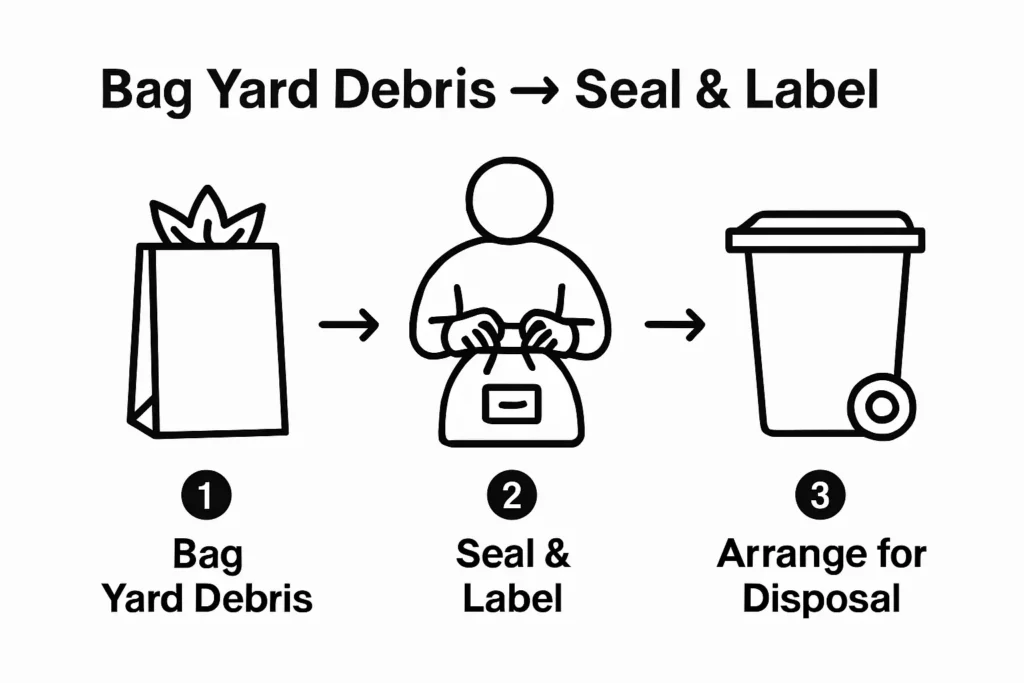
The final preparation stage of yard debris management involves carefully sealing and labeling your bags, transforming a simple collection into an organized, efficient disposal process. Proper sealing prevents spillage, maintains bag integrity, and ensures smooth waste collection. Begin by folding the top of each bag carefully, creating a clean, tight seal that prevents debris from escaping during transport or storage.
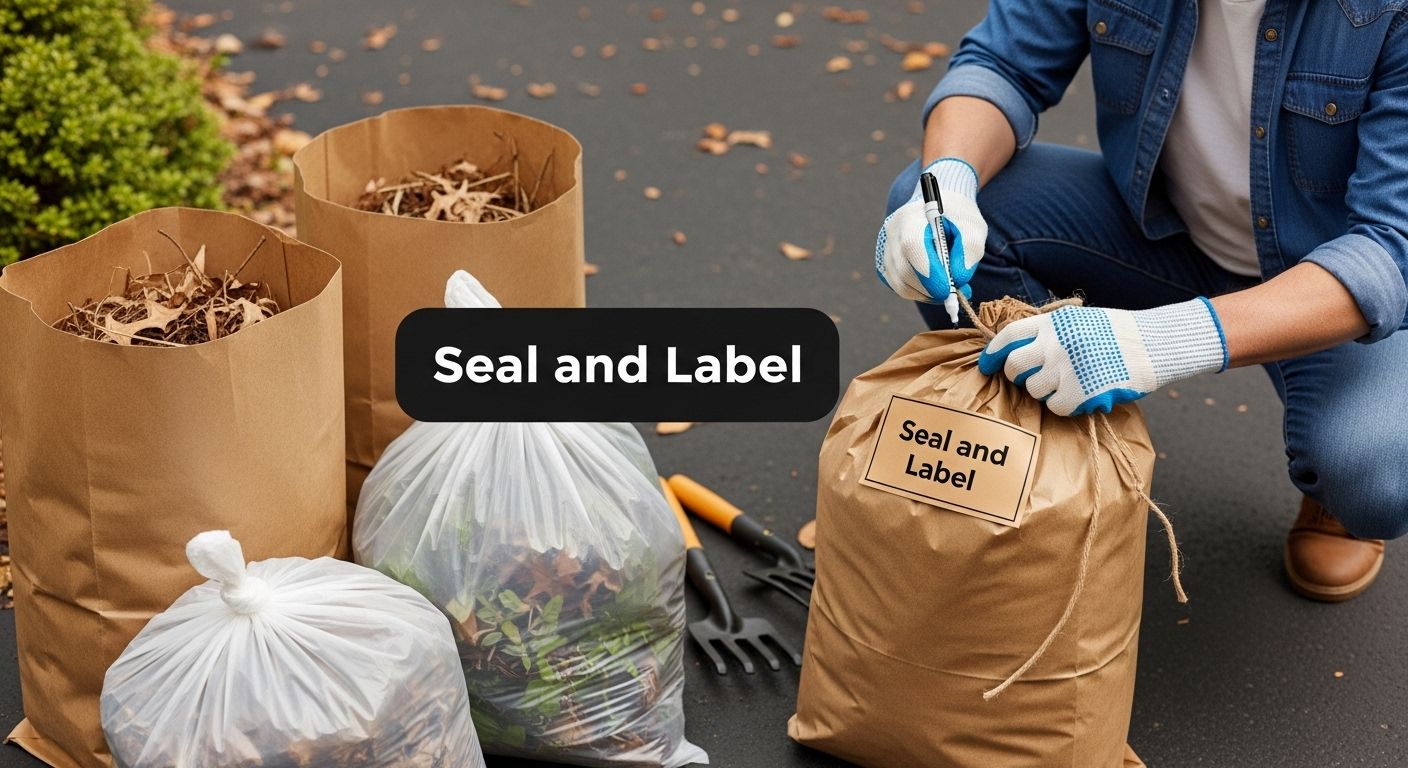
For paper yard waste bags, use the built-in fold-over method provided by most manufacturers. These bags typically have designated folding lines that allow for a secure closure without additional materials. Plastic contractor bags require a different approach use sturdy twist ties or specialized bag closures that create a tight seal without risking tears or punctures. Avoid using loose string or thin twine, which can break under the weight of yard debris and create messy spills.
Check out our recommended yard waste management strategies for additional insights into proper bag preparation. Labeling becomes crucial, especially if you’re managing multiple types of yard waste or preparing for municipal collection. Use a permanent marker to clearly note the contents and date of collection on each bag.
Consider these essential labeling and sealing tips:
- Write contents clearly and legibly
- Include the date of collection
- Note any special handling requirements
- Ensure label is visible from multiple angles
Pay close attention to local municipal guidelines regarding yard waste collection. Some areas have specific requirements for bag preparation, weight limits, and acceptable materials. Proper labeling can help prevent your yard waste from being rejected during collection, saving you time and potential additional disposal fees.
Once sealed and labeled, arrange your bags in a dry, accessible location away from direct sunlight and moisture. Position them near the street or designated collection area, ensuring they are easily visible and accessible to waste management personnel. By taking these final careful steps, you transform your yard debris from a messy collection of waste into a professionally prepared, easily manageable disposal package.
Step 6: Schedule Disposal or Pick-Up Service
Scheduling yard debris disposal transforms your carefully prepared waste into a seamless, stress-free cleanup experience. Understanding your local waste management options is crucial for efficient yard waste removal. Begin by contacting your municipal waste services or local waste management department to confirm specific collection guidelines, schedules, and any unique requirements for yard debris disposal.
Municipal services typically offer seasonal yard waste collection during spring and fall, with specific pickup dates and preparation guidelines. Some communities provide curbside collection, while others require residents to drop off yard waste at designated transfer stations. Contact your local services at least a week before your planned cleanup to understand weight limits, acceptable materials, and preferred bagging methods. Timing is everything when coordinating yard waste removal.
Explore our comprehensive bulk pickup solutions to understand alternative disposal options beyond municipal services. For larger properties or significant yard waste volumes, professional junk removal services can provide more flexible and immediate solutions. Professional services excel at handling large-scale yard debris removal, especially when municipal options prove insufficient.
Consider these key factors when scheduling yard waste disposal:
- Confirm local collection schedules
- Understand weight and volume restrictions
- Check acceptable material guidelines
- Verify required preparation methods
- Determine potential additional fees
If municipal services cannot accommodate your yard waste, private waste removal companies offer convenient alternatives. These services often provide same-day or next-day pickup, handling everything from bagging to transportation. Some companies specialize in eco-friendly disposal, ensuring your yard debris is composted or recycled whenever possible.
Once you’ve confirmed your disposal method, prepare your bags strategically. Place them in an easily accessible location, ensuring they meet all specified guidelines. Double-check bag weight, contents, and positioning before collection day. By planning carefully and understanding your disposal options, you’ll transform yard waste cleanup from a potential headache into a smooth, efficient process.
Turn Yard Debris Headaches Into Hassle-Free Solutions
Are you overwhelmed by the sheer volume of bags and the constant struggle with heavy, wet debris from your yard cleanup? If the worries about proper bagging, municipal rules, or just getting the job done right are keeping you from enjoying your outdoor space, you’re not alone. Many homeowners feel frustrated when yard waste piles up or they hit a roadblock trying to organize, label, and haul everything away. The strategies in this article — like assessing your debris, using the right bags, and efficient pickup scheduling — are just the beginning. But what if you could skip the stress and hand off the heavy lifting to a team of local professionals?
With C&M Carting Solutions, you can take care of everything in one step. Our Litchfield County yard debris removal brings fast, eco-friendly pickups, transparent pricing, and real human support to your curbside. Experience convenience that goes beyond simple cleanup, so you can reclaim your weekends and enjoy a tidy yard without the worry. Ready for an easier cleanup? Get a free quote now and let our experts handle your bagged debris the right way. For more tips or to plan your next project, visit our Yard Debris Removal Tips or Yard Debris Disposal Solutions pages. Start your stress-free yard cleanup with C&M Carting Solutions today.
Frequently Asked Questions
What types of bags are best for yard debris?
Using heavy-duty kraft paper bags is usually best for organic materials like leaves and grass clippings, while plastic contractor bags are ideal for heavier items like branches and wet yard waste. A combination of both bag types often works best.
How can I efficiently bag yard debris without making it too heavy?
To avoid making bags too heavy, start with lighter materials like dry leaves, then gradually add heavier items on top. Aim to keep each bag under 40 pounds for easier handling.
What tools do I need for effective yard debris cleanup?
Essential tools include sturdy work gloves, a rake, pruning shears or loppers, and possibly a leaf blower for larger jobs. Safety gear, like safety glasses and closed-toe shoes, is also important.
How should I seal and label my yard debris bags?
Seal each bag securely by folding the top down tightly. Use a permanent marker to label the contents and date on each bag, ensuring that labels are legible and visible from multiple angles.