


Trying to rent a dumpster in Connecticut sounds simple until you see all the options and the rules involved. Most people are surprised to learn there are over four different dumpster sizes and strict local regulations that could result in fines if ignored. What catches everyone off guard is this: with the right prep and a few quick checks, you can skip all the hassle, save money, and avoid last-minute headaches that catch typical renters off guard.
Table of Contents
- Understanding The Dumpster Rental Process
- How To Choose The Right Dumpster Size
- Steps For Scheduling Delivery And Pickup
- Tips For Emergency Or Same-Day Dumpster Rental
Quick Summary
| Takeaway | Explanation |
|---|---|
| Understand local regulations | Familiarize yourself with Connecticut’s waste management statutes to ensure compliance and avoid fines. |
| Choose the right dumpster size | Assess project waste volume to select an appropriately sized dumpster, preventing additional costs and logistical issues. |
| Plan for delivery logistics | Ensure clear communication with the rental service about delivery conditions, access, and permits needed for smooth operation. |
| Prepare for emergencies | Have necessary project details ready to expedite same-day dumpster rental, including waste type and site access information. |
| Consult professionals for guidance | Work with experienced waste management services to navigate regulations, maximizing efficiency and compliance throughout the process. |
Understanding the Dumpster Rental Process
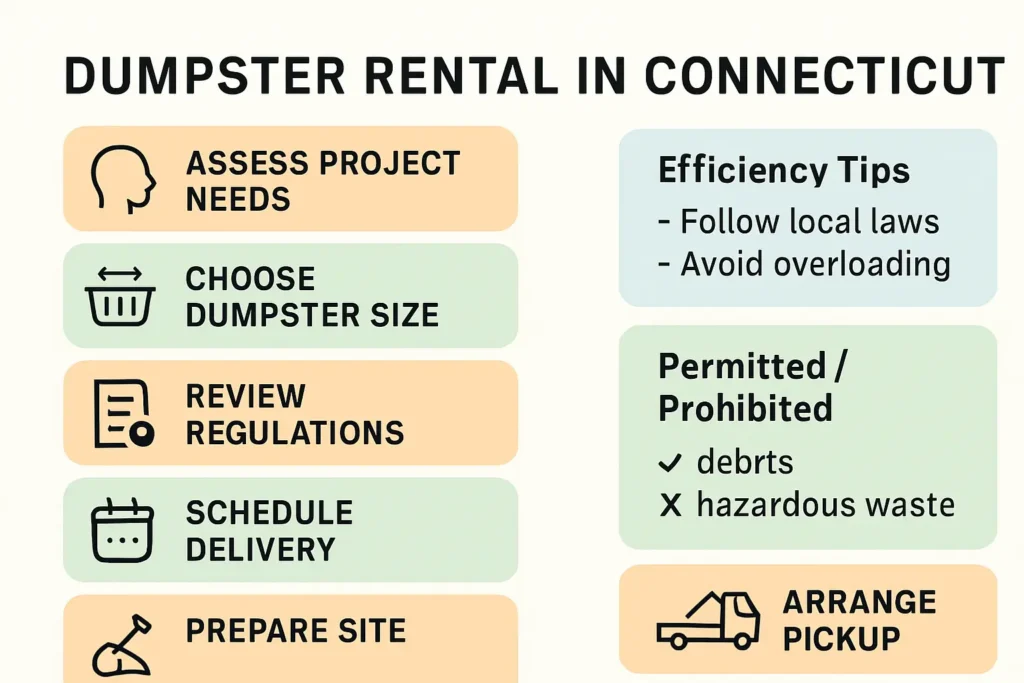
Renting a dumpster involves more than simply ordering a large container. For Connecticut residents and businesses, the process requires careful planning and understanding of local regulations and disposal guidelines. Navigating the dumpster rental process efficiently can save time, money, and potential legal complications.
Key Components of Dumpster Rental Preparation
Before securing a dumpster, several critical factors must be considered. First, assess your specific waste removal needs. Are you managing a home renovation project, cleaning out an estate, or handling commercial debris? Each scenario requires different container sizes and waste management strategies.
The comprehensive dumpster selection guide can help you determine the most appropriate container for your specific requirements. According to the Connecticut Department of Energy & Environmental Protection, proper waste container management involves understanding local regulations and ensuring appropriate waste segregation.
Legal and Regulatory Considerations
Connecticut has specific guidelines governing waste disposal. Chapter 446d of the Connecticut General Statutes addresses solid waste management, providing critical legal definitions and operational standards. This means renters must be aware of permissible materials, weight restrictions, and placement regulations.
Key regulatory aspects include:
- Obtaining necessary permits for waste disposal
- Understanding prohibited materials
- Complying with local zoning requirements
- Ensuring proper waste segregation
Professional dumpster rental services can guide you through these complex requirements, helping you avoid potential fines or compliance issues. They understand local ordinances and can recommend the most appropriate disposal strategy for your specific project.
By thoroughly understanding the dumpster rental process, you can ensure a smooth, efficient, and compliant waste removal experience. Preparation, knowledge of local regulations, and working with experienced professionals are essential steps in managing your waste disposal needs effectively.
How to Choose the Right Dumpster Size
Selecting the appropriate dumpster size is crucial for efficient waste management and cost-effectiveness. The wrong size can lead to unnecessary expenses, multiple rentals, or insufficient space for your project’s debris. Understanding your specific waste removal needs helps you make an informed decision that saves time and money.
Assessing Your Project’s Waste Volume
Determining the right dumpster size starts with a careful evaluation of your project’s scope. According to the U.S. General Services Administration’s Sustainable Facilities Tool, factors like project type, material density, and available space significantly impact container selection. For residential projects like home renovations or estate cleanouts, different considerations apply compared to commercial construction or landscaping work.
Our comprehensive dumpster selection guide can help you navigate these choices. As Wikipedia notes about roll-off dumpsters, standard sizes range from 10 to 40 cubic yards, with each size serving different project needs. A 10-yard container might suffice for small home cleanouts, while a 40-yard container works best for major construction or demolition projects.
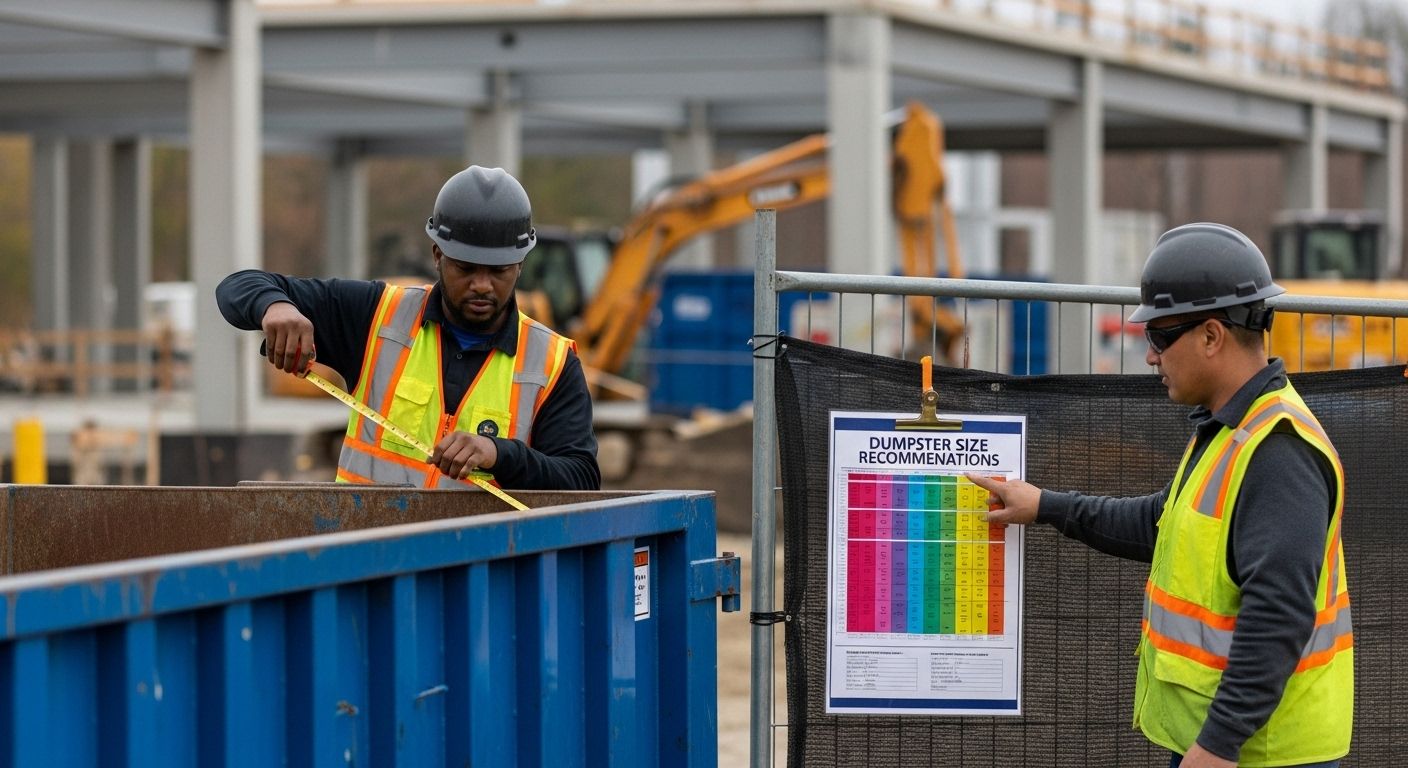
Understanding Dumpster Size Recommendations
Material type and weight play critical roles in dumpster selection. Dense materials like concrete or brick require careful consideration to avoid exceeding weight limits. Rubicon’s waste container guide recommends evaluating not just volume, but the specific characteristics of your waste.
Typical project size recommendations include:
- Small Projects (10-15 cubic yards): Garage cleanouts, minor home renovations, small landscaping work
- Medium Projects (20-30 cubic yards): Kitchen remodels, large home cleanouts, significant yard debris removal
- Large Projects (40 cubic yards): Complete home demolitions, major construction sites, commercial renovations
To help readers select the appropriate dumpster size for their project, the following table summarizes typical projects and their recommended dumpster sizes as described in the article.
| Project Type | Recommended Dumpster Size | Examples |
|---|---|---|
| Small Projects | 10-15 cubic yards | Garage cleanouts, minor home renovations, small landscaping work |
| Medium Projects | 20-30 cubic yards | Kitchen remodels, large home cleanouts, significant yard debris removal |
| Large Projects | 40 cubic yards | Complete home demolitions, major construction sites, commercial renovations |
Professional waste management experts can provide personalized guidance to ensure you select the most appropriate container for your specific needs. By carefully assessing your project’s requirements and consulting with experienced professionals, you can optimize your dumpster rental and streamline your waste removal process.
Steps for Scheduling Delivery and Pickup
Scheduling dumpster delivery and pickup is a critical phase of the rental process that requires careful planning and clear communication. Proper coordination ensures your project runs smoothly and minimizes potential disruptions to your property or work site.
Initial Scheduling and Logistics
Beginning the scheduling process involves several key considerations. According to Chapter 446d of Connecticut’s Solid Waste Management regulations, waste collectors must provide transparent information about their collection and disposal operations. This means you should expect clear communication about delivery windows, placement requirements, and pickup procedures.
When scheduling, you’ll need to provide specific details about your project location, desired rental duration, and anticipated waste volume. Our dumpster rental services can help streamline this process by walking you through the necessary information gathering.
Delivery and Placement Preparation
Preparing for dumpster delivery involves more than just selecting a convenient spot. The delivery location must meet several critical criteria:
- Ensure a flat, stable surface that can support the container’s weight
- Provide sufficient clearance for truck access
- Verify no underground utilities or obstacles exist
- Obtain necessary permits if placing the dumpster on public property
To clarify what preparations are needed before delivery, this table outlines the key checklist items for preparing a site for dumpster delivery and placement, as already discussed in the article.
| Preparation Step | Critical Notes |
|---|---|
| Select a flat, stable surface | Must support the dumpster’s weight |
| Provide sufficient truck clearance | Ensure access path is free of parked vehicles/obstacles |
| Check for underground utilities/obstructions | Helps prevent property damage |
| Obtain necessary permits (if on public property) | Confirm city/town requirements in advance |
| Communicate project timeline | Ensures proper pickup scheduling |
As outlined in the 2021 Connecticut Waste Management Guidelines, collectors are required to report the types and amounts of waste collected. This means being precise about your expected waste type can help ensure proper placement and pickup.
Timing is crucial in the delivery and pickup process. Most rental periods range from 7 to 14 days, though this can be customized based on your specific project needs. Communicate clearly about your project timeline to avoid additional fees or scheduling complications.
By understanding and preparing for the delivery and pickup process, you can ensure a seamless dumpster rental experience. Professional waste management services can guide you through each step, helping you navigate local regulations and logistical challenges with ease. Taking the time to plan carefully will save you time, money, and potential headaches during your project.
Tips for Emergency or Same-Day Dumpster Rental
Emergency dumpster rentals can be critical when unexpected waste removal needs arise. Whether you’re dealing with sudden property damage, urgent cleanouts, or time-sensitive construction projects, understanding how to quickly secure a dumpster can make a significant difference in managing your waste efficiently.
Preparing for Rapid Deployment
Quick action requires thorough preparation. According to the Connecticut Department of Energy and Environmental Protection, proper container management involves ensuring compatibility with stored waste and maintaining containers in good condition. For emergency rentals, this means having key information ready to expedite the process.
Essential details to have on hand include:
- Precise location of dumpster placement
- Estimated volume and type of waste
- Specific project timeline
- Property access information
Our emergency dumpster rental services can help streamline the process by quickly assessing your immediate needs and mobilizing resources.
Navigating Legal and Logistical Considerations
Emergency rentals still require adherence to local regulations. Chapter 446e of the Connecticut General Assembly’s Solid Waste Management Services Act defines specific terms and requirements for waste management projects. This means even in urgent situations, you must comply with local guidelines.
Key considerations for same-day rentals include:
- Verifying permit requirements for dumpster placement
- Understanding weight and material restrictions
- Ensuring proper waste segregation
- Confirming access for delivery vehicles
Professional waste management services can provide crucial guidance during emergency situations. They understand local regulations outlined in Chapter 446d of Connecticut’s Solid Waste Management statutes and can help you navigate complex logistical challenges quickly and efficiently.
By preparing in advance and working with experienced professionals, you can manage emergency waste removal needs with minimal stress. Quick communication, clear documentation, and understanding of local regulations are key to successful same-day dumpster rentals. Remember that while speed is important, maintaining proper waste management protocols remains paramount to ensure safety and compliance.
Frequently Asked Questions
What factors should I consider before renting a dumpster in Connecticut?
Before renting a dumpster, assess your waste removal needs, understand local regulations, and choose the appropriate dumpster size based on the type and volume of waste.
How do I determine the right dumpster size for my project?
To determine the right dumpster size, evaluate the scope of your project and the types of materials you’ll be disposing of. Typical sizes range from 10 to 40 cubic yards, suitable for small cleanouts to large construction projects.
What are the key legal considerations for dumpster rental in Connecticut?
Key legal considerations include obtaining necessary permits, understanding weight and material restrictions, and complying with local zoning requirements as outlined in Connecticut’s waste management regulations.
How can I prepare for same-day dumpster rental?
To prepare for a same-day dumpster rental, have essential information ready such as the exact placement location, estimated waste volume, access details, and specific project timelines to expedite the process.
Get Peace of Mind With Connecticut’s Easiest Dumpster Rental Experience
The article just clarified how overwhelming Connecticut’s local rules, size options, and tight project windows can make the dumpster rental process. If you are worried about picking the wrong container, missing a permit, or facing hidden costs, you are not alone. Many of our customers come to us after reading guides like this, realizing they need easier answers and help with challenging legal guidelines, weight restrictions, and fast delivery.
Take the stress out of your next project. Let the local team at CM Carting Solutions walk you through simple dumpster size selection and compliance checks. Enjoy transparent pricing, fast turnaround, and honest advice—whether for a renovation, clearout, or an urgent, same-day request. Ready to skip the confusion? Get your customized quote now at CM Carting Solutions and see how simple your Connecticut junk removal can be.
Recommended
- Connecticut Dumpster Rental | C&M Carting Solutions
- Dumpster Size Selection Guide for Connecticut in 2025 – C&M Carting Solutions
- Dumpster Rental in Litchfield County | C&M Carting Solutions
- Affordable 15-Yard Dumpster Rental | C&M Carting Solutions
- When to Rent Dumpster: Best Times for Disposal Needs