


Choosing the right dumpster size for your Connecticut project in 2025 sounds simple but can easily trip up even the savviest planners. Here is a surprise. Most people undershoot their waste needs by up to 20 percent, racking up extra fees and headaches they never expected. Instead of just grabbing the smallest bin to save money, the smartest move is often sizing up and avoiding expensive miscalculations. Ready to find out why bigger just might be better for your wallet?
Table of Contents
- Understanding Dumpster Sizes And Capacities
- How To Match Dumpster Size To Your Project
- Key Tips For Emergency And Same-Day Dumpster Needs
- Common Mistakes To Avoid In Dumpster Size Selection
Quick Summary
| Takeaway | Explanation |
|---|---|
| Choose the Right Size | Understand standard dumpster size categories (10-40 cubic yards) to match your project’s waste volume effectively. |
| Consider Project Type and Waste Characteristics | Take into account the type of materials (density and weight) and project duration when selecting a dumpster size to avoid additional costs. |
| Plan for Emergencies | In urgent waste scenarios, quickly assess the volume of debris and opt for a slightly larger dumpster to prevent overfilling issues. |
| Avoid Common Mistakes | Be mindful of underestimating waste volume, overlooking weight restrictions, and ignoring local regulations to ensure smooth dumpster rental. |
Understanding Dumpster Sizes and Capacities
Selecting the right dumpster size is crucial for efficient waste management and cost-effective disposal. Your project’s scope, waste volume, and specific requirements will determine the most appropriate container. Dumpster size selection involves understanding the various capacities available and matching them to your specific needs.
Standard Dumpster Size Categories
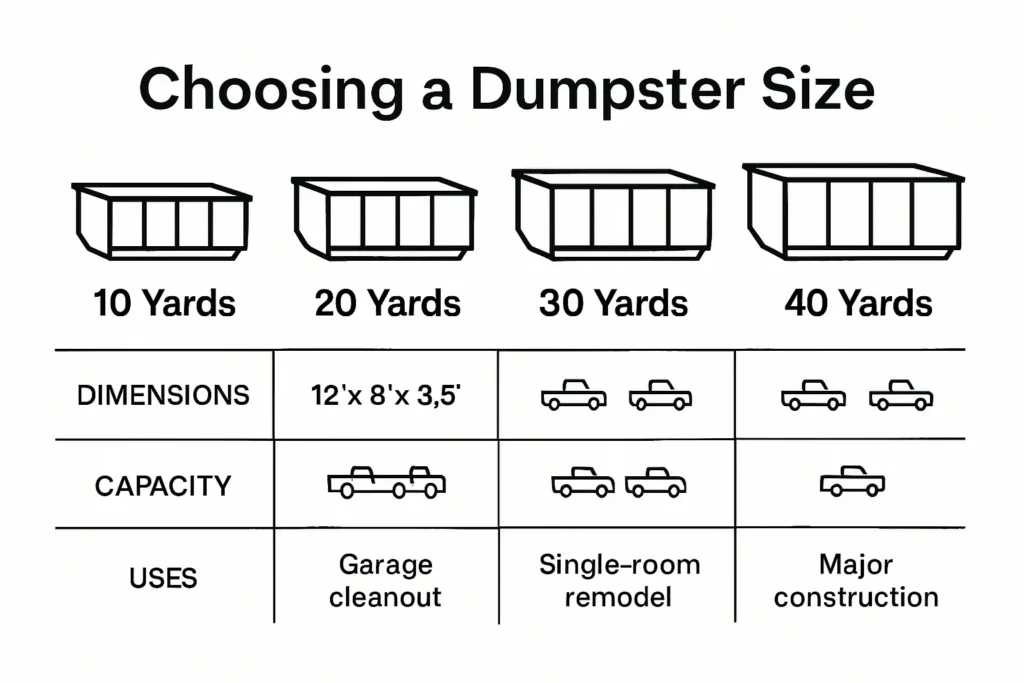
According to Buildings magazine, dumpster sizes typically range from 10 to 40 cubic yards, each designed for different project scales. The University of Maryland’s Facilities Management provides a comprehensive breakdown of container capacities:
- 10-yard dumpsters: Perfect for small residential projects like garage cleanouts or minor home renovations. These compact containers hold approximately 10 cubic yards of waste, equivalent to 3-4 pickup truck loads.
- 20-yard dumpsters: Ideal for medium-sized projects such as kitchen remodels, basement cleanouts, or small construction jobs. This size accommodates roughly 6-8 pickup truck loads of debris and is a popular choice for homeowners undertaking significant home improvement work.
- 30-yard dumpsters: Suitable for larger home renovations, commercial construction projects, and extensive property cleanouts. These containers can handle approximately 9-10 pickup truck loads of waste, making them versatile for more substantial disposal needs.
- 40-yard dumpsters: Designed for major commercial renovations, large-scale construction projects, and extensive demolition work. These massive containers can manage up to 12-16 pickup truck loads of debris.
Here is a table summarizing the standard dumpster size categories and their typical uses to help you quickly compare your options:
| Dumpster Size | Typical Use Cases | Approximate Volume (Cubic Yards) | Equivalent Pickup Loads |
|---|---|---|---|
| 10-yard | Small residential projects, garage cleanouts, minor renovations | 10 | 3-4 |
| 20-yard | Medium home remodels, basement cleanouts, small construction jobs | 20 | 6-8 |
| 30-yard | Large home renovations, commercial construction, large cleanouts | 30 | 9-10 |
| 40-yard | Major commercial/demolition projects, large-scale construction | 40 | 12-16 |
Factors Influencing Dumpster Size Selection
Choosing the right dumpster involves more than just volume. Project type, waste density, and local regulations play significant roles. For instance, construction debris might be heavier and more compact than household waste, affecting the actual capacity you can utilize. Learn more about our local dumpster rental options for Connecticut projects.
Consider these critical factors when selecting a dumpster:
- Waste Type: Different materials have varying densities. Concrete and soil are much heavier than household items, which can impact your container’s effective capacity.
- Space Constraints: Measure the available area where the dumpster will be placed. Ensure there’s sufficient room for delivery, placement, and pickup without obstructing access or violating local regulations.
- Project Duration: Longer projects might require larger containers or multiple rentals to manage waste efficiently.
Professional waste management experts recommend always selecting a slightly larger container than you initially estimate. This approach prevents the need for additional rentals and ensures you have adequate space for unexpected waste volumes. By understanding these size categories and considerations, you can make an informed dumpster size selection that meets your specific disposal requirements while optimizing cost and efficiency.
How to Match Dumpster Size to Your Project
Matching the right dumpster size to your specific project requires careful planning and assessment. Selecting an inappropriate container can lead to unnecessary expenses, multiple rentals, or inefficient waste management. The key is to accurately estimate your project’s waste volume and choose a container that provides optimal capacity and value.
Residential Project Dumpster Selection
For residential projects, dumpster size selection depends on the scope and complexity of your task. The Connecticut Department of Energy and Environmental Protection recommends creating a comprehensive waste management plan that considers the estimated types and quantities of materials generated.
- Home Renovation Projects:
A 20-yard dumpster typically works best for medium-scale home renovations like kitchen remodels, basement cleanouts, or replacing flooring. These projects usually generate 6-8 pickup truck loads of debris. If you are tackling a major home addition or whole-house renovation, consider a 30-yard container to accommodate larger waste volumes. - Landscaping and Yard Waste:
Yard cleanup and landscaping projects require careful size assessment. A 10-yard dumpster suits small yard projects like tree removal or minor landscaping. For extensive landscaping involving large amounts of soil, rocks, or extensive tree and shrub removal, a 20-yard dumpster provides more appropriate capacity.
Commercial and Construction Project Considerations
Commercial and construction projects demand more strategic dumpster size planning. The U.S. Environmental Protection Agency’s All-Hazards Waste Management Planning Tool emphasizes the importance of pre-incident waste management planning, which applies directly to construction project waste management.
- Small Commercial Projects:
Office renovations, retail store updates, or small commercial construction typically require 20 to 30-yard dumpsters. These sizes accommodate mixed materials like drywall, wood, metal, and general construction debris. - Large Construction Sites:
Major commercial construction, demolition projects, or extensive infrastructure work demand 40-yard dumpsters. These massive containers can handle up to 16 pickup truck loads of heavy construction materials like concrete, steel, and mixed demolition waste.
Additional Dumpster Size Selection Strategies
Beyond project type, several strategic considerations can help you make the most accurate dumpster size selection. Learn more about our comprehensive dumpster rental process.
- Material Density: Heavier materials like concrete or soil occupy less volume but weigh more. Always account for material density when estimating container needs.
- Overfilling Risks: Select a slightly larger dumpster to prevent overfilling, which can result in additional fees or the need for multiple rentals.
- Local Regulations: Check local Connecticut waste disposal regulations, as some areas have specific requirements for waste management and container placement.
By carefully analyzing your project’s specific waste generation potential and considering these strategic factors, you can select the most appropriate dumpster size. This approach ensures efficient waste disposal, cost-effectiveness, and compliance with local waste management guidelines.
Key Tips for Emergency and Same-Day Dumpster Needs
Emergency waste disposal situations demand quick, strategic decision-making and precise dumpster size selection. Whether you are facing an unexpected home cleanup, sudden renovation project, or urgent property clearance, understanding how to rapidly secure the right dumpster can save time, money, and reduce stress.
Rapid Assessment for Emergency Waste Removal
In emergency scenarios, time is of the essence. According to Dumpster Rental Experts, accurate and swift project assessment is crucial for immediate waste management. Begin by quickly evaluating the volume and type of debris you need to remove.
- Residential Emergency Scenarios:
Situations like storm damage, sudden property cleanouts, or emergency renovations require immediate waste disposal solutions. A 10 to 20-yard dumpster often provides the most versatile option for residential emergencies. These sizes can handle approximately 2-3 tons of mixed debris, accommodating various waste types from household items to light construction materials. - Commercial Urgent Clearance:
For businesses experiencing sudden cleanup needs such as water damage, fire restoration, or unexpected equipment removal, a 30 to 40-yard dumpster might be necessary. These larger containers can manage substantial volumes of mixed commercial waste efficiently.
Below is a summary table to help you quickly assess the recommended dumpster sizes for common emergency and same-day scenarios:
| Emergency Scenario | Recommended Dumpster Size | Typical Waste Type | Notes |
|---|---|---|---|
| Residential storm/property cleanup | 10–20 yard | Mixed household debris | Versatile, handles 2–3 tons |
| Emergency home renovation | 10–20 yard | Light construction/hh debris | Accommodates sudden waste surge |
| Business water/fire restoration | 30–40 yard | Commercial mixed materials | For substantial volume, rapid clearance |
| Equipment/furniture removal | 20–30 yard | Bulky items, light construction | May require 30 yard for large items |
| Demolition or large commercial | 40 yard | Heavy construction/demolition | Handles maximum volume (12-16 pickups) |
Navigating Same-Day Dumpster Rental Challenges
The Connecticut Dumpster Rental market presents unique challenges for same-day service. The Local Rental Experts emphasize several critical considerations for rapid deployment:
- Weight and Material Restrictions: Different materials have varying densities that impact container capacity. Concrete, soil, and heavy construction debris require careful weight calculations. Most standard 20-yard dumpsters can handle approximately 3.5 tons of mixed materials, but this varies based on specific waste composition.
- Permit and Placement Considerations: Emergency situations do not exempt you from local regulations. Always verify immediate placement requirements. Some Connecticut municipalities require quick permits for dumpster placement, even in urgent scenarios. Prepare documentation and contact local authorities promptly to avoid potential delays.
Strategic Approaches for Urgent Dumpster Needs
To ensure smooth same-day or emergency dumpster rental, implement these strategic approaches:
- Pre-Screening Rental Providers: Identify local dumpster rental services that offer guaranteed same-day or next-day delivery. Maintain a list of reliable providers who specialize in rapid response.
- Detailed Waste Inventory: Before contacting rental services, conduct a quick but thorough inventory of your waste. Estimate volume, list primary material types, and identify any potentially hazardous items that might require special handling.
- Flexible Size Selection: When time is critical, be prepared to compromise on exact size. A slightly larger dumpster might be preferable to waiting for the perfect-sized container.
By understanding these key strategies, you can navigate emergency and same-day dumpster needs with confidence. Quick assessment, strategic planning, and working with responsive local providers will help you manage urgent waste disposal challenges efficiently and effectively.
Remember, in emergency situations, communication and preparation are your greatest assets. Always prioritize safety, comply with local regulations, and work with experienced waste management professionals who understand the urgency of your specific situation.
Common Mistakes to Avoid in Dumpster Size Selection
Choosing the right dumpster size is more complex than many people realize. A single misstep can lead to significant financial and logistical challenges. Dumpster size selection requires careful planning, precise estimation, and understanding of potential pitfalls that can derail your waste management strategy.
Underestimating Project Waste Volume
One of the most frequent errors in dumpster rental is dramatically underestimating the total amount of waste your project will generate. According to waste management experts, this miscalculation can result in multiple expensive additional rentals or inefficient waste disposal. Waste Management Professionals recommend adding 10-20% extra capacity to your initial volume estimate to account for unexpected debris.
- Residential Renovation Miscalculations: Homeowners often underestimate demolition waste. A kitchen remodel might seem straightforward, but removing cabinets, old flooring, and wall materials can quickly fill a smaller dumpster. What appears to be a 10-yard project might actually require a 20-yard container.
- Construction Project Volume Errors: Commercial and construction projects are particularly susceptible to waste volume underestimation. Concrete, steel, drywall, and mixed construction debris can consume container space rapidly, leading to potential project delays and additional rental costs.
Overlooking Weight Restrictions and Material Limitations
Beyond volume, weight represents a critical factor many renters ignore. Learn more about our comprehensive dumpster rental guidelines. Different materials have vastly different density characteristics that dramatically impact container capacity:
- Dense Material Challenges: Concrete, soil, and heavy construction materials can quickly exceed weight limits, even if the container is not visually full. A 20-yard dumpster might have a weight limit of 3-4 tons, which can be reached with surprisingly little dense material.
- Mixed Waste Complexity: Combining lightweight materials like wood and heavy materials like concrete requires strategic loading and careful weight management. Improper mixing can lead to unexpected overage fees or safety issues during transportation.
Ignoring Local Regulations and Placement Considerations
Many renters overlook the critical importance of local regulations and placement restrictions. Municipalities often have specific guidelines about dumpster size, placement, and permitted duration of placement:
- Permit Requirements: Some Connecticut towns require specific permits for dumpster placement, especially in residential areas. Failing to secure proper permissions can result in fines or forced removal of your rental container.
- Space and Access Limitations: Measuring available space is crucial. A dumpster that technically fits your waste volume might be practically impossible to place due to narrow driveways, overhead obstacles, or proximity to structures.
Pro Tip: Always consult with local waste management professionals and verify all regulations before finalizing your dumpster rental. Unexpected complications can transform a simple waste disposal project into a complex logistical challenge.
By understanding these common mistakes, you can approach dumpster size selection with confidence. Careful planning, accurate estimation, and proactive communication with your rental provider will help you avoid costly errors and ensure a smooth waste disposal experience. Remember, the goal is not just to rent a dumpster but to do so strategically and efficiently.
Frequently Asked Questions
What dumpster sizes are available for rental in Connecticut?
Dumpster sizes in Connecticut typically range from 10 to 40 cubic yards, designed for various project scales. Common sizes include 10-yard, 20-yard, 30-yard, and 40-yard dumpsters, accommodating residential and commercial waste needs.
How do I choose the right dumpster size for my project?
To select the right dumpster size, assess the estimated volume and type of waste generated by your project. Consider factors like project type, waste density, and necessary space for placement. It’s advisable to opt for a slightly larger size to prevent overfilling.
What are the common mistakes to avoid when selecting a dumpster size?
Common mistakes include underestimating the total waste volume, overlooking weight restrictions for dense materials, and ignoring local regulations for dumpster placement. Always plan for unexpected debris and verify local guidelines before finalizing your rental.
How can I rent a dumpster for an emergency situation in Connecticut?
For emergency dumpster rental in Connecticut, quickly assess the waste volume and type, then contact local providers that guarantee same-day service. Be prepared with a detailed inventory of your waste and consider a larger dumpster to accommodate potential additional debris.
Make Dumpster Size Selection Simple With Local Solutions You Trust
Are you worried about misjudging your dumpster size and ending up with extra charges, or worse, a half-finished cleanup in your Connecticut project? It is easy to underestimate waste volume and get caught by weight limits or surprise local rules. If you want a seamless waste removal experience, you need a partner that not only supplies the right sizes but also understands your town’s regulations and your project’s unique needs. From emergency rentals to everyday cleanouts, the right support means no more guesswork or hidden fees.
At CM Carting Solutions, we combine local know-how with responsive service so you can skip the stress. Whether it is a small yard project or a major renovation, you will get personalized advice on the best dumpster rental options for Connecticut. Choosing the right size is only the start. We handle everything from prompt delivery to pickup, all for one transparent price. Ready to avoid the common pitfalls and get your space cleared fast? Request a quote now and see how easy decluttering can be when you work with your local experts.
Recommended
- Connecticut Dumpster Rental | C&M Carting Solutions
- Affordable 25-Yard Dumpster Rental | C&M Carting Solutions
- Affordable 15-Yard Dumpster Rental | C&M Carting Solutions
- Affordable 20-Yard Dumpster Rental | C&M Carting Solutions
- 12-Yard Dumpster Rentals Litchfield | C&M Carting Solutions
- Dumpster Rental in Litchfield County | C&M Carting Solutions
- Understanding Dumpster Rental Basics for Your Needs