


Estate cleanouts can feel like enormous undertakings in Connecticut. In fact, clearing out a single home can mean sorting through over 200 bags of belongings and furniture, not to mention piles of paperwork. Most people expect chaos and stress from the start. Turns out, the biggest mistake is skipping the planning phase. The secret is that having a simple checklist can turn days of confusion into a focused and even meaningful cleanout, no matter how much there is to handle.
Table of Contents
- Preparing For An Efficient Estate Cleanout
- Sorting, Donating, And Disposing Items Wisely
- Emergency And Same-Day Junk Removal Options
- Estate Cleanout Tips For Businesses And Landlords
Quick Summary
| Takeaway | Explanation |
|---|---|
| Define clear objectives before starting. | Establish your goals for the cleanout to streamline the process and manage emotional aspects effectively. |
| Conduct a comprehensive property assessment. | Take an inventory and gather important documents to prevent disputes and ensure efficient management of the estate. |
| Use a strategic sorting process. | Categorize items into keep, donate, and dispose to maximize value while reducing waste and supporting local charities. |
| Consider professional help if needed. | For complex situations, engaging experts can offer guidance and ensure a respectful, organized cleanout process. |
| Prioritize legal and regulatory compliance. | Ensure adherence to waste disposal laws and regulations to avoid penalties and legal issues during the cleanout process. |
Preparing for an Efficient Estate Cleanout

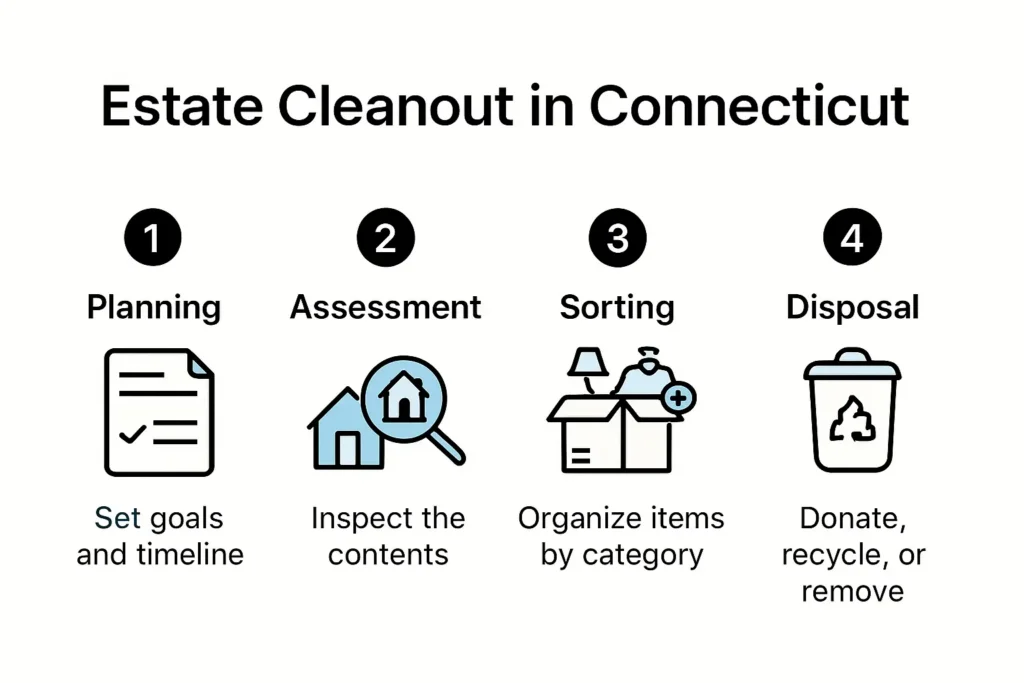
Executing an estate cleanout requires careful planning and strategic organization. Whether you’re managing a family property after a loss or preparing a home for sale, the process demands a systematic approach that balances emotional sensitivity with practical efficiency.
Define Clear Objectives and Scope
Before diving into the cleanout process, learn more about strategic property clearance by establishing precise goals. According to Texas Disposal Systems, setting clear objectives helps prioritize tasks and streamline decision making. Your goals might include:
- Preparing the property for sale
- Distributing personal belongings among family members
- Clearing out a deceased relative’s home
- Downsizing for a family member’s transition
Each objective will influence your approach, timeline, and resource allocation. A well-defined scope prevents overwhelming feelings and ensures a structured method for addressing the estate’s contents.
Comprehensive Property Assessment and Documentation
Before beginning the physical cleanout, conduct a thorough inventory and secure critical documentation. Moving experts recommend taking several preparatory steps:
Secure the Property
- Change exterior locks to prevent unauthorized access
- Restrict key distribution to essential parties
- Ensure the property remains protected during the cleanout process
Gather Essential Documents
- Collect legal paperwork including wills and deeds
- Compile bank statements and insurance policies
- Organize financial records related to the estate
Documentation provides a legal and financial framework, preventing potential disputes and streamlining administrative processes. A meticulously organized approach reduces stress and potential complications during the estate settlement.
Strategic Planning and Resource Allocation
Successful estate cleanouts require careful planning and appropriate resource management. Start by assessing the volume and types of items in each room. This initial survey helps determine:
- Required manpower
- Necessary equipment
- Potential disposal or donation strategies
- Estimated time and budget for the project
Consider enlisting professional help for complex situations involving extensive belongings or emotionally challenging circumstances. Professional estate cleanout services can provide objective assistance, ensuring efficient and respectful property clearance.
Remember that estate cleanouts are not just logistical challenges but deeply personal experiences. Approach the process with patience, empathy, and a structured mindset. Each item represents memories and history, so balance efficiency with emotional consideration.
To help clarify the preparatory process, the following table summarizes the key initial steps for an efficient estate cleanout:
| Step | Purpose | Example Actions |
|---|---|---|
| Define Objectives & Scope | Create focus, reduce overwhelm | Decide if goal is home sale, downsizing, or distributing belongings |
| Secure the Property | Protect property and belongings | Change locks, restrict keys, monitor access |
| Gather Essential Documents | Prevent disputes, aid administration | Collect wills, deeds, bank statements, insurance, legal paperwork |
| Inventory & Assessment | Plan resources and timelines | Make a room-by-room list of contents and their condition |
| Resource Allocation | Ensure efficient execution | Estimate manpower/equipment; seek professional help if needed |
Sorting, Donating, and Disposing Items Wisely


Sorting through an estate’s contents requires a strategic and compassionate approach. The process involves making thoughtful decisions about what to keep, donate, sell, or dispose of while managing emotional attachments and practical considerations.
Categorizing Items with Purpose
Learn about efficient disposal strategies for estate cleanouts. According to the Connecticut Department of Energy & Environmental Protection, creating a systematic sorting process is crucial. Begin by creating distinct categories:
Keep Categories
- Family heirlooms with significant emotional value
- Important legal and financial documents
- Items with potential future use or monetary worth
- Personally meaningful memorabilia
Donate Categories
- Gently used furniture in good condition
- Clothing and accessories
- Kitchen appliances and cookware
- Books and media collections
- Working electronics
Prioritize items that can benefit local charities or community organizations. This approach not only reduces waste but also supports those in need.
Responsible Disposal and Recycling
The U.S. Environmental Protection Agency emphasizes the importance of responsible disposal. Different items require specific handling:
Electronics and Hazardous Materials
- Schedule specialized electronic waste recycling
- Separate batteries, computers, and electronic devices
- Contact local hazardous waste collection centers
- Avoid throwing electronic items in regular trash
Furniture and Large Items
- Assess item condition for potential sale or donation
- Contact local charities for pickup services
- Consider professional junk removal for large or multiple items
- Explore local recycling options for non-donatable furniture
Maximizing Value and Minimizing Waste
To optimize the estate cleanout process, consider multiple disposal strategies:
- Host an estate sale for valuable collectibles and furniture
- Use online platforms to sell items with potential market value
- Partner with local auction houses for unique or antique items
- Consult professional appraisers for high-value possessions
Remember that each item tells a story. While efficiency is important, approach the sorting process with respect and consideration for the memories attached to personal belongings. Take time to reflect, involve family members when appropriate, and make decisions that honor the estate’s legacy while maintaining practical goals.
By implementing a thoughtful sorting strategy, you can transform the estate cleanout from a potentially overwhelming task into a meaningful process of preservation, donation, and responsible disposal.
To make decision-making easier when sorting and disposing of items, the table below outlines handling options for common estate contents:
| Category | Common Items | Recommended Action |
|---|---|---|
| Family Heirlooms & Documents | Jewelry, photos, wills | Keep/Distribute among family |
| Gently Used Furniture | Couches, chairs, tables | Donate or sell if in good condition |
| Clothing and Accessories | Clothes, shoes, bags | Donate to local charities |
| Kitchenware & Appliances | Cookware, small appliances | Donate, recycle, or dispose as appropriate |
| Books & Media | Books, DVDs, records | Donate to libraries/thrift stores, recycle excess |
| Electronics & Hazardous Waste | TVs, computers, batteries, cleaners | Recycle at designated facilities/hazardous waste |
| Non-Donatable Furniture | Broken, heavily used furniture | Junk removal or local recycling |
Emergency and Same-Day Junk Removal Options
When estate cleanouts require immediate action, understanding emergency and same-day junk removal options becomes crucial. Time-sensitive situations demand flexible, rapid solutions that can quickly address unexpected disposal needs while maintaining efficiency and professionalism.
Immediate Disposal Requirements
Explore comprehensive junk removal strategies for urgent cleanout scenarios. According to HazWaste Central, specialized waste management services are critical for handling time-sensitive removal projects. Emergency junk removal becomes essential in scenarios such as:
Urgent Cleanout Triggers
- Sudden property foreclosure
- Immediate estate settlement deadlines
- Rapid relocation requirements
- Unexpected inheritance management
- Legal or financial time constraints
Quick response times can prevent potential legal complications, property damage, and emotional stress associated with prolonged estate management.
Specialized Waste Management Approaches
Understanding junk hauling specifics helps streamline emergency removals. The USA Waste & Recycling highlights several critical considerations for rapid disposal:
Emergency Removal Strategies
- Immediate on-site assessment
- Rapid scheduling capabilities
- Comprehensive removal services
- Proper sorting and disposal protocols
- Environmentally responsible waste management
Professional services offer structured approaches that balance speed with responsible disposal, ensuring minimal disruption during time-sensitive estate cleanouts.
Navigating Logistical Challenges
Emergency junk removal requires strategic planning and quick decision making. Consider these essential steps:
- Contact multiple removal services for immediate quotes
- Verify service availability and response times
- Understand precise removal and disposal capabilities
- Confirm insurance and liability coverage
- Request detailed documentation of removal process
Successful emergency estate cleanouts demand a combination of preparedness, professional support, and strategic planning. By understanding available resources and maintaining flexible approaches, you can effectively manage unexpected disposal challenges while preserving the integrity of the estate settlement process.
Remember that each emergency scenario is unique. Prioritize communication, remain adaptable, and seek professional guidance to navigate complex removal requirements efficiently and compassionately.
Estate Cleanout Tips for Businesses and Landlords
Businesses and landlords face unique challenges when managing estate cleanouts, requiring a strategic approach that balances legal compliance, financial considerations, and efficient property management. The process demands careful planning and execution to minimize disruption and maximize property value.
Legal and Regulatory Compliance
Understand comprehensive cleanout protocols for commercial and residential properties. According to the Connecticut Department of Energy and Environmental Protection, businesses and landlords must adhere to strict waste disposal regulations. Key compliance considerations include:
Regulatory Requirements
- Proper hazardous waste identification and disposal
- Compliance with local and state environmental regulations
- Documentation of waste removal processes
- Adherence to health and safety standards
- Maintaining proper disposal records
Failure to comply with these regulations can result in significant financial penalties and potential legal complications.
Strategic Property Clearing Approaches
The Connecticut Department of Social Services highlights several strategic approaches for effective estate cleanouts. Businesses and landlords should consider:
Disposal and Donation Strategies
- Comprehensive inventory of property contents
- Assessment of item value and potential donation
- Coordination with local charitable organizations
- Efficient sorting of salvageable and disposable items
- Maximizing potential revenue from valuable items
Professional cleanout services can provide objective assistance, ensuring a systematic and efficient approach to property clearing.
Minimizing Financial and Operational Disruption
Effective estate cleanouts require a balanced approach that minimizes financial and operational impacts. Key strategies include:
- Rapid assessment of property condition
- Quick turnaround for property preparation
- Minimizing vacancy periods
- Reducing potential property damage
- Implementing cost-effective disposal methods
The Connecticut Department of Public Health emphasizes the importance of thorough cleaning and proper waste management to prevent potential health risks and property value depreciation.
Businesses and landlords must approach estate cleanouts as strategic operations. By combining thorough planning, regulatory compliance, and efficient execution, property managers can transform potentially challenging situations into opportunities for property optimization and potential revenue generation.
Remember that each estate cleanout is unique. Flexibility, professional guidance, and a comprehensive approach are crucial to successfully navigating these complex property management scenarios.
Frequently Asked Questions
What are the first steps in preparing for an estate cleanout in Connecticut?
Before starting an estate cleanout, define clear objectives for the process, conduct a comprehensive property assessment, and secure important documents. This initial planning helps streamline the cleanout and manage emotional aspects effectively.
How can I sort items during an estate cleanout?
Items should be categorized into three main groups: keep, donate, and dispose. Prioritize family heirlooms and important documents for keeping, while gently used items can be donated. Ensure responsible disposal practices for items that cannot be kept or donated.
What do I do with hazardous materials during an estate cleanout?
Hazardous materials, such as electronic waste and chemicals, require special handling. Contact local hazardous waste collection centers or professionals for proper disposal to ensure safety and legal compliance.
Are there professional services available for estate cleanouts in Connecticut?
Yes, professional estate cleanout services are available to assist with complex situations. They offer guidance and ensure organized, respectful cleanouts while helping to manage large volumes of items efficiently.
Make Your Connecticut Estate Cleanout Stress-Free and Simple
You have just learned how exhausting and emotional an estate cleanout can be in Connecticut. From overwhelming sorting tasks to urgent deadlines and sensitive family needs, handling hundreds of items and complying with local disposal rules only adds to the pressure. Whether you are clearing out a loved one’s home or prepping a property for sale, the checklist and strategies from this guide show the importance of streamlined planning, quick turnarounds, and responsible disposal.
Do not let the details hold you back. The team at C&M Carting Solutions understands that every estate cleanout brings personal stories and unique challenges. We specialize in fast and eco-friendly estate cleanouts, respectful handling of your loved one’s belongings, and reliable disposal—including same-day service for urgent situations. Ready to take the next step? Get a fast, transparent estimate now by visiting our online quote request page and see how we can simplify your entire cleanout process. Your peace of mind starts with the right help—contact us today and let us handle the heavy lifting for you.