


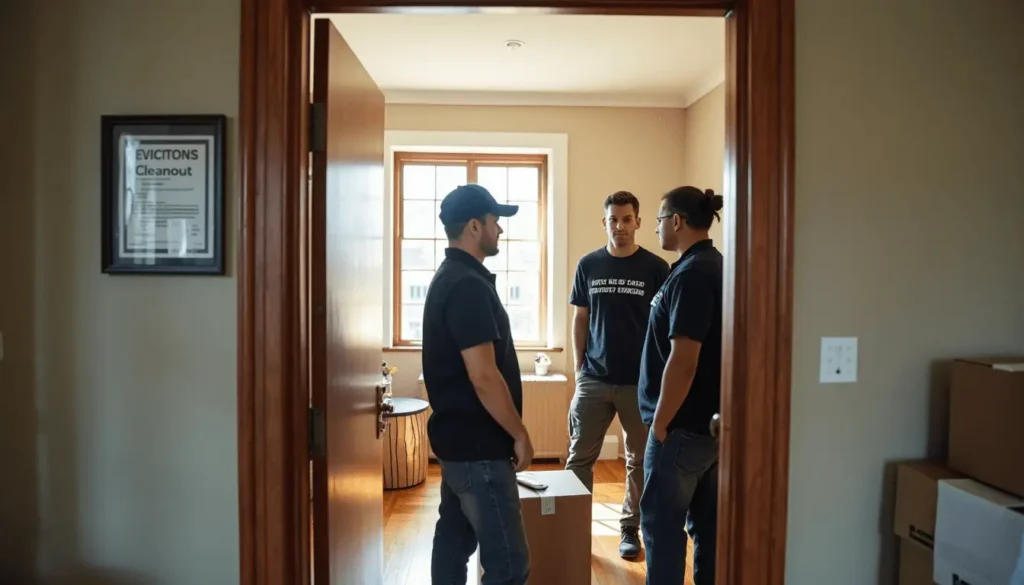
Eviction cleanouts in Connecticut bring more than just a broom and a mop. Here’s a wild fact: landlords are legally required to store tenant belongings for a minimum of 30 days after eviction. That surprises most people expecting a quick turnaround. The twist is that skipping these steps can land property owners in serious legal trouble, turning what looks like an easy cleanout into a costly mistake.
Table of Contents
- What Is An Eviction Cleanout Service?
- Step-By-Step Guide To Eviction Cleanouts
- Handling Emergency And Same-Day Cleanouts
- Choosing The Right Cleanout Partner In Connecticut
Quick Summary
| Takeaway | Explanation |
|---|---|
| Legal Compliance is Crucial | Property owners must follow Connecticut’s legal protocols, securing a court judgment before initiating eviction cleanouts to ensure tenant rights are respected and to avoid potential legal complications. |
| Systematic Cleanout Process | A methodical approach to eviction cleanouts includes comprehensive property assessments, documenting items, and adhering to local regulations for handling tenant belongings and debris disposal. |
| Choosing a Professional Partner | Selecting a cleanout partner with expertise in local laws, proven documentation practices, and a commitment to ethical standards is essential for navigating the complexities of eviction cleanouts effectively. |
| Handling Tenant Belongings Responsibly | Landlords are required to securely store tenant belongings for at least 30 days post-eviction and must provide written notice to tenants regarding the recovery of items, ensuring adherence to state guidelines. |
| Emergency Cleanouts Require Swift Action | In urgent situations, property owners must quickly verify legal standing and follow detailed safety and compliance protocols to ensure rapid yet lawful eviction cleanouts. |
What Is an Eviction Cleanout Service?
An eviction cleanout service represents a specialized professional solution for property owners and managers dealing with the complex aftermath of tenant removals. When tenants are legally required to vacate a property, significant challenges often arise in clearing out abandoned belongings, preparing the space for future occupancy, and managing potential property damage.
The Legal and Practical Framework of Eviction Cleanouts
In Connecticut, eviction cleanouts follow a strict legal protocol. Research from the Connecticut Judicial Branch indicates that landlords must first obtain a court judgment through Summary Process before initiating property clearance. This legal requirement ensures tenant rights are protected while providing property owners a structured pathway to reclaim their property.
Typically, an eviction cleanout service involves comprehensive removal of personal items, furniture, appliances, and potential debris left behind after a tenant’s involuntary departure. Professional teams systematically sort, remove, and dispose of belongings following local regulations and ethical guidelines. This process goes beyond simple trash removal, requiring careful documentation, potential item storage, and responsible disposal methods.
Key Components of Professional Eviction Cleanout Services
Eviction cleanout professionals bring specialized expertise to a challenging situation. Their services typically include:
- Comprehensive Property Assessment: Detailed evaluation of remaining items, potential damage, and cleanup requirements
- Legal Compliance: Adherence to local and state regulations regarding tenant property removal
- Efficient Removal: Systematic sorting, hauling, and appropriate disposal of abandoned possessions
- Property Restoration: Cleaning and preparing the space for potential re-rental or sale
Learn more about our specialized eviction cleanout process.
Property owners face significant challenges during evictions. Beyond the emotional and legal complexities, the physical task of clearing a property requires precision, respect, and professional handling. Professional eviction cleanout services mitigate potential conflicts, reduce personal liability, and streamline the transition between tenants.
Understanding the nuanced nature of eviction cleanouts is crucial. These services are not merely about removing unwanted items but about managing a sensitive transition with professionalism, legal awareness, and compassionate efficiency. For Connecticut property owners, partnering with experienced professionals ensures a smooth, compliant, and stress-reduced property recovery process.
Step-by-Step Guide to Eviction Cleanouts
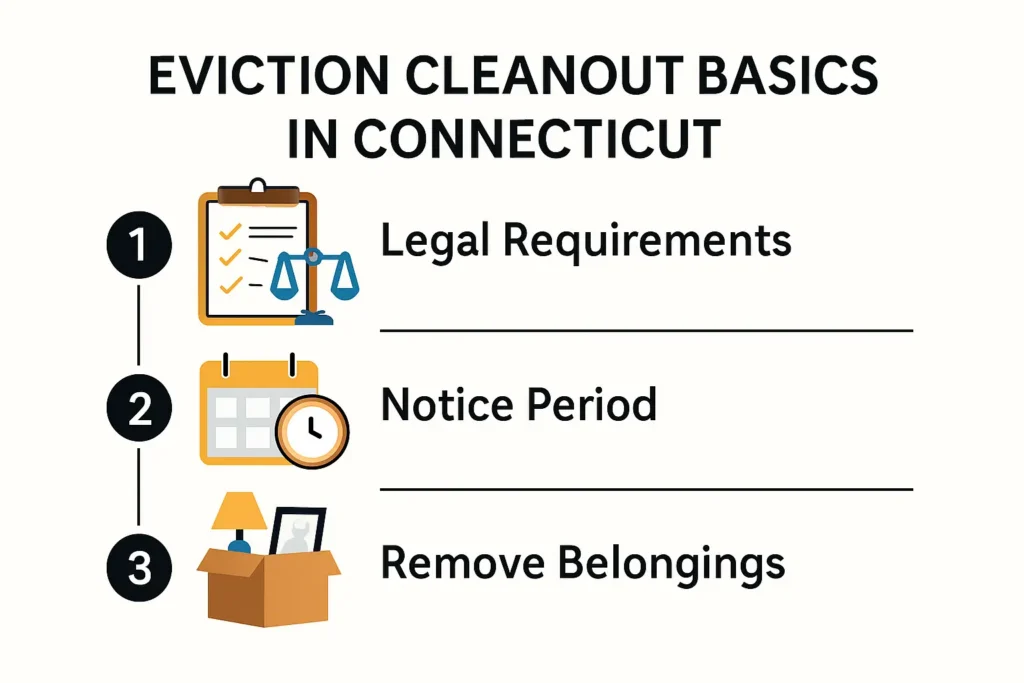
Navigating an eviction cleanout requires careful planning, legal understanding, and systematic execution. Property owners in Connecticut must follow a precise process to ensure compliance with state regulations and protect both tenant and property rights.
Legal Preparation and Documentation
Before initiating an eviction cleanout, landlords must complete critical legal steps. The United Way of Connecticut emphasizes the importance of obtaining a formal court judgment through Summary Process. This involves:
- Serving a proper Notice to Quit to the tenant
- Obtaining a court judgment for possession
- Documenting all communication and legal proceedings
According to Connecticut Judicial Branch guidelines, landlords must provide tenants with sufficient time to remove their belongings before conducting a cleanout. State law requires a structured approach that respects tenant property rights while protecting the property owner’s interests.
Systematic Cleanout Process
Once legal requirements are met, the actual cleanout process becomes a methodical operation. Property owners should:
- Conduct a comprehensive initial property assessment
- Inventory all remaining items
- Photograph the property condition
- Separate valuable items from debris
- Properly store or dispose of tenant belongings according to local regulations
Learn more about our comprehensive property cleanout strategies.

Here is a table summarizing the step-by-step eviction cleanout process for Connecticut property owners:
| Step | Action | Purpose |
|---|---|---|
| 1 | Serve Notice to Quit | Formally notify tenant of eviction process |
| 2 | Obtain Court Judgment | Secure legal right to possession of property |
| 3 | Document Legal Proceedings | Maintain evidence for compliance and risk management |
| 4 | Initial Property Assessment | Evaluate remaining items and damage |
| 5 | Inventory & Photograph Items | Create record for legal and recovery purposes |
| 6 | Separate & Sort Belongings | Identify valuables vs. debris for proper handling |
| 7 | Secure Storage of Belongings | Comply with 30-day storage law & safeguard tenant property |
| 8 | Proper Disposal of Unclaimed Items | Complete cleanout in accordance with local regulations |
Handling Tenant Belongings and Final Steps
Connecticut law provides specific guidelines for handling abandoned property. Research from the Connecticut General Assembly indicates that landlords must store tenant belongings for at least 30 days, giving tenants an opportunity to reclaim their items. During this period, property owners should:
- Create a detailed inventory of all items
- Store items securely
- Provide written notice to the tenant about item recovery
- Follow legal protocols for disposing of unclaimed items
Successful eviction cleanouts require a delicate balance of legal compliance, practical efficiency, and professional handling. By following these systematic steps, property owners can navigate the challenging process of clearing a property while minimizing potential conflicts and legal complications.
Remember that each eviction scenario is unique. Professional cleanout services can provide invaluable support in managing these complex situations, ensuring a smooth transition and protecting the property owner’s interests throughout the process.
Handling Emergency and Same-Day Cleanouts
Emergency and same-day eviction cleanouts represent critical scenarios requiring immediate action and specialized professional intervention. Property owners facing urgent situations need a strategic approach to quickly and legally clear a property while maintaining compliance with Connecticut state regulations.
Immediate Legal Considerations
Research from the Connecticut General Assembly highlights that emergency cleanouts demand precise legal navigation. When a property is suddenly vacated or requires immediate clearance, landlords must first confirm their legal standing. This involves verifying:
- Confirmed court judgment for property possession
- Proper documentation of tenant departure
- Compliance with state notification requirements
- Verification of abandoned property status
Under Connecticut law, landlords must provide written notice to the tenant’s last known address, indicating the intent to enter and inventory belongings. This notification creates a critical legal safeguard, protecting property owners from potential claims of unauthorized property removal.
Rapid Response Cleanout Strategies
Successful emergency cleanouts require a methodical yet swift approach. Professional services specialize in quickly assessing, documenting, and clearing properties while maintaining legal integrity. Key strategies include:
- Immediate property securing and assessment
- Comprehensive photographic documentation
- Systematic sorting of tenant belongings
- Secure storage of recoverable items
- Efficient debris and unwanted item removal
Explore our emergency property cleanout solutions.
Safety and Compliance Protocols
Emergency cleanouts demand rigorous safety and compliance protocols. Connecticut housing regulations mandate that landlords maintain specific standards during property transitions. Professional cleanout teams must:
- Wear appropriate personal protective equipment
- Follow hazardous material handling guidelines
- Respect tenant privacy rights
- Maintain detailed inventories of removed items
- Ensure proper disposal of waste and debris
navigating emergency cleanouts requires a delicate balance between swift action and legal precision. Property owners benefit significantly from partnering with experienced professionals who understand the complex regulatory landscape of tenant property removal.
Understanding that each emergency cleanout scenario presents unique challenges, property owners should prioritize working with specialized services that can respond quickly while maintaining full legal compliance. The goal is not just rapid property clearance but a systematic, respectful approach that protects all parties involved.
Choosing the Right Cleanout Partner in Connecticut
Selecting the appropriate cleanout partner is a critical decision for property owners navigating the complex landscape of eviction and property clearance in Connecticut. The right service provider can mean the difference between a smooth, legally compliant process and potential costly complications.
Essential Criteria for Cleanout Service Selection
Research from legal experts emphasizes the importance of choosing a cleanout partner with comprehensive understanding of local regulations. Property owners should evaluate potential services based on several key factors:
- Legal Compliance: Demonstrated knowledge of Connecticut eviction and property clearance laws
- Documentation Practices: Ability to provide detailed inventories and photographic evidence
- Professional Credentials: Proper licensing, insurance, and professional certifications
- Local Experience: Specific expertise in Connecticut property management and eviction processes
Connecticut’s unique legal landscape requires a service provider who understands the nuanced requirements of tenant property removal. The Connecticut General Assembly mandates specific procedures for handling abandoned property, making local expertise crucial.
Below is a table outlining essential criteria to consider when selecting a professional eviction cleanout partner in Connecticut:
| Criterion | Why It Matters | Sample Indicators |
|---|---|---|
| Legal Compliance | Ensures lawful and risk-free cleanouts | Knowledge of CT eviction statutes, track record |
| Documentation | Critical for legal protection | Inventories, photos, written protocols |
| Professional Credentials | Confirms legitimacy & coverage | Licensing, insurance, certifications |
| Local Experience | Understands state-specific challenges | CT property references, prior evictions handled |
| Comprehensive Services | Provides end-to-end solutions | Storage, disposal, emergency response |
Evaluating Service Capabilities
Beyond basic cleanout services, property owners should look for comprehensive solution providers. Key capabilities to consider include:
- Comprehensive property assessment
- Secure item storage and inventory management
- Responsible disposal and recycling practices
- Emergency and same-day response capabilities
- Transparent pricing and detailed reporting
Discover our comprehensive cleanout solutions.
Risk Mitigation and Professional Standards
Choosing the right cleanout partner is fundamentally about risk management. Local housing regulations impose strict requirements on property maintenance and tenant property handling. A professional service should offer:
- Detailed written protocols for property clearance
- Comprehensive insurance coverage
- Proven track record of successful cleanouts
- Clear communication and documentation processes
- Commitment to legal and ethical standards
Navigating eviction cleanouts requires more than simply removing items. It demands a sophisticated approach that balances legal compliance, logistical efficiency, and professional respect for all parties involved.
Property owners in Connecticut face unique challenges in managing tenant transitions. The right cleanout partner serves as more than a service provider – they become a critical ally in protecting property interests while maintaining legal and ethical standards. Careful selection ensures a smooth, compliant, and stress-reduced property recovery process that minimizes potential legal and financial risks.
Frequently Asked Questions
What is an eviction cleanout service?
An eviction cleanout service is a professional solution designed to help landlords and property managers clear out a rental property after a tenant has been legally evicted. This process includes the removal of personal belongings, furniture, and debris, while adhering to local regulations.
What are the legal requirements for eviction cleanouts in Connecticut?
In Connecticut, landlords must obtain a court judgment through the Summary Process before initiating an eviction cleanout. They are also required to store tenant belongings for at least 30 days and provide written notice to the tenant about item recovery to comply with state guidelines.
How long do landlords need to store tenant belongings after an eviction?
Landlords in Connecticut are legally required to store tenant belongings for a minimum of 30 days after the eviction. During this time, tenants have the opportunity to reclaim their items.
What should I consider when choosing a cleanout partner in Connecticut?
When selecting a cleanout partner, consider their knowledge of local regulations, experience with eviction cleanouts, documentation practices, and their ability to handle both the legal and logistical aspects of the cleanout process.
Streamline Your Connecticut Eviction Cleanout Today
Dealing with an eviction cleanout in Connecticut often comes with unexpected legal steps and strict timelines. As discussed in the article, missing any step can lead to extra costs and unnecessary stress, especially with Connecticut’s law that requires safe storage of tenant belongings for at least 30 days. Many landlords and property managers find it overwhelming to juggle documentation, item removal, and compliance all at once. That is where local expertise makes all the difference.
Let our family-owned team at C&M Carting Solutions guide you through every phase of your property cleanout safely and efficiently. We know how crucial legal compliance and reliable documentation are. If you want to reduce your risk and get your property ready fast, request a quick quote for eviction cleanout services now. Ready to reclaim your rental property and eliminate the worry? Connect with us here and get personalized service from local professionals who understand Connecticut’s laws and timelines.
Recommended
- Property Cleanouts in Litchfield | C&M Carting Solutions
- Apartment Cleanout Services | C&M Carting Solutions
- Hoarder & Eviction Cleanouts in Litchfield County
- The Ultimate Guide to Property Cleanouts
- Residential Junk Removal in Litchfield County | C&M Carting
- What’s The Cheapest Way to Get Rid of Junk?