



Eviction cleanouts in Connecticut are packed with legal hoops and hurdles. More than 3,700 eviction filings happen in Connecticut every single year, but the real surprise comes after the court case is over. Here is the twist that catches most people off guard: even after you win the case, strict laws still require landlords to give written notice and store a tenant’s belongings for a set period before tossing anything. Suddenly, what looked like a straightforward junk removal turns into a legal balancing act.
Table of Contents
- Understanding The Eviction Cleanout Process
- Essential Steps For Your Eviction Cleanout Checklist
- Tips For Emergency Or Same-Day Junk Removal
- Choosing A Reliable Cleanout Service In Connecticut
Quick Summary
| Takeaway | Explanation |
|---|---|
| Understand Legal Requirements | Familiarize yourself with Connecticut’s eviction laws, including the necessity of a Notice to Quit and obtaining court judgment before proceeding with a cleanout. |
| Document Property Condition | Thoroughly document the property’s condition with photographs and written records before and after the eviction to protect against potential legal disputes. |
| Navigate Personal Property Regulations | Handle evicted tenants’ belongings according to local laws, providing written notice and respecting specific retrieval timeframes for personal items left behind. |
| Prioritize Safety During Cleanout | Use protective gear and follow safety protocols during junk removal to mitigate risks associated with debris and hazardous materials. |
| Choose a Reliable Cleanout Service | Research credentials, environmental practices, and flexibility of cleanout services in Connecticut to ensure compliance and effective professional support. |
Understanding the Eviction Cleanout Process
Eviction cleanouts represent a complex and sensitive process that requires careful navigation of legal requirements and practical considerations. In Connecticut, the eviction process involves multiple critical steps that landlords and property managers must follow precisely to ensure a legal and efficient property recovery.
Legal Framework of Eviction in Connecticut
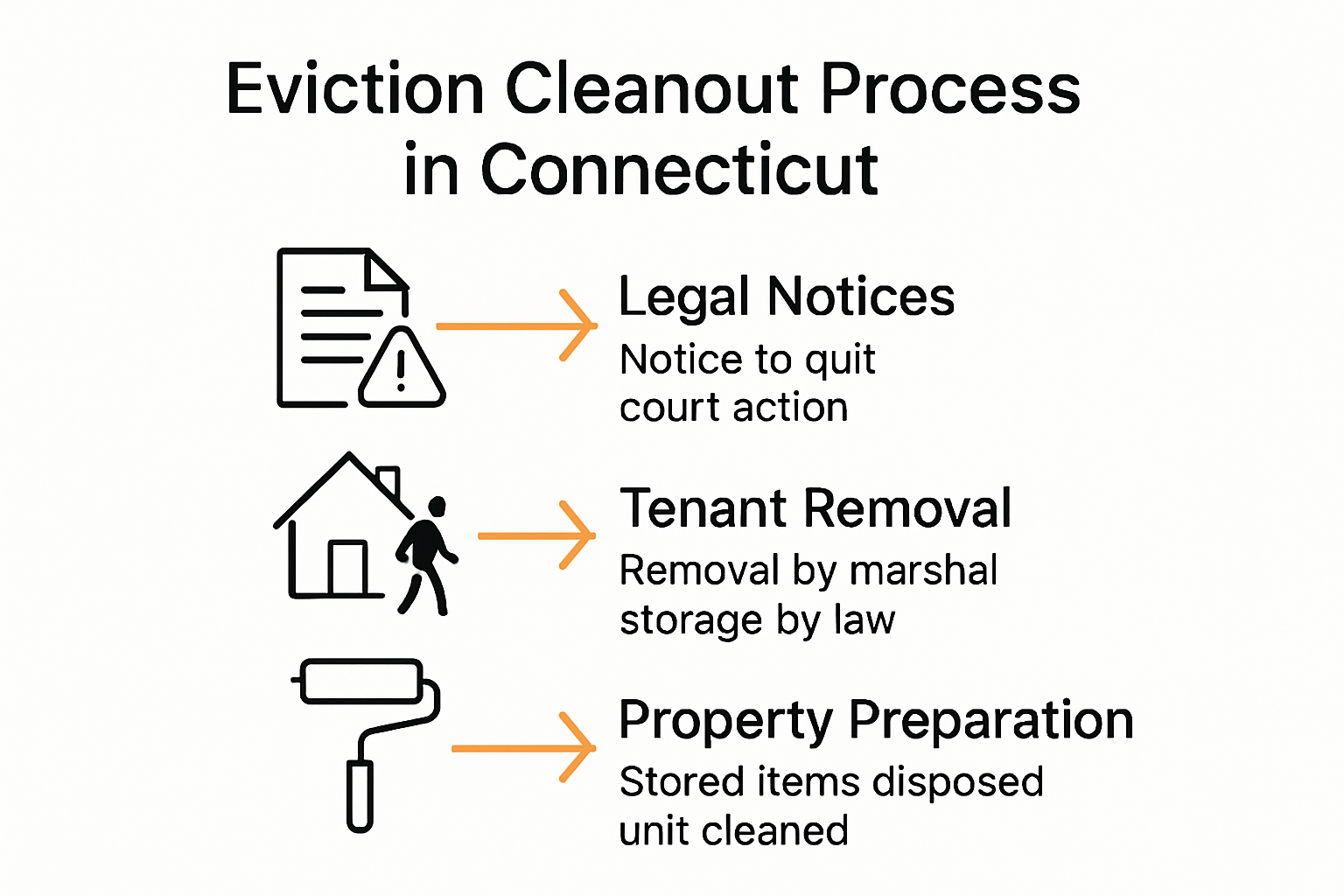
The eviction process in Connecticut, legally known as Summary Process, follows a structured approach that protects both landlord and tenant rights. According to Connecticut General Statutes, landlords must first serve a formal Notice to Quit, which provides tenants with a specific timeframe to vacate the property or resolve any underlying issues. The University of Connecticut’s Housing and Eviction Defense Clinic highlights that this initial step is crucial in establishing a legal foundation for potential removal.
After serving the Notice to Quit, landlords must obtain a court judgment for possession. This involves filing a Summons and Complaint with the local housing court, where a judge will review the case and determine whether eviction is warranted. The court provides a stay of execution period, during which tenants are legally required to vacate the premises. If tenants fail to leave voluntarily, a state marshal can legally remove them, but must provide at least 24 hours’ notice before executing the eviction.
Preparing for the Cleanout Process
Once the legal requirements are satisfied, property owners must approach the cleanout with strategic planning and sensitivity. This involves documenting the property’s condition, understanding potential personal property regulations, and preparing for the physical removal of remaining items. Our comprehensive guide on property cleanouts provides additional insights into managing this delicate process.
The cleanout process typically requires several key considerations. First, document the property’s condition thoroughly with detailed photographs and written records. This documentation protects the property owner and provides evidence of the property’s state before and after tenant removal. Second, understand local regulations regarding abandoned personal property. Connecticut law provides specific guidelines about how landlords must handle items left behind by evicted tenants, including required storage periods and notification processes.
Practical preparation involves assembling the right resources. This might include professional cleaning services, junk removal experts, potential storage solutions for tenant belongings, and potentially legal counsel to ensure all steps comply with state regulations. Property owners should also be prepared for potential emotional and logistical challenges that can arise during an eviction cleanout.
While the process can be challenging, approaching an eviction cleanout with professionalism, legal compliance, and strategic planning can help minimize stress and potential complications. Each step requires careful consideration of legal requirements, tenant rights, and practical logistics to ensure a smooth property recovery and transition.
To help clarify the legal sequence, the following table outlines the key stages of the Connecticut eviction process as discussed above:
| Step | Description |
|---|---|
| Notice to Quit | Formal written notice served to tenants, giving a timeframe to vacate or resolve issues |
| Court Judgment | Landlord files Summons and Complaint; court reviews and issues a judgment for possession |
| Stay of Execution | Court allows tenants a set period to vacate after judgment |
| Marshal Eviction | State marshal provides at least 24 hours’ notice, then legally removes tenants if they have not left |
| Personal Property Storage | Landlord must store tenant’s belongings for a required period and provide written notice |
Essential Steps for Your Eviction Cleanout Checklist
Executing a successful eviction cleanout requires meticulous planning, legal compliance, and strategic execution. Property owners and managers must approach this process systematically to protect their investments and maintain professional standards.
Legal Documentation and Property Assessment
Before initiating the cleanout, comprehensive documentation is critical. According to Connecticut General Statutes, landlords must carefully document the property’s condition. This involves creating a detailed inventory of the unit, capturing photographic evidence of the current state, and noting any damages or remaining personal property. Housing experts at UW Connecticut recommend maintaining a comprehensive record that can protect landlords from potential legal disputes.
The initial assessment should include a thorough walk-through, documenting the condition of walls, floors, appliances, and fixtures. Take high-resolution photographs from multiple angles, ensuring clear documentation of the property’s state. Create a written report that itemizes existing damages, repair needs, and the overall condition of the unit. This documentation serves as crucial evidence in potential legal proceedings and helps streamline the cleanout process.

Personal Property Management and Removal
Handling tenant belongings requires careful navigation of legal requirements. Our comprehensive property cleanout guide provides insights into managing personal property during evictions. Connecticut law mandates specific protocols for handling items left behind by evicted tenants. Property owners must provide written notice to tenants about their personal belongings, typically allowing a reasonable timeframe for retrieval.
The removal process involves several critical steps. First, separate valuable items from debris. Identify items that might have personal or financial value to the tenant. Create a detailed inventory of these items, including photographs and descriptions. Some items may require secure storage, while others might be subject to specific legal requirements for disposal. Consider consulting local legal resources to ensure full compliance with Connecticut’s tenant property regulations.
Professional Cleaning and Property Restoration
After removing personal belongings, the property requires comprehensive cleaning and potential repairs. Professional cleaning services specialize in post-eviction restoration, addressing challenges unique to these situations. This typically involves deep cleaning, sanitization, and preparing the unit for future occupancy. Apartment cleanout services can provide specialized support in thoroughly preparing the property.
The restoration process should address multiple aspects of the property. This includes deep cleaning of all surfaces, repairing any damage caused during the eviction, addressing potential maintenance issues, and ensuring the unit meets local housing standards. Pay special attention to areas like flooring, walls, appliances, and bathroom fixtures. Consider professional painting, carpet cleaning or replacement, and thorough sanitization to make the unit market-ready.
Each step of the eviction cleanout process requires careful attention to detail, legal compliance, and professional execution. By following a systematic approach and understanding local regulations, property owners can successfully navigate the challenging process of property recovery and preparation for future tenants.
To make the eviction cleanout steps more actionable, here’s a summary checklist of essential tasks discussed above:
| Step | Task | Purpose |
|---|---|---|
| 1 | Document property with photos & written notes | Protects against disputes and supports legal compliance |
| 2 | Inventory personal property left behind | Ensures accurate record-keeping and legal adherence |
| 3 | Provide written notice for retrieval | Satisfies state-required notification to former tenant |
| 4 | Separate valuables, debris, and hazardous items | Streamlines removal & sorting process |
| 5 | Secure storage of required items | Complies with legal storage regulations |
| 6 | Deep clean and sanitize unit | Prepares property for new occupancy |
| 7 | Repair any damages or maintenance issues | Restores unit to rentable condition |
Tips for Emergency or Same-Day Junk Removal
Emergency and same-day junk removal during an eviction cleanout requires swift, strategic action and careful planning. Property owners and managers must be prepared to act quickly while maintaining safety, efficiency, and legal compliance.
Safety and Preparation Protocols
Before initiating an emergency junk removal, prioritize personal safety and proper equipment. According to FEMA guidelines, protective gear is essential during debris removal. This includes wearing sturdy gloves, protective eyewear, closed-toe shoes, and dust masks to prevent potential health risks. Assess the property for hazardous materials, sharp objects, or potential structural damage that could compromise safety during the cleanout process.
Documentation is crucial during emergency removal. Our comprehensive junk removal services recommend creating a detailed inventory and photographic record before beginning the cleanout. Take high-resolution photographs of the property and itemize the contents to be removed. This documentation serves multiple purposes: it protects the property owner, provides evidence for potential insurance claims, and helps track the removal process.
Efficient Sorting and Removal Strategies
Effective emergency junk removal requires a systematic approach to sorting and disposal. Begin by categorizing items into clear groups: valuable personal property, recyclable materials, hazardous waste, and general debris. According to Federal Emergency Management guidelines, proper sorting is critical to ensure safe and efficient removal.
Create distinct zones for different types of materials. Set up separate areas for items that might be returned to the tenant, materials that can be donated, recyclables, and items destined for disposal. This approach streamlines the removal process and minimizes potential legal complications. Consider the most cost-effective disposal methods to maximize efficiency and minimize expenses.
Logistics and Disposal Considerations
Practical logistics play a crucial role in emergency junk removal. Ensure you have appropriate transportation and disposal resources readily available. This might include multiple dumpsters, removal trucks, and connections with local recycling centers or donation facilities. Plan the removal sequence carefully, starting with the most critical areas and working systematically through the property.
Pay special attention to placement of debris and removal vehicles. FEMA recommendations emphasize keeping removal areas clear of obstacles, avoiding blockage of roadways, and maintaining safe distances from structures like fire hydrants and utility poles. This ensures not only efficient removal but also maintains safety for workers and potential future occupants.
Emergency and same-day junk removal demands a combination of careful planning, swift action, and adherence to safety protocols. By approaching the process methodically and professionally, property owners can successfully navigate the challenges of rapid property clearance while minimizing potential risks and complications.
Choosing a Reliable Cleanout Service in Connecticut
Selecting a dependable cleanout service in Connecticut requires careful consideration and strategic evaluation. Property owners and managers must navigate multiple factors to ensure they partner with a professional, efficient, and legally compliant service provider.
Evaluating Service Credentials and Reputation
Before engaging a cleanout service, conduct comprehensive research into their professional credentials. The Better Business Bureau recommends thoroughly investigating a company’s reputation, customer reviews, and business standing. Look for services with consistent positive feedback, clear communication, and demonstrated expertise in handling complex property cleanouts.
Key credentials to examine include licensing, insurance, and professional certifications. Verify that the cleanout service holds appropriate state and local permits for waste removal and disposal. Apartment cleanout services in Litchfield County suggest requesting proof of general liability insurance and worker’s compensation coverage to protect yourself from potential liability during the cleanout process.
Environmental Compliance and Disposal Practices
Environmentally responsible disposal is crucial when selecting a cleanout service. The Connecticut Department of Energy and Environmental Protection emphasizes the importance of sustainable waste management practices. Inquire about the service’s recycling protocols, donation partnerships, and methods for minimizing environmental impact.
A reputable cleanout service should demonstrate a commitment to responsible disposal. This includes separating recyclable materials, identifying items suitable for donation, and ensuring hazardous materials are handled according to state and federal regulations. Consider services that provide transparent documentation of their disposal process and can explain their approach to waste reduction.
Practical Considerations and Service Flexibility
Practical aspects of the cleanout service are equally important. Evaluate the provider’s operational capabilities, including their dumpster rental options and ability to handle emergency or same-day cleanouts. The U.S. Environmental Protection Agency recommends selecting services that offer comprehensive solutions, including sorting, removal, and responsible disposal.
Consider the service’s flexibility in managing different types of properties and cleanout scenarios. Look for providers with experience in residential and commercial settings, particularly those familiar with eviction-related cleanouts. Request detailed quotes that outline all potential costs, including labor, transportation, disposal fees, and any additional services.
Choosing a reliable cleanout service in Connecticut involves a methodical approach that balances professional credentials, environmental responsibility, and practical capabilities. By conducting thorough research and asking targeted questions, property owners can find a service provider that meets their specific cleanout needs while maintaining legal and ethical standards.
Frequently Asked Questions
What is the eviction process in Connecticut?
The eviction process in Connecticut includes serving a Notice to Quit, obtaining a court judgment, and then executing the eviction through a state marshal if necessary. Landlords must follow specific legal steps to ensure compliance with state laws.
How should a landlord handle personal property left behind after an eviction?
Landlords must document the items left behind, provide written notice to the tenant, and store the items for a required period before disposal. It’s important to comply with local regulations regarding abandoned personal property.
What documentation is needed before a cleanout following an eviction?
Before a cleanout, landlords should take high-resolution photographs, create a written inventory of the property condition, and document any damages or remaining personal property. This helps protect against potential disputes.
How can I find a reliable eviction cleanout service in Connecticut?
To find a reliable cleanout service, research their credentials and reputation, ensure they comply with environmental regulations, and assess their flexibility in handling different types of properties and cleanout scenarios.
Secure Your Connecticut Property With a Stress-Free Eviction Cleanout Solution
If you are feeling overwhelmed by the legal complexities and emotional stress of eviction cleanouts in Connecticut, you are not alone. The article highlights how quickly an eviction can shift from a legal victory to a logistical nightmare, especially with strict state requirements about documentation, storing tenant belongings, and staying compliant every step of the way. It is easy to lose valuable time and end up facing disputes or compliance risks if you handle it alone.
Let our local team at CM Carting Solutions handle the heavy lifting for you. With our expertise in apartment cleanouts and commitment to compliant, hassle-free service, we save you both time and worry. We know that serving legal notices, documenting property conditions, and quickly restoring your unit are urgent priorities. We are ready to answer your questions, accommodate fast turnarounds, and offer stress-free scheduling. Want to protect your investment and move on to your next tenant with confidence? Get your free quote now with CM Carting Solutions and experience why so many Connecticut landlords and property managers rely on our family-owned local service for every property cleanout need.
Recommended
- Property Cleanouts in Litchfield | C&M Carting Solutions
- Apartment Cleanout Services | C&M Carting Solutions
- The Ultimate Guide to Property Cleanouts
- Hoarder & Eviction Cleanouts in Litchfield County
- Legal Eviction Process For Rented Property Explained
- What Does a House Cleaner Do: The Ultimate Checklist