


Figuring out how to get rid of old furniture can feel overwhelming at first. More than 12 million tons of furniture waste ends up in US landfills each year, even when much of it could be recycled or donated. But most people throw away items that actually have second-life potential or could avoid costly disposal mistakes. The secret is a simple, step-by-step process that makes responsible furniture removal much easier than you might imagine.
Table of Contents
- Step 1: Assess Your Furniture Disposal Needs
- Step 2: Research Local Disposal Regulations
- Step 3: Identify Suitable Disposal Methods
- Step 4: Schedule Pick-Up or Drop-Off Services
- Step 5: Prepare Furniture for Safe Transport
- Step 6: Verify Disposal Completion and Compliance
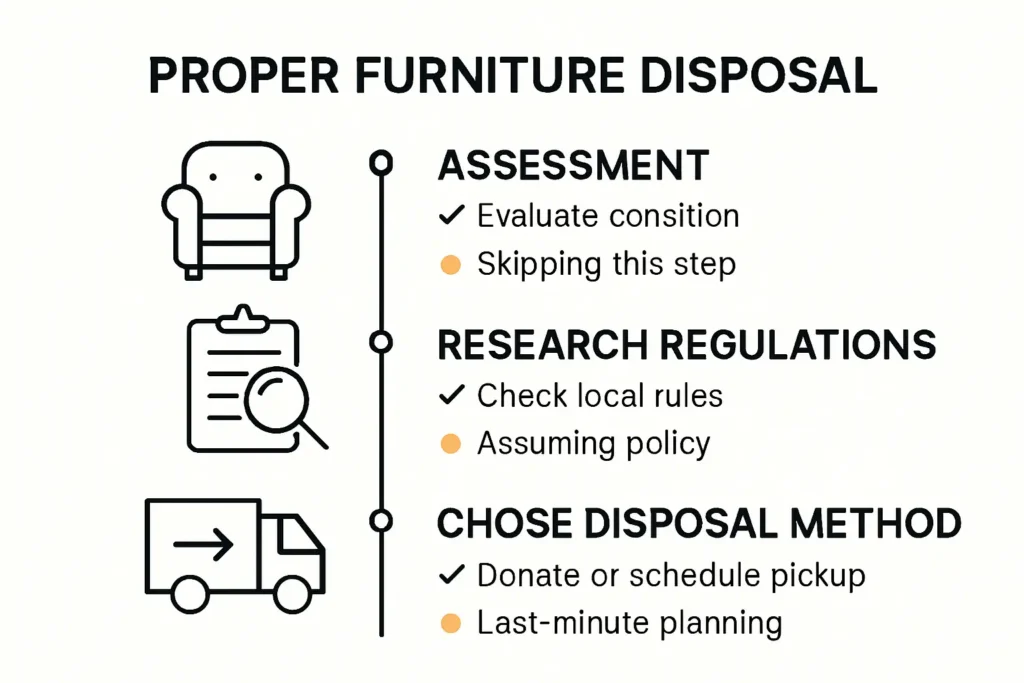
Quick Summary
| Key Point | Explanation |
|---|---|
| 1. Assess furniture’s condition first | Examine structural integrity and damage to decide on disposal options like recycling or donation. |
| 2. Research local disposal regulations | Understand specific guidelines to avoid fines and ensure compliance with your municipality’s disposal rules. |
| 3. Identify appropriate disposal methods | Explore donation, recycling, and professional services, choosing options that are environmentally responsible and beneficial. |
| 4. Schedule convenient pick-up or drop-off | Plan the timing and logistics of furniture removal to streamline the process and ensure efficient service. |
| 5. Verify disposal completion and compliance | Confirm that the disposal service followed local regulations and maintain records for documentation purposes. |
Step 1: Assess Your Furniture Disposal Needs
Before diving into furniture disposal, understanding the condition and potential of your unwanted furniture is critical. Proper assessment determines the most appropriate and efficient removal strategy. Every piece of furniture tells a story – whether it’s a beloved family heirloom or a worn out chair that has seen better days.
Start by carefully examining your furniture’s physical condition. Look for key indicators that will guide your disposal decision. Structural integrity matters most when determining whether an item can be reused, donated, or must be discarded. Check for significant damage like deep cracks, broken frames, severe stains, or fabric tears that render the piece unusable. Minor wear can often be repaired, but extensive damage typically means disposal is your best option.
Consider the furniture’s overall usability and potential second life. Some pieces might seem beyond repair at first glance but could be attractive to local charities, secondhand stores, or DIY enthusiasts willing to restore them. Learn more about local furniture donation options that can help you responsibly manage your unwanted furniture. If the item is structurally sound and clean, donation becomes an excellent environmentally friendly alternative to landfill disposal.
Assessment also involves practical considerations like size, weight, and transportation challenges. Measure large furniture pieces and evaluate whether you can move them independently or will require professional assistance. Bulky items like sectional sofas or heavy wooden furniture often necessitate specialized removal services. Take precise measurements of doorways, hallways, and potential transport vehicles to ensure smooth removal without causing additional damage to your property.
Ultimately, your assessment should result in a clear disposal path. Ask yourself these key questions: Can this be donated? Is it repairable? Does it require professional removal? By systematically evaluating your furniture’s condition, potential, and practical removal challenges, you set the stage for an efficient and responsible disposal process.
Documenting your findings through photographs and detailed notes can also help when consulting with junk removal professionals or donation centers, ensuring they understand exactly what you need to dispose of or donate.
Step 2: Research Local Disposal Regulations
Navigating the complex landscape of furniture disposal requires understanding local regulations that can vary dramatically between municipalities. Regulations are not one size fits all and can significantly impact how you remove unwanted furniture from your property. Your goal in this step is to become an informed disposal strategist who knows exactly what local rules govern furniture removal.
Start by contacting your local municipal waste management department or visiting their official website. Many cities and towns have specific guidelines about bulk item disposal, including furniture. Some communities offer scheduled bulk pickup services, while others require residents to schedule special pickups or transport items to designated transfer stations. Pay close attention to potential restrictions such as limits on item size, required preparation, or specific disposal windows throughout the year.
Learn about responsible disposal options in Connecticut to ensure you’re following local guidelines. Different regions have unique waste management protocols that can include additional requirements for large furniture items. Urban areas might have more stringent regulations compared to rural communities, so confirming specifics is crucial.
Check whether your local regulations differentiate between different types of furniture materials. Wooden furniture, upholstered pieces, and items containing metal components might have separate disposal guidelines. Some municipalities have specific recycling programs for certain materials, which could provide an environmentally friendly alternative to traditional waste disposal. This might involve separating furniture components or taking them to specialized recycling centers.
Additionally, investigate potential fees associated with furniture disposal. Some waste management services charge extra for bulky item removal, while others include it in standard municipal services. Understanding these potential costs upfront helps you budget and plan your furniture removal strategy effectively. Keep documentation of your research, including contact information for local waste management departments and any specific instructions you receive.
By thoroughly researching local disposal regulations, you transform what could be a complicated process into a smooth, compliant furniture removal experience. Your diligence ensures you avoid potential fines, contribute to community waste management efforts, and dispose of your furniture responsibly.
Step 3: Identify Suitable Disposal Methods
With your furniture assessment complete and local regulations understood, the next critical step is identifying the most appropriate disposal method. Not all furniture meets the same disposal pathway, and your choices can significantly impact environmental sustainability and potential cost savings.
Donation emerges as an excellent first option for furniture in good condition. Local charities, homeless shelters, community centers, and secondhand stores often welcome gently used furniture that can provide value to individuals or families in need. Before donating, ensure the pieces are clean, structurally sound, and free from significant damage. Explore responsible disposal solutions that can help you determine whether your furniture qualifies for donation programs.
For furniture beyond donation, recycling presents an environmentally conscious alternative to landfill disposal. Many municipalities and specialized recycling centers accept wooden furniture, metal frames, and certain fabric materials. Some facilities can deconstruct furniture, separating components for individual recycling streams. This approach reduces waste and supports circular economy principles by transforming old furniture into new raw materials.
Professional junk removal services offer a comprehensive solution for complex furniture disposal scenarios. These services handle everything from pickup to responsible disposal, navigating local regulations and identifying the most appropriate disposal method for each piece. They can efficiently manage large or heavy items that might be challenging to transport independently, saving you time and physical strain.
If your furniture is truly at the end of its lifecycle, municipal bulk waste pickup or transfer station disposal becomes necessary. Some communities offer scheduled pickups, while others require you to transport items yourself. Prepare for these options by breaking down furniture if possible, removing any non-recyclable components, and ensuring easy access for pickup teams.
Ultimately, your disposal method should balance practicality, environmental responsibility, and potential community benefit. By carefully evaluating each furniture piece and exploring multiple disposal pathways, you transform what could be waste into a resource that potentially helps others or supports sustainable waste management practices.
The following table compares common furniture disposal methods, helping you quickly evaluate the best option based on item condition, convenience, and environmental impact.
| Disposal Method | Best For | Convenience Level | Environmental Impact |
|---|---|---|---|
| Donation | Usable, clean furniture | Moderate | High (reuses items) |
| Recycling | Items not fit for donation, recyclable parts | Moderate | High (reduces waste) |
| Junk Removal Service | Large, heavy, or hard-to-move pieces | High | Variable (ask) |
| Municipal Pickup | Bulky items, standard disposal needs | Moderate | Moderate |
| Drop-Off/Transfer | When self-transport is possible | Low | Variable |
Step 4: Schedule Pick-Up or Drop-Off Services
Scheduling furniture disposal services transforms your preparation into action. Timing and logistics are crucial when removing unwanted furniture, and selecting the right pickup or drop-off method can save you significant time and energy. Your previous research into local regulations now guides your scheduling strategy.
Contact local waste management services to understand their specific scheduling requirements. Some municipalities offer free scheduled bulk pickups, while others require advance booking or have specific collection windows. Check out our comprehensive removal services to explore professional options that can simplify your furniture disposal process. Professional services often provide more flexible scheduling and can handle complex removal scenarios that municipal services might not accommodate.
Prepare detailed information before scheduling your pickup. Measure your furniture precisely, noting exact dimensions and weight. Take clear photographs documenting the furniture’s condition, which can help service providers determine the most appropriate removal method. Some services require preliminary assessments to ensure they can safely transport your items. Be prepared to describe material composition, potential damage, and any special handling requirements.
Consider the logistical aspects of your pickup or drop-off. If using a drop-off service, confirm operating hours, location, and any associated fees. For pickup services, ensure clear access to your furniture, removing any obstacles that might impede removal. Clear pathways through doorways, hallways, and exterior routes makes the process smoother and can prevent potential additional charges for complicated removals.
Verify all scheduling details in writing. Confirm the exact date, time window, and specific instructions for furniture preparation. Some services require items to be placed in specific locations or prepared in particular ways. Ask about any last-minute cancellation policies and potential fees. Having a written confirmation protects you from misunderstandings and provides a reference point if any issues arise during the disposal process.
By methodically scheduling your furniture disposal, you transform a potentially stressful task into a streamlined, efficient process. Your careful preparation ensures a smooth removal experience that respects both your time and local waste management guidelines.
Step 5: Prepare Furniture for Safe Transport
Preparing furniture for transport is a critical step that determines the safety of your items and the efficiency of the disposal process. Proper preparation prevents damage and ensures smooth removal, protecting both your property and the removal team. Think of this stage as creating a safe passage for your furniture’s final journey.
Learn more about professional removal techniques to supplement your preparation strategy. Begin by thoroughly cleaning the furniture, removing any loose items, cushions, or removable parts. Detach glass surfaces, shelves, or fragile components that could break during transport. For larger pieces like sofas or sectionals, consider disassembling them if possible. Unscrew legs, remove cushions, and separate modular sections to make the item more manageable and reduce potential damage.
Protective wrapping is your furniture’s armor during transport. Use moving blankets, bubble wrap, or sturdy plastic sheeting to cover surfaces and prevent scratches, dents, or additional wear. Pay special attention to corners and edges, which are most vulnerable during movement. Secure wrapping with packing tape, ensuring it’s tight enough to stay in place but not so restrictive that it damages the furniture’s surface. For wooden furniture, consider using furniture pads that provide additional cushioning and protection against impacts.
Create a clear path for removal before the pickup team arrives. Measure doorways, hallways, and any tight spaces to ensure your furniture can pass through without causing damage. Remove any obstacles like area rugs, small furniture, or decorative items that might impede movement. If you’re dealing with a particularly large or awkwardly shaped piece, consider removing door frames or temporarily dismantling door hinges to create more space.
Document the furniture’s condition before transport by taking clear, well-lit photographs from multiple angles. These images serve as a valuable record in case of any potential damage during removal. Mark any existing scratches, dents, or wear to distinguish pre-existing conditions from potential transport-related damage. This documentation can be crucial if you need to file a claim with the removal service.
By meticulously preparing your furniture for transport, you transform a potentially chaotic removal process into a smooth, controlled operation. Your careful preparation protects your property, assists the removal team, and ensures a stress-free disposal experience.

Step 6: Verify Disposal Completion and Compliance
The final stage of furniture disposal involves a critical review process that ensures your removal meets all local regulations and environmental standards. Verification is more than a formality – it’s your guarantee that the disposal process was handled responsibly and legally. Think of this step as your quality control checkpoint for the entire furniture removal journey.
Discover what happens to your junk after removal to understand the full lifecycle of your disposed furniture. Request and carefully review the official disposal documentation from your removal service. This documentation should include details like the date of removal, specific items transported, and the intended disposal or recycling method. Professional services typically provide a receipt or certificate of disposal that serves as your official record of responsible furniture removal.
Contact the disposal service within 24 to 48 hours after removal to confirm complete processing of your furniture. During this follow-up, inquire about the specific disposal pathway – whether the items were donated, recycled, or sent to an appropriate waste management facility. Understanding the final destination of your furniture helps ensure environmental responsibility and provides peace of mind that your items were handled appropriately.
Photographic evidence can be an important verification tool. Compare the before and after images of your space, confirming that all targeted furniture has been removed. Check the areas where furniture was located for any remaining debris or potential damage. If you scheduled a professional removal service, they should leave the area clean and undamaged. Any discrepancies should be immediately reported to the service provider.
Maintain a comprehensive record of the entire disposal process. Create a folder containing initial assessment notes, scheduling confirmations, removal receipts, and follow-up communication. This documentation becomes valuable if you need to reference the disposal later or address any potential issues. For businesses, these records can be crucial for inventory management and potential tax documentation.
By meticulously verifying your furniture disposal, you close the loop on a responsible removal process. Your careful attention ensures legal compliance, environmental responsibility, and provides a clear conclusion to your furniture disposal journey.
Use this checklist to verify you
e fully prepared for furniture removal and that the process was completed in compliance with local rules and standards.
| Verification Step | What to Do | Why Important |
|---|---|---|
| Take pre-removal photos | Photograph all items and their location | Document original condition |
| Confirm removal appointment | Verify date, time, and provider instructions | Ensure service arrives as scheduled |
| Prepare access path | Clear pathways, measure doorways | Avoid delays and property damage |
| Get removal receipt | Request documentation from removal service | Proof of responsible disposal |
| Take post-removal photos | Photograph cleared area | Confirm all items are gone |
| Follow up with service provider | Confirm items handled as agreed | Ensure proper donation/recycling |
| File all paperwork and photos | Save records in a dedicated folder | For reference or future questions |
Take the Stress Out of Furniture Disposal With Local Experts
Do you feel overwhelmed trying to follow disposal rules, lifting heavy furniture, or searching for responsible removal options in Litchfield County? The process is not just about getting rid of unwanted pieces. You want to follow local guidelines, avoid damaging your property, and ensure your items are handled responsibly. Our team understands that proper assessment, preparation, and verified completion are essential for both homeowners and businesses. Whether you are clearing out your home, managing a rental, or preparing an office for new tenants, professional support can remove uncertainty and hassle from the process.
Let us turn your challenging furniture removal into a smooth, worry-free experience. Our family-owned crew at CMC Carting Solutions is trusted throughout Connecticut for safe, quick, and eco-friendly disposal. We handle the heavy lifting for you, arrange compliant haul-away, and ensure transparency every step of the way. Begin today by getting your fast online quote for furniture removal or explore our complete removal services. See how easy it is to reclaim your space and get professional results. Clearing out your old furniture has never been this simple—contact us now and feel the relief of expert support from start to finish.
Frequently Asked Questions
What should I consider when assessing furniture for disposal?
When assessing furniture for disposal, consider its condition, structural integrity, usability, and any potential for repair or donation. Look for significant damage like deep cracks or severe stains that may render the item unusable.
What are the local regulations regarding furniture disposal?
Local regulations regarding furniture disposal can vary greatly by municipality. It’s important to consult your local waste management department to understand specific guidelines for bulk item disposal, any required preparation, and potential fees associated with pickup or drop-off services.
What are the most environmentally friendly furniture disposal options?
The most environmentally friendly furniture disposal options include donating usable items to charities or community centers and recycling materials at specialized recycling centers. Many municipalities have programs to recycle certain components of furniture, reducing landfill waste.
How can I prepare my furniture for transport during disposal?
To prepare furniture for transport, clean the items, remove any loose parts or fragile components, and consider disassembling larger pieces. Use protective wrapping to cover surfaces and secure with packing tape. Ensure clear access for removal and document the furniture’s condition with photographs.
Recommended
- 2025 Appliance Removal Tips for CT Properties
- Responsible Appliance Disposal in Connecticut: Safe Solutions 2025 – C&M Carting Solutions
- Junk Hauling Services Explained: What Connecticut Clients Need (2025) – C&M Carting Solutions
- Top Junk Hauling Service Types in Connecticut 2025 – C&M Carting Solutions