

HOA junk removal rules in Connecticut might look simple at first glance. Some policies even spell out that hauling away the wrong item could cost you over $200 in fines or extra removal fees. That sounds harsh, right? What most residents miss is that just talking with your HOA before tossing out big stuff can often save you from those penalties altogether.
Table of Contents
- Understanding HOA Junk Removal Policies
- Common Restrictions And Approved Methods
- How To Stay Compliant In Connecticut Communities
- Tips For Emergency And Same-Day Junk Removal
Quick Summary
| Takeaway | Explanation |
|---|---|
| Understand HOA Policies | Familiarize yourself with your HOA’s junk removal policies to avoid penalties. |
| Know Prohibited Items | Certain items like hazardous waste and oversized furniture are often not allowed. |
| Communicate with HOA | Maintain open dialogue with your HOA board about junk removal procedures. |
| Follow Timelines | Pay attention to scheduled junk removal days and act in advance. |
| Consider Professional Services | Using a licensed junk removal service can ensure compliance with local regulations. |
Understanding HOA Junk Removal Policies
Homeowners associations (HOAs) in Connecticut have specific regulations governing junk removal that can significantly impact property owners and residents. These policies are designed to maintain community standards, preserve property values, and ensure a clean and orderly living environment.
Legal Framework for HOA Junk Removal
Connecticut’s legal system provides a structured approach to HOA junk removal policies. According to the Connecticut Department of Consumer Protection, HOAs have specific protocols for handling personal property and debris in common areas. These protocols typically involve a multi-step process that protects both the association and property owners.
The Common Interest Ownership Act outlines the fundamental powers of homeowners associations in managing community spaces. This legislation gives HOAs the authority to establish and enforce rules regarding the removal of unwanted items, setting clear guidelines for what constitutes junk and how it should be handled.
Typical HOA Junk Removal Restrictions
Most HOA policies include specific restrictions on junk removal to maintain community aesthetics and property values. These typically encompass several key areas:
- Exterior Storage Limitations: Residents are often prohibited from storing large items, old furniture, or miscellaneous debris outside their units or in common areas.
- Scheduled Removal Periods: Many HOAs mandate specific times and methods for removing bulk items or junk.
- Fines and Penalties: Violations of junk removal policies can result in monetary penalties or other disciplinary actions.
Navigating HOA Removal Policies
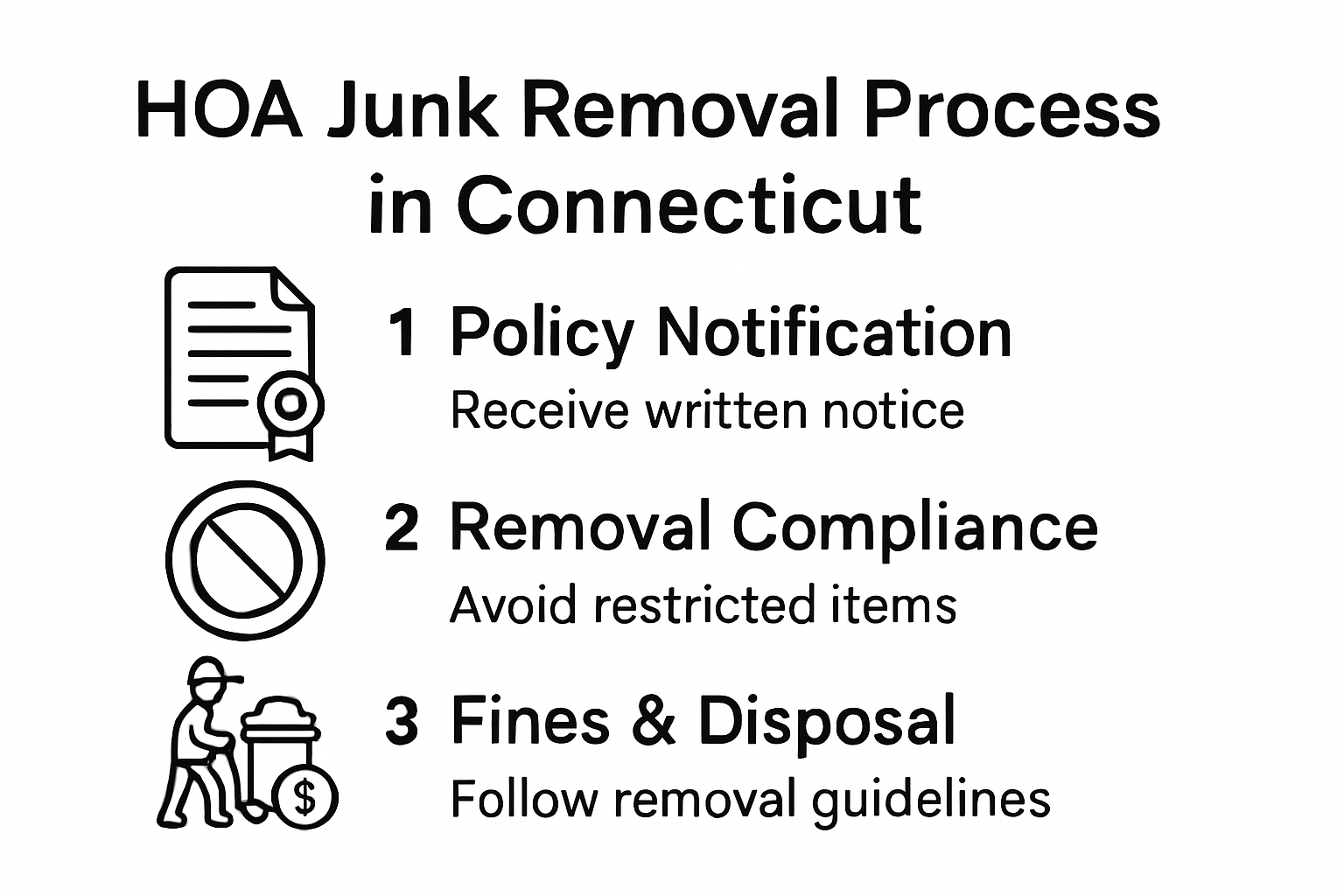
Understanding and complying with HOA junk removal policies requires careful attention to detail. According to Connecticut General Statutes, associations must provide clear notification and follow specific procedures when enforcing removal policies. This typically involves:
- Providing written notice to the property owner
- Specifying the exact items that must be removed
- Setting a reasonable timeframe for removal
- Outlining potential consequences for non-compliance
Residents should carefully review their HOA’s specific bylaws and learn more about comprehensive junk removal guidelines. Each association may have unique requirements that go beyond standard regulations.
Proactive communication with your HOA board is crucial. Before disposing of large items or managing significant junk removal, residents should:
- Review their HOA documentation thoroughly
- Consult with the HOA board about specific removal procedures
- Understand potential fines or penalties for non-compliance
- Consider professional junk removal services that understand local HOA regulations
By staying informed and proactive, Connecticut residents can effectively manage junk removal while maintaining their HOA’s community standards and avoiding potential conflicts.
Here is a table summarizing the typical process steps required by Connecticut HOAs for junk removal enforcement, based on the article details:
| Step | Action Required | Purpose |
|---|---|---|
| 1 | Written notice to property owner | Inform owner of violation |
| 2 | Specify items to be removed | Clarify what needs action |
| 3 | Set reasonable timeframe | Allow time for compliance |
| 4 | Outline potential consequences | Detail penalties or actions for non-compliance |
Common Restrictions and Approved Methods
Homeowners associations in Connecticut maintain strict guidelines regarding junk removal to preserve community aesthetics, environmental standards, and property values. Understanding these restrictions is crucial for residents to avoid potential penalties and maintain harmonious community relationships.
Prohibited Items and Materials
Connecticut HOAs typically enforce comprehensive restrictions on what can be removed or stored in common areas. According to the Connecticut Department of Energy and Environmental Protection, certain materials require specialized handling. Hazardous waste, electronic equipment, and large construction debris are frequently subject to stringent removal protocols.
Specifically, HOAs often prohibit:
- Furniture with visible damage or wear
- Broken appliances
- Construction materials
- Potentially hazardous waste
- Oversized items blocking common pathways
Particularly noteworthy is the regulation surrounding asbestos-containing materials. Connecticut DEEP guidelines mandate that more than one cubic foot of asbestos-containing material cannot be disposed of in standard trash, requiring specialized professional handling.
Approved Removal Procedures
The Connecticut Common Interest Ownership Act provides a structured framework for removal procedures. HOAs must establish clear, transparent processes for junk disposal that protect both the community and individual property owners.
Approved removal methods typically include:
- Scheduled bulk item pickup days
- Designated drop-off locations
- Professional junk removal services
- Coordinated community disposal events
Residents must follow specific guidelines when preparing items for removal. This includes properly sorting materials, ensuring items are clean and manageable, and adhering to size and weight restrictions established by the HOA.
Here is a table comparing common prohibited items versus approved removal methods as discussed in the section:
| Prohibited Items (Examples) | Approved Removal Methods |
|---|---|
| Furniture with visible damage/wear | Scheduled bulk pickup days |
| Broken appliances | Designated drop-off locations |
| Construction materials | Professional junk removal services |
| Potentially hazardous waste | Community-organized disposal events |
| Oversized items blocking pathways | – |
Compliance and Enforcement
Non-compliance with HOA junk removal policies can result in significant consequences. The Connecticut Department of Consumer Protection outlines a structured approach for handling violations, which may include:
- Written warnings
- Monetary fines
- Potential legal action
- Removal of items at the resident’s expense
To avoid these penalties, residents should consult their specific HOA guidelines for comprehensive junk removal strategies. Proactive communication with the HOA board and understanding the specific community regulations can prevent potential conflicts and ensure smooth junk removal processes.
Ultimately, successful junk removal in Connecticut HOA communities requires a collaborative approach. Residents must remain informed, follow established guidelines, and work cooperatively with their association to maintain a clean, orderly, and aesthetically pleasing living environment.
How to Stay Compliant in Connecticut Communities
Staying compliant with HOA junk removal policies in Connecticut requires a proactive and informed approach. Residents must navigate a complex landscape of community regulations, state guidelines, and local ordinances to ensure they meet all necessary requirements.
Understanding Local and State Regulations
Connecticut communities have specific guidelines that go beyond typical HOA restrictions. According to the Connecticut General Statutes, residents must adhere to both state law and community-specific rules regarding waste disposal. These regulations cover everything from the type of materials that can be removed to the specific methods of disposal.
The Connecticut Department of Energy and Environmental Protection (DEEP) provides comprehensive guidance on residential waste management. Residents should familiarize themselves with these guidelines to ensure full compliance. Key considerations include:
- Proper sorting of recyclable and non-recyclable materials
- Understanding restrictions on hazardous waste
- Following specific disposal procedures for bulky items
- Maintaining clean and organized common areas
Effective Communication and Documentation
Proactive communication is the cornerstone of staying compliant in Connecticut HOA communities. Residents should:
- Maintain open dialogue with HOA board members
- Request a copy of current junk removal policies
- Document all communication regarding waste disposal
- Keep records of item removals and disposals
It’s crucial to understand that each HOA may have unique requirements. Review comprehensive disposal guidelines to ensure you’re meeting all specific community standards.
Practical Compliance Strategies
Implementing a systematic approach to junk removal can help residents avoid potential conflicts and penalties. Recommended strategies include:
- Create a dedicated storage area for items awaiting removal
- Schedule regular decluttering sessions
- Coordinate with neighbors for community disposal events
- Use professional junk removal services familiar with local regulations
- Stay informed about seasonal disposal guidelines
Timing is critical when it comes to compliance. Most HOAs have specific windows for bulk item removal and specific procedures for different types of materials. Residents should:
- Mark calendar reminders for scheduled removal days
- Prepare items well in advance of removal dates
- Ensure items are properly prepared and sorted
- Follow size and quantity restrictions precisely
Financial implications can be significant for non-compliance. Potential consequences include:
- Monetary fines
- Mandatory removal at the resident’s expense
- Potential legal action
- Loss of certain community privileges
Ultimately, staying compliant requires a combination of knowledge, preparation, and proactive communication. Connecticut residents must remain vigilant, understanding that HOA junk removal policies are designed to maintain community standards and property values. By taking a systematic and informed approach, homeowners can navigate these regulations effectively while maintaining positive relationships within their community.
Tips for Emergency and Same-Day Junk Removal
Emergency junk removal situations in Connecticut HOA communities require swift action, careful planning, and strict adherence to community guidelines. Residents must be prepared to navigate complex removal protocols while managing unexpected debris or property challenges.
Understanding Emergency Removal Protocols
Connecticut HOAs have specific protocols for emergency junk removal scenarios. According to the Connecticut Department of Consumer Protection, associations must follow a structured notification process before removing personal property from common areas. This typically involves:
- Providing written notice to the property owner
- Documenting the condition and location of items
- Establishing a reasonable timeframe for removal
- Maintaining detailed records of the emergency removal process
The Connecticut Department of Energy and Environmental Protection emphasizes the importance of prompt debris management during emergency situations. This is particularly crucial after natural disasters or unexpected events that generate significant waste.
Here is a table listing immediate action steps and emergency preparedness strategies, as outlined in the section, to help residents manage urgent junk removal situations efficiently:
| Immediate Action Steps | Emergency Preparedness Strategies |
|---|---|
| Contact HOA board immediately | Maintain emergency contact list for removal services |
| Document condition of items | Keep digital records of HOA guidelines |
| Photograph damage/materials | Understand insurance coverage for removal |
| Understand costs and liability | Create rapid response plan |
| Seek professional assistance if needed |
Immediate Action Steps
When facing an emergency junk removal situation, residents should take immediate and strategic actions:
- Contact the HOA board immediately
- Document the condition of items needing removal
- Photograph any damage or problematic materials
- Understand potential costs and liability
- Seek professional assistance if the situation is complex
Learn about rapid response junk removal options to address urgent disposal needs quickly and efficiently. Professional services can help navigate the complex requirements of emergency removals.
Navigating Regulatory Compliance
Emergency junk removal in Connecticut requires careful attention to regulatory guidelines. The Connecticut Department of Energy and Environmental Protection’s “What Do I Do With?” resource provides critical guidance for proper disposal of various materials, especially in urgent situations.
Key considerations for emergency removals include:
- Proper handling of potentially hazardous materials
- Compliance with local and state waste disposal regulations
- Minimizing environmental impact
- Ensuring community safety
Residents should be aware of potential challenges:
- Unexpected removal costs
- Potential fines for improper disposal
- Time-sensitive removal requirements
- Complex HOA approval processes
Additional emergency preparedness strategies:
- Maintain an emergency contact list for junk removal services
- Keep digital records of HOA guidelines
- Understand your insurance coverage for emergency removals
- Create a rapid response plan for unexpected junk removal scenarios
While emergency situations can be stressful, Connecticut residents can navigate junk removal challenges effectively by staying informed, prepared, and proactive. Understanding HOA guidelines, maintaining clear communication, and knowing when to seek professional assistance are crucial steps in managing unexpected junk removal scenarios.

Frequently Asked Questions
What are the key restrictions on junk removal set by Connecticut HOAs?
Most Connecticut HOAs have restrictions that include prohibiting the storage of large items and debris outside units, mandating scheduled removal times, and specifying prohibited items such as hazardous waste and oversized furniture.
How can homeowners avoid fines related to junk removal in their HOA?
To avoid fines, homeowners should familiarize themselves with their HOA’s junk removal policies, ensure proper communication with the HOA board, and adhere to scheduled pickup days and approved removal methods.
What should residents do before disposing of large items in their HOA community?
Residents should review their HOA documentation, communicate with the HOA board about specific junk removal procedures, and understand potential penalties for non-compliance before disposing of large items.
How can Connecticut residents effectively manage emergency junk removal situations?
In an emergency removal situation, residents should immediately contact their HOA board, document the condition of items needing removal, and consider hiring professional services that are experienced in navigating HOA regulations.
Stay Compliant and Hassle-Free with Professional HOA Junk Removal
Are you feeling overwhelmed by Connecticut’s strict HOA junk removal rules? If you are worried about hefty fines, missed removal windows, or simply do not have the time to deal with detailed HOA procedures, you are not alone. Many local homeowners struggle to navigate all the guidelines on approved items, documentation, and proper disposal methods. This article highlighted the real risks of non-compliance, from sudden penalties to mandatory removal fees—problems no Connecticut resident wants to face.
If you want to skip the headaches and maintain your community standards stress-free, let our local team handle your next junk removal. Our service at C&M Carting Solutions is built for HOA communities in Litchfield County. We offer fast, compliant cleanouts for furniture, yard waste, and more, always following the latest HOA and state requirements. Save yourself from last-minute panic by using our easy online quote request and work with professionals who keep you fully protected. Act now—get in touch today to book your compliant junk removal and avoid the risk of expensive violations.
Recommended
- Junk Hauling Services Explained: What Connecticut Clients Need (2025) – C&M Carting Solutions
- Junk Removal Process for CT Homes & Businesses 2025
- Local Trash vs Junk Removal: A 2025 Guide for Connecticut – C&M Carting Solutions
- Eviction Cleanout Checklist 2025 for Connecticut Homes
- Local Pest Regulations – Pest Control Van Alstyne, TX – Pestico Pest Control
- [Roof Snow Removal Helena, MT: Why It’s Essential for Homeowners](https://ellingsonroofing.com/roof-snow-removal-helena-mt-why-its-essential-for-homeowners)