


Home offices can become chaos zones fast. Papers pile up and old gadgets gather dust until even finding your favorite pen feels like a scavenger hunt. But check this. A single 10 minute routine at the end of each workday can keep everything under control even after a big cleanout. Most people think you need a perfect system right away, but a few honest habits matter way more than expensive file folders or a brand new desk.
Table of Contents
- Step 1: Assess Your Current Situation
- Step 2: Gather Necessary Supplies
- Step 3: Sort And Categorize Items
- Step 4: Dispose Of Unwanted Items
- Step 5: Organize Remaining Items
- Step 6: Establish Maintenance Routines
Quick Summary
| Key Point | Explanation |
|---|---|
| 1. Assess your current workspace honestly | Conduct a thorough evaluation of your office to identify clutter areas that hinder productivity. |
| 2. Gather adequate decluttering supplies | Assemble boxes, trash bags, and cleaning tools to keep the cleanout process organized and efficient. |
| 3. Sort items into four categories | Use ‘keep, donate, recycle, discard’ categories to make clear decisions about each item’s future. |
| 4. Dispose of items responsibly | Follow eco-friendly practices for recycling and donating, particularly for electronics and sensitive documents. |
| 5. Establish maintenance routines | Implement daily and weekly tasks to keep your workspace consistently organized and clutter-free. |
Step 1: Assess Your Current Situation
A home office cleanout begins with a strategic and honest assessment of your current workspace. This crucial first step sets the foundation for transforming your work environment from chaotic to organized. Understanding the current state of your home office will help you create a targeted plan for decluttering and optimizing your workspace.
Start by standing in the center of your home office and conducting a comprehensive visual survey. Look beyond the surface clutter and examine how your workspace truly functions. Are your current work surfaces constantly buried under papers, books, and random items? Do you find yourself struggling to locate essential documents or feeling overwhelmed by the disorganization? These observations provide critical insights into the scope of your cleanout project.
Take a systematic approach to assessment by breaking down your evaluation into key areas. Examine your desk, filing systems, storage solutions, and technology setup. Identify items that are actively supporting your productivity versus those that are merely occupying valuable space. Old electronics, outdated paperwork, surplus office supplies, and unused equipment are prime candidates for removal. Create a mental inventory of what truly belongs in your workspace and what has accumulated without purpose.
Documentation can be a powerful tool during this assessment. Consider taking photographs of your current office layout and creating a written inventory of your existing items. This documentation will serve as a baseline for measuring your progress and help you track the transformation of your workspace. According to organizational experts at the Whole Building Design Guide, understanding your current workspace arrangement is critical to improving workplace effectiveness.
During your assessment, be brutally honest with yourself about your work habits and storage needs. Ask yourself critical questions: Do you actually use those stacks of old magazines? Are those extra office chairs serving any functional purpose? Are your current storage solutions meeting your organizational needs, or are they creating more complexity? By critically examining these aspects, you’ll develop a clear roadmap for your home office cleanout, setting the stage for a more efficient and inspiring work environment.
This table outlines each key step in the home office cleanout process, along with its main goal and the type of effort required.
| Step | Main Goal | Effort Level |
|---|---|---|
| Assess Current Situation | Identify clutter and productivity gaps | Moderate |
| Gather Necessary Supplies | Prepare tools and sorting containers | Easy |
| Sort and Categorize Items | Make keep/discard decisions | High |
| Dispose of Unwanted Items | Responsibly remove unwanted materials | Moderate |
| Organize Remaining Items | Create systems for easy access | Moderate |
| Establish Maintenance Routines | Prevent future clutter | Easy/Consistent |
Step 2: Gather Necessary Supplies
Preparing for a home office cleanout requires strategic planning and assembling the right tools to make your decluttering process efficient and thorough. This step is about equipping yourself with the supplies that will transform your workspace from chaotic to organized. Think of these supplies as your decluttering arsenal, each item playing a crucial role in streamlining your home office reorganization.
Your primary supplies should include sturdy boxes or containers for sorting and storing items. Select a variety of sizes to accommodate different types of office materials. Clear plastic bins with lids work exceptionally well, allowing you to see contents while protecting items from dust and potential damage. Invest in high quality, durable storage solutions that will serve you beyond this initial cleanout process. Consider acquiring banker boxes, storage totes, and labels to create a systematic sorting system.
Additional essential supplies include heavy duty trash bags, shredding materials for sensitive documents, cleaning supplies, and organizational tools like file folders, hanging organizers, and drawer dividers. Microfiber cloths, all purpose cleaner, and disinfectant wipes will help you thoroughly clean surfaces as you declutter. A label maker can be an excellent investment, helping you create a consistent and professional organizational system that makes future maintenance easier.
According to productivity experts at the Whole Building Design Guide, having the right tools before starting an organizational project significantly increases the likelihood of success. Professional organizers recommend gathering all supplies before beginning your cleanout to maintain momentum and prevent unnecessary interruptions.
Prepare a dedicated workspace for sorting, with a clear table or clean floor area where you can spread out your materials. Ensure you have adequate lighting and perhaps a portable fan or music system to make the process more enjoyable. By thoughtfully gathering your supplies and creating a comfortable work environment, you set the stage for a successful and potentially transformative home office cleanout experience.
The following table summarizes the main supplies needed for a thorough home office cleanout and the purpose each one serves.
| Supply | Purpose |
|---|---|
| Sturdy boxes/containers | Sorting and storing items during cleanout |
| Clear plastic bins | Protecting and visibly organizing office materials |
| Banker boxes/storage totes | Systematic sorting and easy transport |
| Trash bags | Disposing of general waste and clutter |
| Shredding materials | Securely destroying sensitive documents |
| Cleaning supplies | Thoroughly cleaning surfaces as you declutter |
| Label maker/labels | Creating a clear and consistent organizational system |
| File folders/dividers | Organizing documents and supplies for easy access |
Step 3: Sort and Categorize Items
Sorting and categorizing items is the critical transformation phase of your home office cleanout. This step will help you separate essential tools and documents from unnecessary clutter, creating a clear path toward a more organized workspace. Your goal is to make intentional decisions about every single item in your office, determining its value and future placement.
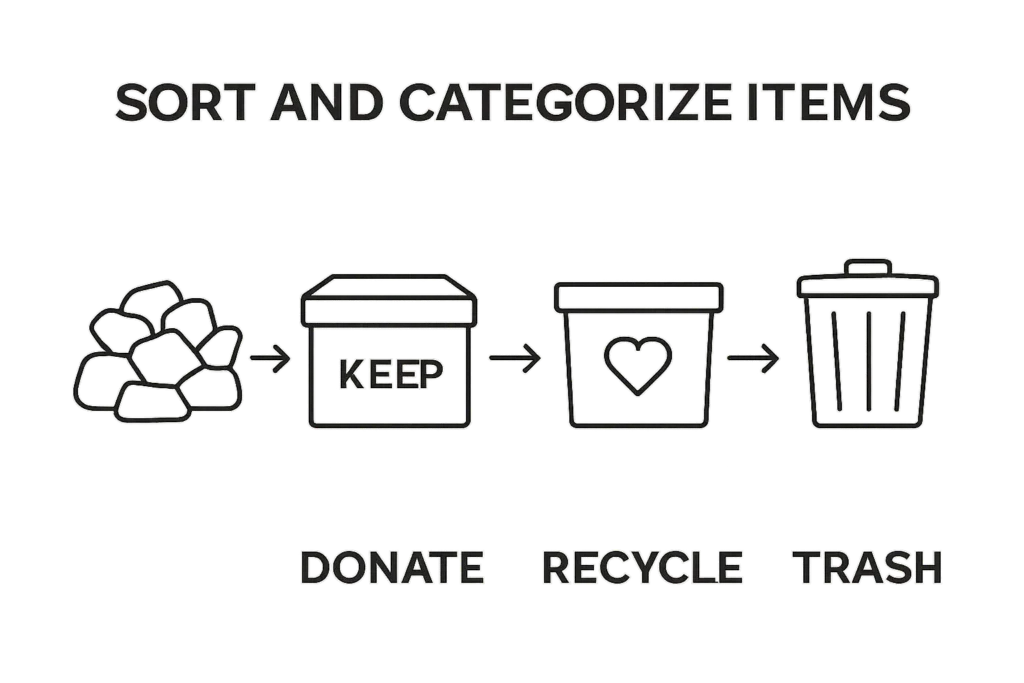
Begin by creating four primary sorting categories: keep, donate, recycle, and discard. Place your sorted boxes or containers in a strategic location and start systematically working through each area of your office. Handle each item only once, making an immediate decision about its fate. For papers and documents, consider their current relevance, legal requirements for retention, and potential digital alternatives. Old tax records, important contracts, and professional certifications should be carefully preserved, while outdated magazines, promotional materials, and redundant paperwork can be safely removed.
Technology and office equipment require special consideration during sorting. Evaluate electronic devices based on functionality, compatibility with your current work setup, and potential for future use. Broken chargers, obsolete computer peripherals, and outdated electronics should be responsibly recycled. If you have helpful tips for apartment cleanout and disposal, those principles can apply equally to home office organization.
As you progress, be ruthless yet strategic in your categorization. Ask yourself critical questions about each item: When was the last time I used this? Does this support my current work goals? Am I keeping this out of genuine necessity or mere sentimentality? For office supplies, consolidate duplicate items, discard dried out pens, and keep only what you realistically need. Professional organizers recommend maintaining a lean, purpose driven workspace that enhances productivity rather than creating visual and mental noise.
Once your sorting is complete, take a moment to review your categories. Ensure your “keep” items are truly essential, your donation and recycling piles are clean and well organized, and your discard pile is ready for responsible disposal. This methodical approach transforms your home office from a cluttered space to a streamlined, efficient work environment.
Step 4: Dispose of Unwanted Items
Disposing of unwanted items is a critical phase in your home office cleanout that requires thoughtful strategy and responsible decision making. This step is about more than just removing clutter it is about creating an environmentally conscious and efficient approach to eliminating unnecessary materials from your workspace.
Begin by separating your unwanted items into distinct categories: recyclables, donations, electronic waste, and general trash. Electronic items like old computer peripherals, outdated chargers, and broken office equipment should be handled with special care. Many electronics contain hazardous materials that require specific disposal methods. Local electronics stores and community recycling centers often provide free electronic waste disposal services. According to environmental experts at the EPA, preventing waste through responsible disposal is the most effective waste management strategy.
For office supplies and documents, consider donation options before discarding. Local schools, nonprofit organizations, and community centers frequently welcome gently used office materials. Certain nonprofit organizations specialize in redistributing office supplies to educators and small community programs. Shred sensitive documents containing personal or financial information, using either a home shredder or professional shredding service. Many office supply stores and community centers offer affordable document shredding events.
If you are looking for cost effective junk removal strategies, consider scheduling a professional junk removal service that can efficiently handle multiple disposal categories. These services understand proper disposal protocols and can streamline the process of removing various types of office materials. Professional services are particularly helpful when dealing with large quantities of items or complex disposal requirements.
Finalize your disposal process by conducting a final sweep of your workspace. Verify that all unwanted items have been properly sorted, removed, or recycled. Clean the areas where items were stored, preparing your space for reorganization. This methodical approach ensures that your home office cleanout not only removes clutter but does so in an environmentally responsible and efficient manner.
Step 5: Organize Remaining Items
Organizing your remaining items transforms your home office from a cluttered space into a functional, efficient workspace. This step is about creating intentional systems that support your productivity and professional goals. The key is to develop an organizational strategy that not only looks clean but also enhances your workflow and reduces daily stress.
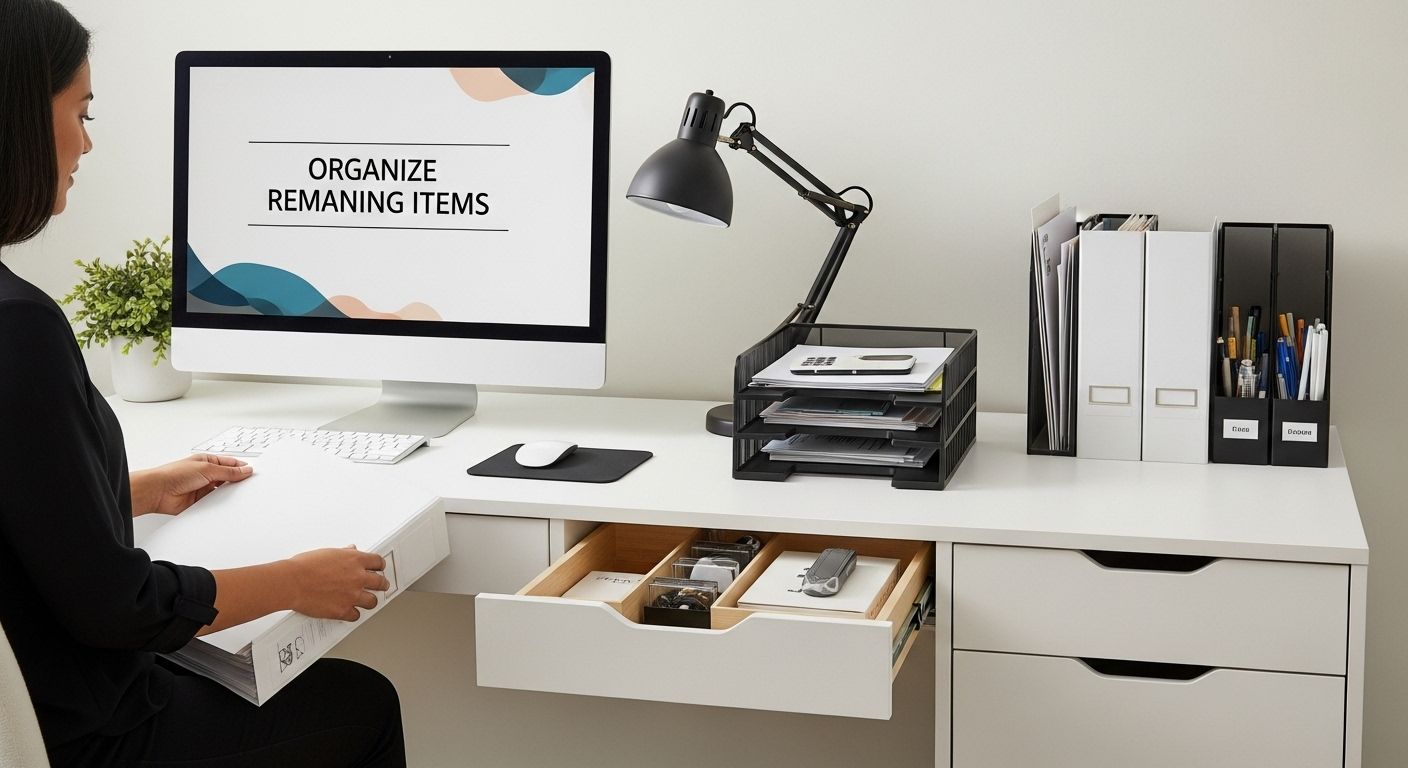
Start by implementing a comprehensive filing system for your documents. Digital and physical documents should be organized with equal care. Consider color coded folders or digital folder structures that align with your work categories. Invest in high quality, sturdy file cabinets or digital cloud storage solutions that can grow with your professional needs. If you’re looking for additional insights on managing spaces efficiently, our basement cleanout tips offer great organizational principles that can be adapted to your home office.
According to organizational experts at the University of Central Florida, creating designated spaces for office supplies is crucial. Use drawer dividers, desktop organizers, and vertical storage solutions to maximize your workspace. Vertical storage helps maintain a clean desktop while keeping essential items within immediate reach. Consider wall mounted shelves, pegboards, or magnetic strips for tools like scissors, tape dispensers, and other frequently used office equipment.
Create a systematic approach to digital organization as well. Set up clear folder structures on your computer, use cloud storage for backup, and develop consistent file naming conventions. Delete unnecessary files, organize emails into specific folders, and establish a routine for regular digital maintenance. Your goal is to create an organizational system that feels intuitive and reduces the mental load of searching for important documents or supplies.
Finalize your organization by conducting a walkthrough of your newly arranged workspace. Verify that everything has a designated place, items are easily accessible, and the space feels both functional and inspiring. A well organized home office is more than just a clean space it is a productivity catalyst that supports your professional aspirations and reduces daily stress.
Step 6: Establish Maintenance Routines
Establishing consistent maintenance routines is the final and most crucial step in transforming your home office from a one time cleanout to a permanently organized workspace. This step is about creating sustainable habits that prevent future clutter and maintain the organizational systems you have carefully developed. Think of these routines as a protective shield against the gradual accumulation of unnecessary items and workspace chaos.
Begin by implementing a daily 10 minute end of work routine. This compact timeframe allows you to reset your workspace, file documents, clear your desktop both physically and digitally, and prepare for the next day. Consistency is key in maintaining an organized office. Place a small timer or use a smartphone app to track your daily cleanup, turning it into a structured and almost meditative practice. Organize your files, return tools to their designated spaces, and clear any surface clutter before ending your workday.
According to workplace safety experts at the CDC’s National Institute for Occupational Safety and Health, regular maintenance reduces stress and increases productivity. Develop a weekly deep cleaning schedule that goes beyond the daily quick tidy. Set aside 30 minutes each week to conduct a more thorough review of your workspace. During this time, purge unnecessary digital files, update your filing system, wipe down surfaces, and reassess your organizational strategies.
Digital maintenance is equally important in your home office routine. Schedule monthly digital cleanouts where you archive old files, update software, backup important documents, and streamline your digital workspace. Use cloud storage solutions with automatic backup features to ensure your important work is always protected. Create a digital filing system that mirrors your physical organization, making document retrieval seamless and efficient.
Finalize your maintenance routine by creating a visible tracking system. Use a wall calendar or digital app to mark your daily and weekly organizational tasks. This visual reminder helps build consistency and turns workspace maintenance into a habit rather than a sporadic event. Remember, the goal is not perfection but continuous improvement in managing your home office environment.
Ready for a Truly Organized Home Office?
You have just learned how a systematic cleanout lays the groundwork for a functional and inspiring workspace. But facing piles of outdated paperwork, unused electronics, and bulky office furniture on your own can feel overwhelming. When the clutter becomes too much to sort or dispose of without help, this is where professional support makes the difference. If your “discard” pile keeps growing and disposal logistics start to slow you down, our trusted junk removal solutions can help you finish strong and reclaim your space faster.
Act now and turn your hard work into lasting results. Our team at CM Carting Solutions makes office cleanouts simple for homeowners and businesses across Connecticut. With our commitment to transparent pricing and easy scheduling, you can say goodbye to unwanted clutter without any added stress. Discover how effortless your next step can be. Start by requesting a free online quote and find more tips on our apartment cleanout guide. Your functional, organized home office is within reach—let the local professionals help you get there. Visit CM Carting Solutions to get started today.
Frequently Asked Questions
How do I start a home office cleanout?
To begin a home office cleanout, assess your current workspace by taking a comprehensive visual survey. Identify areas that are cluttered and items that no longer support your productivity. This assessment helps you create a targeted plan for decluttering and organizing.
What supplies do I need for a home office cleanout?
Gather necessary supplies such as sturdy boxes for sorting items, heavy-duty trash bags, shredding materials for sensitive documents, cleaning supplies, and organizational tools like file folders and drawer dividers to make your cleanout efficient.
How should I sort items during a home office cleanout?
Sort items into four categories: keep, donate, recycle, and discard. Handle each item only once and make an immediate decision on its fate. For documents, evaluate their relevance, legal retention requirements, and consider digital alternatives for obsolete papers.
What are effective ways to maintain an organized home office?
Establish daily maintenance routines, such as a 10-minute end-of-work cleanup, and implement a weekly deep cleaning schedule. Additionally, conduct monthly digital cleanouts to streamline your digital workspace and ensure a consistent organized environment.