


Connecticut towns do not mess around when it comes to junk pickup rules. Improper junk disposal can hit your wallet with fines up to $25,000 per day. That figure might sound outrageous compared to simply missing your regular trash day. Yet the real surprise is how much these junk laws actually affect your property value, community reputation, and even your legal standing. Find out how a few forgotten items at the curb can transform into a financial and legal nightmare in ways most people never expect.
Table of Contents
- What Are Local Junk Pickup Laws In Connecticut?
- How Junk Pickup Laws Impact Your Property
- Rules For Emergency And Same-Day Junk Removal
- Tips For Compliance And Avoiding Junk Pickup Fines
Quick Summary
| Takeaway | Explanation |
|---|---|
| Understand local junk laws | Familiarize yourself with your municipality’s junk disposal regulations to avoid penalties. |
| Separate waste correctly | Follow waste separation guidelines to prevent fines and ensure proper disposal. |
| Stay informed on pickup schedules | Be aware of your local bulk item pickup days and guidelines for compliance. |
| Consider professional services | Using licensed junk removal services can simplify compliance with complex regulations. |
| Know the penalties for violations | Familiarize yourself with the financial penalties of improper junk disposal to avoid costly mistakes. |
What Are Local Junk Pickup Laws in Connecticut?
Navigating local junk pickup regulations in Connecticut requires understanding complex state and municipal guidelines that govern waste disposal. These laws are designed to protect public health, maintain community aesthetics, and ensure environmentally responsible waste management.
State Level Waste Management Regulations
Connecticut’s waste management framework is primarily governed by the Connecticut Department of Energy and Environmental Protection (DEEP), which establishes comprehensive guidelines for solid waste disposal. Under Chapter 446d of the Connecticut General Statutes, municipalities have specific responsibilities and powers regarding waste management. The state regulations mandate strict protocols for different types of waste, including household junk, construction debris, and potentially hazardous materials.
Most Connecticut municipalities require residents to follow specific sorting and disposal guidelines. This means you cannot simply throw all items into a single trash container. Different materials like electronics, furniture, yard waste, and construction materials often require separate disposal methods. Some towns have designated transfer stations or recycling centers where residents must bring specific types of junk.
Municipal Variations in Junk Pickup Laws
Local junk pickup laws can vary significantly between Connecticut towns and cities. While state regulations provide a general framework, individual municipalities often implement their own specific rules. For instance, urban areas like Hartford might have more frequent bulk item pickup schedules compared to rural towns in Litchfield County.
Some key municipal variations include:
- Scheduled bulk item pickup dates
- Size and weight restrictions for junk items
- Required preparation and sorting of materials
- Potential fees for special waste removal
- Specific guidelines for hazardous or electronic waste
Residents should always check with their local public works department or municipal website to understand the exact requirements. Learn more about local waste disposal guidelines in our comprehensive guide on trash and junk removal.
To help readers understand how municipal junk pickup regulations can differ across Connecticut, here’s a comparison of key municipal variations mentioned in the article:
| Municipal Regulation Factor | Possible Variations/Examples |
|---|---|
| Bulk Item Pickup Schedule | Varies by town (e.g., Hartford vs rural towns) |
| Size & Weight Restrictions | Limits on individual item size or weight |
| Preparation & Sorting Requirements | Rules for separating materials |
| Special Waste Removal Fees | Extra fees for certain item types |
| Hazardous/Electronic Waste Handling | Guidelines for safe and legal disposal |
Environmental Compliance and Penalties
Connecticut takes environmental protection seriously. The Connecticut Environmental Policy Act (CEPA) mandates thorough environmental impact evaluations for waste management practices. Improper junk disposal can result in significant penalties, including fines and potential legal action.
Municipalities may impose different enforcement mechanisms:
- Warning notices for first-time violations
- Progressive financial penalties for repeated infractions
- Potential mandatory community service
- In extreme cases, legal prosecution for environmental violations
To avoid potential issues, residents should:
- Understand local pickup schedules
- Properly sort and prepare junk items
- Follow municipal guidelines precisely
- Consider professional junk removal services for complex disposal needs
By staying informed and compliant with local junk pickup laws, Connecticut residents can contribute to community cleanliness and environmental sustainability while avoiding potential legal complications.
How Junk Pickup Laws Impact Your Property
Junk pickup laws significantly influence property values, community aesthetics, and potential legal liabilities for Connecticut homeowners. Understanding these regulations is crucial for maintaining property standards and avoiding costly penalties.
Property Value and Community Standards
Local junk pickup laws directly affect property aesthetics and market value. According to Connecticut’s Chapter 405 statutes, municipalities have the authority to regulate junk accumulation and establish community standards that protect neighborhood appearances. Excessive junk or improper disposal can lead to significant property devaluation and potential fines.
Neighborhood appearance plays a critical role in property valuation. Homes with accumulated junk or poorly managed waste areas can experience substantial decreases in market value. Local ordinances often mandate specific storage and disposal requirements to maintain community aesthetics. Homeowners who fail to comply may face penalties that not only impact their financial standing but also create tension within their local community.
Legal Consequences and Enforcement
The legal ramifications of improper junk disposal can be severe. The Connecticut Department of Energy & Environmental Protection outlines strict penalties for non-compliance, including:
- Fines up to $25,000 per day for illegal dumping
- Potential vehicle confiscation
- Liability for environmental cleanup costs
- Potential legal action from municipal authorities
These consequences extend beyond immediate financial penalties. Repeated violations can lead to more significant legal challenges, including potential liens on your property or mandatory community service. Explore our comprehensive guide on local waste management policies to understand the full scope of potential impacts.
Property Types and Specific Regulations
Different property types face unique challenges under local junk pickup laws. Residential properties, commercial spaces, and multi-unit dwellings each have specific guidelines that impact waste management. Connecticut’s urban homesteading legislation specifically addresses the rehabilitation of abandoned and blighted properties, highlighting the critical nature of proper waste management.
Homeowners associations (HOAs) often implement additional restrictions beyond municipal regulations. These can include:
- Specific container placement requirements
- Limitations on visible storage of large items
- Scheduled bulk item removal windows
- Restrictions on outdoor storage of potential junk items
To protect your property and avoid potential legal issues, homeowners should:
- Regularly review local junk pickup regulations
- Maintain clear communication with local authorities
- Implement proper waste management practices
- Consider professional junk removal services for complex disposal needs
By understanding and proactively addressing local junk pickup laws, Connecticut property owners can protect their investments, maintain community standards, and avoid potentially costly legal complications.

Rules for Emergency and Same-Day Junk Removal
Emergency and same-day junk removal in Connecticut requires understanding specific legal protocols and municipal guidelines that ensure safe, efficient, and compliant waste disposal during urgent situations.
Emergency Debris Removal Protocols
During emergency scenarios, Connecticut has established clear guidelines for rapid waste management. Under Connecticut General Statutes § 28-9c, the state provides specific authorization for debris removal during declared disaster emergencies. This legislation enables government agencies to clear wreckage and debris from public and private properties that potentially threaten public health or safety.
Emergency situations that may trigger expedited junk removal include:
- Natural disaster aftermath (hurricanes, floods, severe storms)
- Structural damage requiring immediate property cleanup
- Hazardous material containment
- Emergency property foreclosures or evictions
- Immediate health and safety risk mitigation
Municipal Nuisance and Rapid Removal Regulations
Connecticut General Statutes § 7-148 grants municipalities extensive powers to define, prohibit, and abate nuisances within their jurisdictions. This statute allows local authorities to quickly intervene in situations where accumulated junk or debris poses immediate community risks.
Municipalities typically have specific protocols for rapid junk removal, which may include:
- Immediate notification processes
- Emergency contact numbers for waste management
- Specialized teams for rapid debris assessment
- Expedited permitting for emergency disposal
Local governments can mandate immediate cleanup when junk poses potential health hazards, structural risks, or environmental contamination. Learn more about our emergency junk removal services to understand the comprehensive support available during urgent situations.
Legal and Environmental Compliance in Urgent Removals
While emergency situations demand quick action, the Connecticut Department of Energy & Environmental Protection (DEEP) emphasizes that proper disposal protocols must still be followed. Illegal dumping, even during emergencies, can result in significant penalties including:
- Fines up to $25,000 per day
- Potential vehicle confiscation
- Legal action for environmental damage
- Mandatory cleanup and restoration costs
To ensure compliant emergency junk removal, property owners and managers should:
- Document the emergency condition thoroughly
- Communicate immediately with local authorities
- Use certified waste management professionals
- Maintain detailed records of removal processes
- Follow all environmental safety guidelines
- Obtain necessary emergency permits
While speed is crucial during emergency junk removal, maintaining legal and environmental standards remains paramount. Connecticut’s regulations balance rapid response capabilities with strict accountability, ensuring community safety without compromising environmental protection.
Understanding these nuanced rules helps Connecticut residents and property managers navigate emergency junk removal efficiently, legally, and responsibly.
Tips for Compliance and Avoiding Junk Pickup Fines
Navigating Connecticut’s complex junk pickup regulations requires strategic planning and meticulous attention to municipal guidelines. Understanding how to remain compliant can save homeowners and property managers significant financial and legal headaches.
Understanding Waste Separation Requirements
Connecticut General Statutes (Sec. 22a-220a) mandates strict waste separation protocols that residents must follow. Municipalities require precise sorting of different waste types to ensure environmental protection and efficient recycling processes. Failure to properly separate recyclables from general waste can result in substantial fines and potential service interruptions.
Key waste separation guidelines include:
- Segregating recyclable materials from general trash
- Identifying and removing restricted materials
- Using designated containers for specific waste types
- Following municipal pickup schedule guidelines
- Keeping waste areas clean and organized
Navigating Municipal Junk Disposal Regulations
The Connecticut Department of Energy and Environmental Protection (DEEP) provides comprehensive guidance on avoiding common disposal violations. Different municipalities have unique requirements that can significantly impact compliance strategies.
Common compliance strategies include:
- Researching specific local junk pickup ordinances
- Understanding bulk item removal schedules
- Obtaining necessary permits for large waste removals
- Using authorized waste management services
- Maintaining documentation of proper disposal
Learn more about navigating local waste management policies to ensure you stay within legal boundaries.
Financial Penalties and Legal Consequences
Connecticut municipalities impose increasingly stringent penalties for improper waste disposal. Fines can escalate quickly, transforming a simple junk removal task into a potentially expensive legal challenge. Unauthorized junk haulers or incorrect disposal methods can trigger significant financial consequences.
Below is a summary table highlighting the potential financial and legal penalties for improper junk disposal in Connecticut, as described in the article:
| Infraction Type | Penalty/Consequence |
|---|---|
| Improper junk disposal | Fines up to $25,000 per day |
| Illegal dumping (multiple offenses) | Progressive fines, possible legal prosecution |
| Community appearance violations | Property devaluation, municipal fines |
| Non-compliance with separation rules | Monetary fines, service interruptions |
| Repeated offenses | Liens, mandatory cleanup costs, vehicle confiscation |
Potential penalties may include:
- Initial warning citations
- Progressive monetary fines
- Mandatory cleanup costs
- Potential legal action for repeated violations
- Service suspension or restriction
To minimize financial risks, property owners should:
- Stay informed about local regulations
- Maintain detailed disposal records
- Work with licensed waste management professionals
- Regularly audit waste disposal practices
- Promptly address any compliance issues
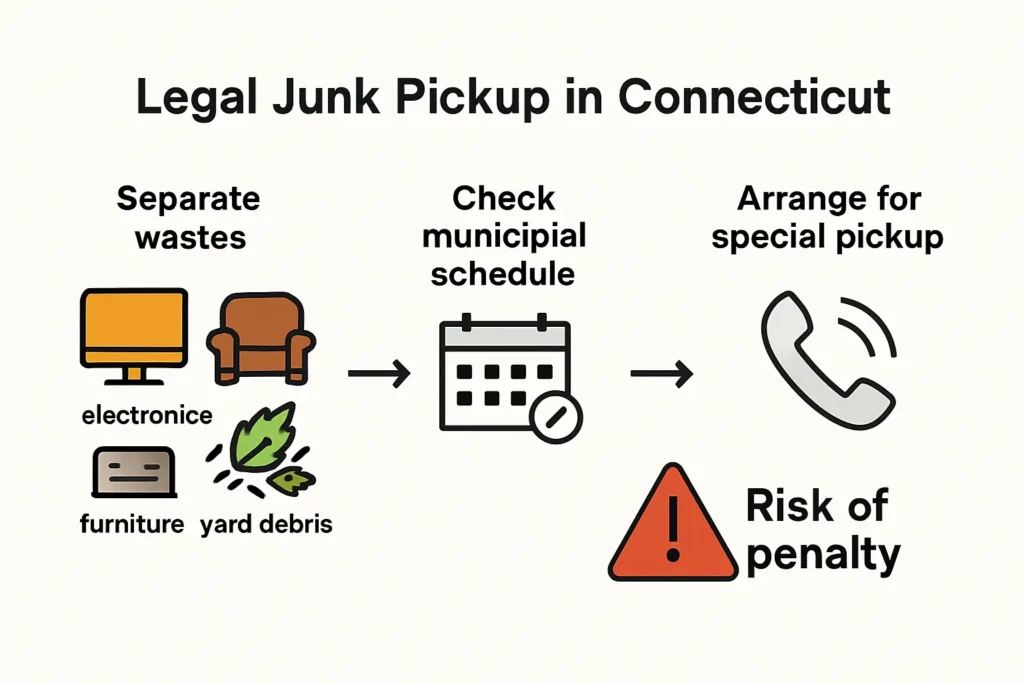
Compliance is not just about avoiding fines it is about contributing to community environmental health and sustainability. By understanding and following local junk pickup laws, Connecticut residents can protect their properties, wallets, and the broader community environment.
Remember that regulations evolve, so staying proactive and informed is the best strategy for smooth, penalty-free junk removal.
Frequently Asked Questions
What are the local junk pickup laws in Connecticut?
Connecticut’s local junk pickup laws are governed by both state and municipal regulations. These laws dictate how residents must dispose of various types of junk and what preparation and sorting are required before disposal.
How can improper junk disposal affect property values in Connecticut?
Improper junk disposal can lead to significant decreases in property values due to community aesthetic concerns and potential financial penalties. Accumulated junk can create an unappealing neighborhood atmosphere that deters homebuyers.
What are the penalties for failing to comply with junk pickup regulations?
Penalties for non-compliance can be severe, with fines reaching up to $25,000 per day for illegal dumping. Additionally, repeated violations can result in progressive fines, legal action, and potential liens on properties.
Are there specific rules for emergency junk removal in Connecticut?
Yes, during emergencies, Connecticut has specific protocols for rapid junk removal. These rules allow for quick cleanup in response to natural disasters or other urgent situations, but proper disposal procedures must still be followed to avoid legal penalties.
Stay Safe and Compliant: Effortless Junk Disposal for Connecticut Residents
Navigating Connecticut’s strict junk pickup laws can feel overwhelming. Between state regulations, city-specific rules, and the risk of costly fines, even a small mistake can put your property value, reputation, or finances at risk. If you are worried about accidentally facing penalties or if managing emergency junk removal feels too complex, you are not alone. Many local residents and businesses find Connecticut’s requirements—for proper sorting, hazardous disposal, and rapid response during emergencies—a real source of stress.
Let our family-owned team help you avoid these headaches. We know Connecticut’s local regulations inside and out. Our full-service solutions cover everything from routine cleanouts to urgent debris pickup, keeping your property compliant and attractive. Save time and eliminate uncertainty. Request a fast quote today and see how easy it is to protect your investment with expert junk removal. Take control of your clutter and avoid fines by scheduling your hassle-free Connecticut junk removal now.
Recommended
- Local Trash vs Junk Removal: A 2025 Guide for Connecticut – C&M Carting Solutions
- HOA Junk Removal Policies: What Connecticut Residents Must Know (2025) – C&M Carting Solutions
- Junk Hauling Services Explained: What Connecticut Clients Need (2025) – C&M Carting Solutions
- Junk Removal Process for CT Homes & Businesses 2025