


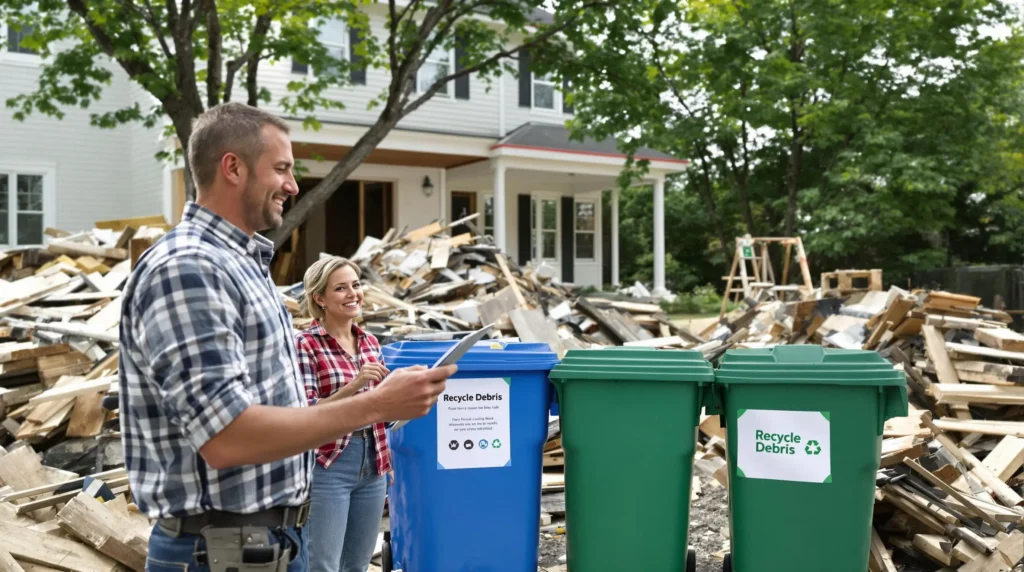
Renovating a home in Connecticut can turn even a small remodel into a mountain of leftover wood, metal, drywall, and old fixtures. You might expect most of it just ends up in a landfill. Not quite. Up to 80 percent of renovation debris like wood and cardboard can actually be recycled instead of trashed. So while tossing everything in the dumpster might be the habit, there is a smarter way to handle renovation waste that can save money and help the environment at the same time.
Table of Contents
- Understanding Renovation Debris Recycling Basics
- Types Of Renovation Debris And How To Sort Them
- Connecticut Recycling Options And Emergency Services
- Tips For Efficient And Eco-Friendly Debris Disposal
Quick Summary
| Takeaway | Explanation |
|---|---|
| Understanding Debris Types | Familiarize yourself with common renovation debris categories, such as wood, metal, concrete, and insulation, to facilitate effective sorting and recycling. |
| Implementing Sorting Best Practices | Use dedicated, labeled containers for different material types and ensure materials are clean and free from contaminants to improve recycling rates. |
| Utilizing Local Resources | Explore Connecticut’s network of recycling facilities and emergency debris removal services to efficiently manage renovation waste and reduce environmental impact. |
| Proactive Waste Management | Plan projects with waste reduction in mind by ordering precise materials, salvaging usable items, and donating them to local organizations to minimize landfill contributions. |
Understanding Renovation Debris Recycling Basics
Renovation projects generate substantial waste materials that can create significant environmental challenges. Understanding how to manage and recycle these materials effectively is crucial for homeowners and contractors alike. Renovation debris recycling represents a sustainable approach to waste management that reduces landfill burden and conserves valuable resources.
What Constitutes Renovation Debris
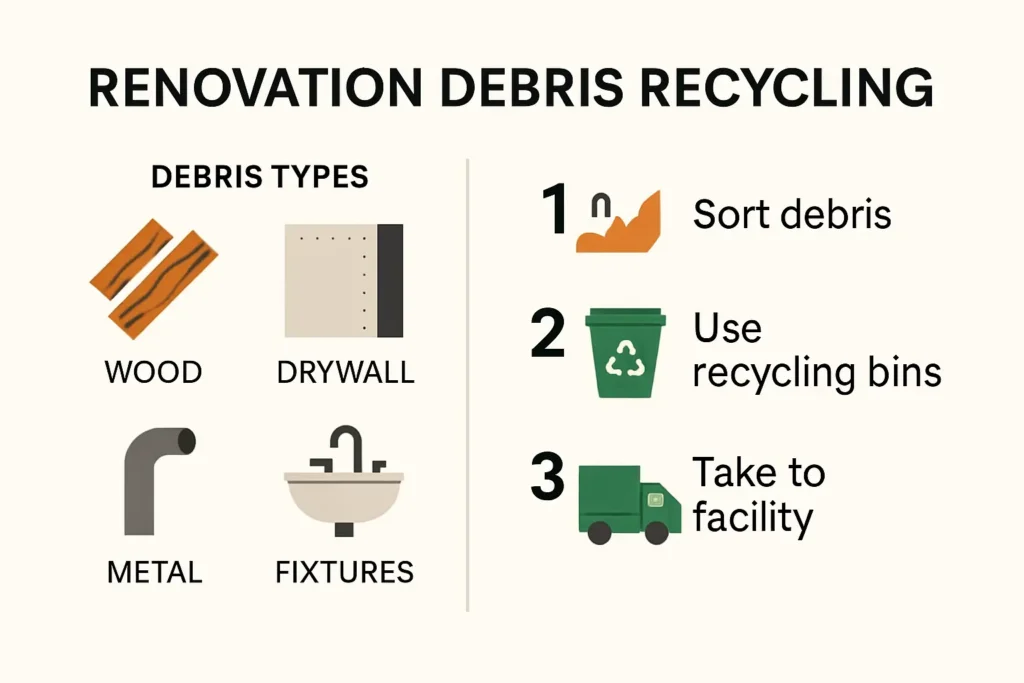
Renovation debris encompasses a wide range of materials generated during construction and remodeling projects. Learn more about efficient disposal methods for different types of waste. Typical renovation debris includes:
- Wood Materials: Lumber scraps, old framing, broken furniture, and wooden fixtures
- Metal Components: Copper wiring, steel pipes, aluminum siding, and metallic hardware
- Concrete and Masonry: Broken tiles, demolished concrete, brick fragments, and ceramic materials
- Drywall and Insulation: Damaged wall sections, leftover insulation materials, and construction remnants
The U.S. Environmental Protection Agency emphasizes that sustainable management of construction and demolition materials can create jobs, conserve resources, and significantly reduce environmental impacts. By implementing strategic recycling approaches, homeowners can transform what was once considered waste into valuable resources.
Recycling Process and Best Practices
Effective renovation debris recycling requires careful sorting and processing. According to the Connecticut Department of Energy & Environmental Protection, successful waste management involves several critical steps:
- Initial Waste Assessment: Evaluate the types and quantities of materials generated during your renovation project
- Material Separation: Carefully segregate different materials to facilitate proper recycling
- Identify Recycling Facilities: Research local facilities that accept specific renovation debris types
- Proper Transportation: Ensure materials are transported safely and efficiently to recycling centers
Professional waste management services can streamline this process, offering expertise in handling complex renovation debris. Some materials like metals have high recycling rates, while others like composite materials might require specialized processing.
By understanding renovation debris recycling basics, homeowners can make informed decisions that benefit both their immediate project needs and long-term environmental sustainability. The key is to approach waste not as a problem to dispose of, but as a resource waiting to be transformed and reused.
Implementing these practices not only reduces environmental impact but can also potentially lower disposal costs and contribute to a more circular economy approach to construction and renovation projects.
To help you visualize the best practices for recycling renovation debris, the table below outlines the main steps and key tips for each:
| Step | Description | Key Tips |
|---|---|---|
| Initial Waste Assessment | Evaluate volume and types of debris generated from renovation | Record materials as you go |
| Material Separation | Sort materials by type (wood, metal, drywall, etc.) | Use labeled or color-coded bins |
| Identify Recycling Facilities | Find local facilities accepting specific debris types | Check hours and material restrictions |
| Proper Transportation | Move separated materials safely to recycling centers | Use covered vehicles, avoid mixed loads |
| Professional Assistance | Hire waste management services for complex or hazardous debris | Inquire about special handling and rates |
Types of Renovation Debris and How to Sort Them
Navigating the complex world of renovation debris requires a strategic approach to sorting and recycling. Different materials demand unique handling techniques to maximize environmental sustainability and minimize waste disposal costs. Understanding the nuanced characteristics of various renovation materials is crucial for effective recycling.
Identifying Common Renovation Debris Categories
Renovation projects generate multiple types of materials that can be categorized and processed differently. Learn more about efficient waste management strategies for your project. According to the U.S. Environmental Protection Agency, typical renovation debris falls into several key categories:
- Inert Materials: Concrete, bricks, ceramics, and stone
- Organic Materials: Wood, cardboard, and untreated lumber
- Metal Components: Steel, copper, aluminum, and other recyclable metals
- Synthetic Materials: Plastics, insulation, and composite materials
Sorting Strategies for Effective Recycling

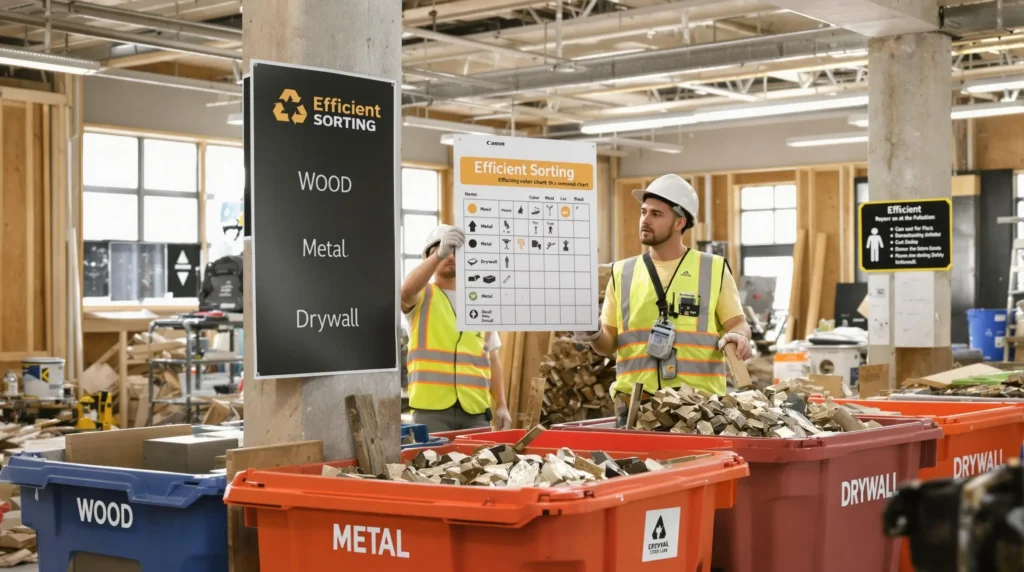
The Connecticut Department of Energy & Environmental Protection recommends a systematic approach to debris sorting. Professional waste management experts suggest implementing these critical sorting techniques:
- Segregation at Source: Separate materials immediately during demolition to prevent contamination
- Use Designated Containers: Utilize color-coded or labeled containers for different material types
- Clean Materials Matter: Ensure recyclable materials are free from excessive dirt, paint, or other contaminants
- Hazardous Material Handling: Identify and separately manage potentially dangerous materials like lead-based paint or asbestos
Wood and cardboard typically represent 60% to 80% of job site waste, making them primary targets for recycling efforts. Metals offer high recyclability rates, with many facilities accepting clean metal components from renovation projects.
The EPA further emphasizes the importance of controlling waste release, particularly with potentially hazardous materials. Using heavy plastic sheeting, securely sealing debris bags, and following local waste disposal regulations are critical steps in responsible renovation debris management.
Effective sorting not only reduces environmental impact but can also generate cost savings. Many recycling facilities offer reduced rates for well-sorted materials, incentivizing careful waste management practices. By understanding the nuances of renovation debris categories and implementing strategic sorting techniques, homeowners and contractors can transform waste management from a challenging task into an environmentally responsible process.
The following table summarizes the main categories of renovation debris and the recommended sorting approach for each, making recycling easier:
| Debris Category | Example Materials | Sorting Recommendation |
|---|---|---|
| Inert Materials | Concrete, bricks, ceramics, stone | Separate from other waste, keep clean |
| Organic Materials | Wood, cardboard, untreated lumber | Place in containers for wood/paper only |
| Metal Components | Steel, copper, aluminum hardware | Collect metals together, remove fasteners |
| Synthetic Materials | Plastics, insulation, composites | Keep apart from organics and metals |
| Hazardous Materials | Lead paint, asbestos, contaminated insulation | Isolate, follow hazardous waste protocol |
Connecticut Recycling Options and Emergency Services
Connecticut offers a comprehensive network of recycling facilities and emergency services designed to help homeowners and contractors efficiently manage renovation debris. Understanding the local recycling infrastructure is crucial for responsible waste disposal and environmental conservation.
Local Recycling Facilities and Drop-Off Centers
Explore our local waste management solutions to streamline your renovation debris disposal. The state provides multiple options for recycling different types of renovation materials. According to the Connecticut Department of Energy and Environmental Protection, specific guidelines exist for various materials:
- Clean Fill Materials: Uncontaminated brick, rock, ceramics, concrete, and asphalt can be processed as clean fill
- Metal Recycling: Dedicated facilities accept copper, aluminum, steel, and other metal components
- Wood Waste: Specialized centers process untreated lumber and wood scraps
- Mixed Construction Debris: Certain facilities offer comprehensive mixed material recycling services
Emergency Debris Removal Services
Renovation projects can unexpectedly generate large volumes of waste, requiring immediate disposal solutions. The U.S. Environmental Protection Agency recommends having a flexible waste management plan that can adapt to unexpected challenges.
Emergency services typically include:
- Rapid Response Removal: Same-day or next-day debris collection
- Hazardous Material Handling: Specialized removal for potentially dangerous renovation waste
- Large Volume Disposal: Dumpster rentals and bulk waste pickup
- Contaminated Waste Management: Professional handling of materials requiring special disposal
Connecticut regulations require careful management of potentially contaminated materials. Clean fill materials can often be repurposed, while contaminated debris must be processed through specialized solid waste disposal facilities. This approach ensures environmental protection and responsible waste management.
Homeowners and contractors should always verify local regulations and facility requirements before disposing of renovation debris. Many recycling centers offer competitive rates for well-sorted materials, potentially reducing overall disposal costs. By understanding local recycling options and emergency services, property owners can efficiently manage renovation waste while minimizing environmental impact.
Proactive planning and awareness of local recycling infrastructure can transform renovation debris from a challenging disposal problem into an opportunity for sustainable waste management. Working with professional waste management services can simplify this process and ensure compliance with local and state regulations.
Tips for Efficient and Eco-Friendly Debris Disposal
Responsible renovation debris disposal goes beyond simply removing waste. It requires strategic planning, environmental consciousness, and a commitment to sustainable practices. Homeowners and contractors can significantly reduce their ecological footprint by implementing smart waste management strategies.
Waste Reduction and Prevention Strategies
Check out our guide on cost-effective disposal methods that minimize environmental impact. The U.S. Environmental Protection Agency recommends several proactive approaches to waste management:
- Design for Minimal Waste: Plan renovation projects with material efficiency in mind
- Precise Material Ordering: Calculate exact material requirements to prevent excess
- Salvage and Reuse: Identify materials that can be repurposed within the current or future projects
- Donate Usable Materials: Connect with local organizations that can use surplus construction materials
Efficient Sorting and Recycling Techniques
The Connecticut Department of Energy and Environmental Protection emphasizes the importance of strategic material separation. Effective sorting can dramatically improve recycling rates and reduce landfill waste:
- Use Dedicated Containers: Implement color-coded or labeled containers for different material types
- Keep Materials Clean: Prevent contamination that could compromise recyclability
- Optimize Building Dimensions: Plan cuts to align with standard material sizes
- Separate Hazardous Materials: Ensure proper handling of potentially dangerous waste
By optimizing material usage and implementing careful sorting techniques, homeowners can significantly reduce the environmental impact of renovation projects. The EPA notes that recycling construction and demolition materials can create employment opportunities, reduce project expenses, and conserve valuable landfill space.
Beyond recycling, consider donation as a sustainable alternative. Many building materials like doors, windows, lumber, and fixtures can be repurposed by local community organizations, reducing waste and supporting local initiatives.
Professional waste management services can provide expert guidance in navigating these complex disposal requirements. They offer comprehensive solutions that balance environmental responsibility with practical project needs, ensuring that renovation debris is handled efficiently and sustainably.
Ultimately, eco-friendly debris disposal is about more than just waste management. It represents a commitment to environmental stewardship, resource conservation, and responsible renovation practices that benefit both individual projects and the broader community.
Frequently Asked Questions
What types of materials can be recycled during a renovation?
During a renovation, materials such as wood, metal, concrete, drywall, insulation, cardboard, and untreated lumber can typically be recycled. It’s crucial to sort these materials properly to maximize recycling rates.
How can I efficiently sort renovation debris for recycling?
To efficiently sort renovation debris, use designated, labeled containers for different material types. Ensure that materials are clean and free from contaminants, and separate hazardous materials from regular debris to prevent issues during recycling.
Are there local recycling facilities in Connecticut for renovation debris?
Yes, Connecticut has a network of local recycling facilities and drop-off centers that accept various types of renovation debris. You can contact local waste management services or visit state resources for specific locations and their accepted materials.
What should I do with hazardous materials generated during a renovation?
Hazardous materials, such as lead paint or asbestos, should be handled with care and separated from regular debris. It’s important to contact professional waste management services that specialize in hazardous material handling to ensure safe and compliant disposal.
Make Connecticut Renovation Debris Recycling Effortless With Local Experts
Tired of renovation debris piling up and the stress of sorting it all? The article highlights how overwhelming it can be to manage wood, metal, drywall, and even hazardous materials during any home or business project. Many readers worry about wasting time, facing hauling challenges, or unintentionally harming the environment when handling construction waste alone. Even with careful sorting, finding the right local recycling drop-offs or emergency services can be confusing and time-consuming.
Let us make the process simple for you. Our team at CMC Carting Solutions specializes in eco-friendly junk removal and can handle everything from basic sorting to large-scale hauling, ensuring materials go to the correct facilities across Litchfield County. We offer transparent pricing and a fast turnaround for quotes, so you never have to second guess your cleanout plan. Ready to reclaim your space, save time, and stick to proven renovation debris recycling practices? Get a custom quote today and discover how easy responsible debris removal can be. Take the next step toward a clutter-free project with professional help from a trusted local service.