


Cost-effective debris removal is changing the way companies handle waste. Some operations have seen a drastic drop in long-term recovery costs thanks to modern clean-up strategies and tools. Most people expect waste removal to strain the budget and offer little return. Actually, when done right, smart debris management can give your business an edge and turn a routine expense into real value.
Table of Contents
- What Is Cost-Effective Debris Removal?
- Why Cost-Effective Debris Removal Matters
- How Cost-Effective Debris Removal Works
- Key Concepts In Cost-Effective Debris Removal
- Real-World Applications And Benefits
Quick Summary
| Takeaway | Explanation |
|---|---|
| Minimize waste management costs | Implement strategies to reduce financial expenses related to waste disposal and cleaning. |
| Prioritize environmental responsibility | Use sustainable practices that reduce ecological impact and promote recycling and repurposing. |
| Optimize operational efficiency | Streamline debris removal processes to save time and labor, enhancing overall productivity. |
| Evaluate waste management methods | Assess different removal methods and sorting techniques to identify the most effective strategies. |
| Leverage advanced technologies | Utilize modern equipment and innovative approaches to improve waste management practices significantly. |
What is Cost-Effective Debris Removal?
Cost-effective debris removal represents a strategic approach to waste management that balances efficient cleaning and disposal with minimal financial expenditure. At its core, this process involves systematically removing unwanted materials while optimizing resources, reducing unnecessary expenses, and maximizing overall value.
Understanding the Core Principles
Cost-effective debris removal goes beyond simple trash elimination. It encompasses a comprehensive methodology that considers multiple factors:
- Economic Efficiency: Minimizing total expenses associated with waste management
- Environmental Responsibility: Ensuring sustainable disposal practices
- Operational Optimization: Streamlining removal processes to reduce time and labor costs
According to research from the UC Davis Advanced Highway Maintenance and Construction Technology Research Center, innovative approaches can significantly reduce debris removal expenses. Their development of specialized attachments demonstrates how strategic technological interventions can make waste management more economical.
Strategic Approaches to Cost-Effective Debris Removal
Successful cost-effective debris removal requires a multifaceted strategy. Businesses and property managers must evaluate several key considerations:
- Selecting appropriate removal methods
- Implementing efficient sorting techniques
- Utilizing specialized equipment
- Exploring recycling and repurposing opportunities
The goal is not merely to remove debris but to do so in a manner that minimizes financial strain while maintaining high standards of cleanliness and environmental consciousness. Learn more about our comprehensive debris removal strategies that can help you optimize your waste management approach.
Ultimately, cost-effective debris removal is about making smart, informed decisions that balance immediate needs with long-term economic and environmental considerations. By adopting a holistic approach, organizations can transform waste management from a necessary expense into a strategic operational advantage.
To help clarify the differences between traditional and cost-effective debris removal, the following table compares key aspects of each approach.
| Aspect | Traditional Debris Removal | Cost-Effective Debris Removal |
|---|---|---|
| Financial Focus | Often high, recurring expenses | Minimizes total expenses |
| Environmental Practices | Basic disposal, may lack sustainability | Prioritizes recycling and repurposing |
| Operational Efficiency | Manual, time- and labor-intensive | Streamlined, optimized processes |
| Use of Technology | Limited or outdated equipment | Advanced tools and innovations |
| Value Creation | Viewed as a necessary expense | Transforms into operational advantage |

Why Cost-Effective Debris Removal Matters
Cost-effective debris removal is not merely a technical process but a critical strategy with far-reaching implications for businesses, communities, and the environment. Its significance extends beyond simple waste management, representing a comprehensive approach to resource optimization and sustainable practices.
Economic and Environmental Impact
The financial and ecological consequences of inefficient debris removal are substantial. Organizations that fail to implement strategic waste management can face significant direct and indirect costs:
- Direct Financial Costs: Unnecessary disposal expenses
- Operational Inefficiencies: Time and labor wasted on unoptimized removal processes
- Environmental Penalties: Potential fines for improper waste handling
According to research from the Homeland Security Digital Library, effective debris removal is crucial for protecting public health, conserving municipal resources, and maintaining community infrastructure.
Strategic Benefits of Cost-Effective Approaches
Beyond immediate financial considerations, cost-effective debris removal offers strategic advantages for organizations. Proactive waste management can transform a routine operational expense into a competitive advantage:
- Reducing overall waste management expenditures
- Minimizing environmental impact
- Enhancing organizational reputation
- Improving operational efficiency
Explore our comprehensive debris removal strategies that can help your organization optimize waste management practices.
Ultimately, cost-effective debris removal represents a holistic approach that balances economic prudence with environmental responsibility. By understanding and implementing intelligent waste management strategies, organizations can achieve significant operational improvements while contributing to broader sustainability goals.
How Cost-Effective Debris Removal Works
Cost-effective debris removal is a sophisticated process that integrates strategic planning, advanced technologies, and systematic approaches to waste management. The methodology transforms traditional disposal practices into an efficient, environmentally conscious operation that minimizes expenses while maximizing resource utilization.
Strategic Planning and Assessment
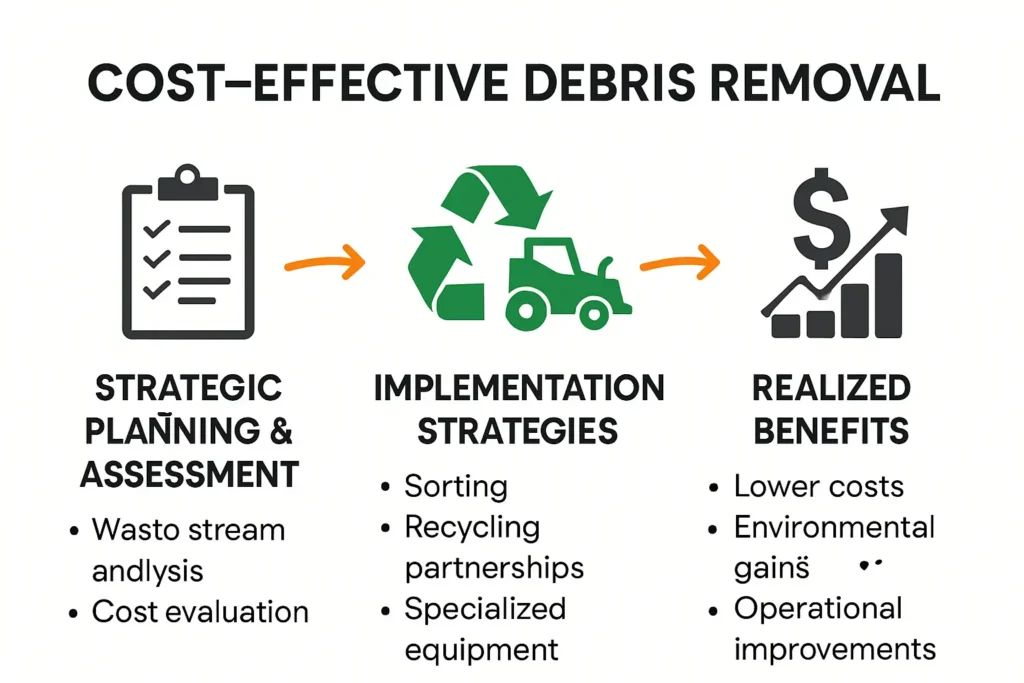
Successful cost-effective debris removal begins with comprehensive planning and detailed assessment. Organizations must evaluate multiple factors to develop an optimal waste management strategy:
- Waste Stream Analysis: Identifying types and volumes of debris
- Resource Mapping: Determining available disposal and recycling options
- Cost Evaluation: Calculating potential expenses and potential savings
According to the U.S. Environmental Protection Agency, pre-incident planning and understanding potential debris streams are critical for efficient waste management.
Implementation and Optimization Techniques
The practical execution of cost-effective debris removal involves several key techniques designed to reduce expenses and improve overall efficiency:
- Implementing advanced sorting technologies
- Utilizing specialized equipment
- Developing partnerships with recycling facilities
- Exploring alternative disposal methods
Discover advanced debris management techniques that can transform your waste handling processes.
Ultimately, cost-effective debris removal is a dynamic process that requires continuous adaptation, technological innovation, and strategic thinking. By integrating data-driven decision making with sustainable practices, organizations can turn waste management from a necessary expense into a value-generating operational component.
Key Concepts in Cost-Effective Debris Removal
Cost-effective debris removal relies on a sophisticated framework of interconnected principles and strategic approaches that transform traditional waste management into an intelligent, resource-conscious process. Understanding these foundational concepts is crucial for organizations seeking to optimize their debris management strategies.
Fundamental Principles of Waste Management
At the core of cost-effective debris removal are several critical principles that guide decision making and operational strategies:
- Resource Hierarchy: Prioritizing waste reduction, reuse, and recycling
- Economic Optimization: Minimizing expenses while maximizing value
- Environmental Responsibility: Reducing ecological impact through strategic disposal
According to the U.S. Environmental Protection Agency, pre-incident planning and comprehensive stakeholder consultation are essential for developing effective waste management frameworks.
Strategic Evaluation and Implementation
Successful cost-effective debris removal demands a comprehensive approach that integrates multiple strategic considerations:
- Comprehensive waste stream analysis
- Advanced technological interventions
- Continuous performance monitoring
- Adaptive management techniques
Explore our comprehensive debris management strategies to transform your organization’s waste handling approach.
Ultimately, cost-effective debris removal is not a static process but a dynamic, evolving strategy that requires ongoing innovation, technological integration, and a commitment to sustainable practices. By understanding and implementing these key concepts, organizations can convert waste management from a routine operational expense into a strategic competitive advantage.
Real-World Applications and Benefits
Cost-effective debris removal transforms theoretical principles into practical solutions across various industries and scenarios. By implementing strategic waste management approaches, organizations can achieve significant operational improvements and environmental benefits.
Industry-Specific Implementation
Different sectors demonstrate unique approaches to cost-effective debris removal, each tailored to their specific operational requirements:
- Construction Sector: Minimizing waste through precise material forecasting
- Municipal Services: Developing comprehensive recycling and disposal strategies
- Industrial Manufacturing: Implementing closed-loop waste management systems
- Healthcare Facilities: Managing specialized waste streams with precision
According to the Congressional Research Service, coordinated debris removal efforts can significantly reduce long-term recovery expenditures and enhance infrastructure resilience.
The table below summarizes key industry-specific strategies for implementing cost-effective debris removal, highlighting their distinct approaches to waste management.
| Industry Sector | Unique Approach to Debris Removal |
|---|---|
| Construction | Material forecasting to minimize site waste |
| Municipal Services | Comprehensive recycling and disposal programs |
| Industrial Manufacturing | Closed-loop waste management systems |
| Healthcare Facilities | Specialized handling for diverse waste streams |
Tangible Organizational Benefits
Companies adopting cost-effective debris removal strategies experience multiple strategic advantages:
- Reduced operational expenses
- Enhanced environmental sustainability
- Improved corporate reputation
- Compliance with regulatory requirements
- Potential for revenue generation through recycling
Learn more about implementing effective debris management strategies to transform your organization’s waste handling approach.
Ultimately, cost-effective debris removal is more than a waste management technique. It represents a comprehensive approach to resource optimization, environmental stewardship, and operational efficiency that delivers measurable value across diverse organizational contexts.
Take Control of Cost-Effective Debris Removal in Litchfield County
Are you searching for a smarter way to handle waste that saves time and cuts costs, just as highlighted in our guide on cost-effective debris removal? Many property owners and businesses in Connecticut struggle with high disposal expenses, inefficient cleanup processes, and concerns over sustainable practices. The challenges you read about, like balancing financial efficiency with environmental responsibility, are real—but solutions exist close to home. Our family-owned team at C&M Carting Solutions specializes in turning complex debris removal into a streamlined, affordable experience.
Now is the best time to move towards intelligent, hassle-free junk removal tailored to your needs. Whether you need help with furniture disposal, estate cleanouts, or large-scale debris, our transparent pricing and responsive local service make the difference. Ready to experience how easy and cost-effective debris management can be? Request a free quote today. Discover more about our residential and commercial debris removal solutions and take the first step to an efficient, cleaner space right now.
Frequently Asked Questions
What are the core principles of cost-effective debris removal?
Cost-effective debris removal focuses on economic efficiency, environmental responsibility, and operational optimization to balance waste management with minimal financial expenditure.
Why is cost-effective debris removal important for organizations?
This approach minimizes direct costs, reduces operational inefficiencies, and lowers environmental penalties, transforming waste management into a strategic advantage for organizations.
How can organizations implement cost-effective debris removal strategies?
Organizations can implement these strategies by conducting waste stream analyses, utilizing specialized equipment, exploring recycling opportunities, and optimizing their removal processes.
What are the benefits of adopting cost-effective debris removal practices?
Adopting these practices can lead to reduced operational expenses, enhanced corporate reputation, improved compliance with regulations, and the potential for revenue generation through recycling efforts.