


Local junk disposal laws touch almost every homeowner and business, quietly shaping how we get rid of old mattresses, broken electronics, and construction debris. Most people expect tossing junk is as easy as putting it to the curb. But here is what surprises many. Failing to follow these rules can bring fines as high as $25,000 per violation for businesses, and hefty penalties even for home mistakes. The hidden details of these regulations might decide if your junk pickup ends in a quick cleanup or a legal headache.
Table of Contents
- What Are Local Junk Disposal Laws And Why Are They Important?
- Understanding The Types Of Waste Covered By Local Junk Disposal Laws
- Key Regulations And Responsibilities For Homeowners And Businesses
- Common Penalties For Non-compliance With Local Junk Disposal Laws
- How Local Junk Disposal Laws Affect Emergency And Same-Day Services
Quick Summary
| Takeaway | Explanation |
|---|---|
| Understand local junk disposal laws | Regulations vary by municipality and must be followed to avoid fines. |
| Different waste categories require specific disposal methods | Residential and commercial wastes have unique protocols to ensure safe handling. |
| Failure to comply leads to penalties | Non-compliance can result in fines, education programs, or even criminal charges for businesses. |
| Emergency services adhere to regulations | Even in urgent situations, waste must be documented and sorted according to local laws. |
| Stay informed to protect community health | Knowing regulations helps contribute to a cleaner environment and reduces legal risks. |
What Are Local Junk Disposal Laws and Why Are They Important?
Local junk disposal laws represent a critical framework of regulations that govern how residents and businesses manage and remove unwanted materials, ensuring environmental safety, public health, and community cleanliness. These laws vary significantly across different municipalities, creating a complex landscape of disposal requirements that every property owner must understand.
Understanding the Regulatory Landscape
Local junk disposal laws are designed to address several key concerns beyond simple waste management. According to Environmental Protection Agency, these regulations aim to:
- Prevent environmental contamination
- Protect public health and safety
- Manage waste stream efficiently
- Reduce illegal dumping and improper disposal practices
Each municipality establishes its own specific guidelines regarding what constitutes junk, how it should be sorted, where it can be disposed, and the penalties for non-compliance. These regulations often cover various categories of waste, including household items, construction debris, electronic waste, and hazardous materials.
Key Reasons for Strict Disposal Regulations
The importance of local junk disposal laws cannot be overstated. Improper waste disposal can lead to significant environmental and health risks. Unregulated junk removal can contaminate soil and water sources, attract pests, create fire hazards, and potentially spread diseases. Communities implement these laws to protect public spaces, maintain aesthetic standards, and promote sustainable waste management practices.
Interested readers can learn more about local waste management strategies to better understand the nuanced world of junk disposal regulations. By staying informed and compliant, residents and businesses can contribute to a cleaner, safer community environment while avoiding potential legal complications associated with improper waste removal.
Understanding the Types of Waste Covered by Local Junk Disposal Laws
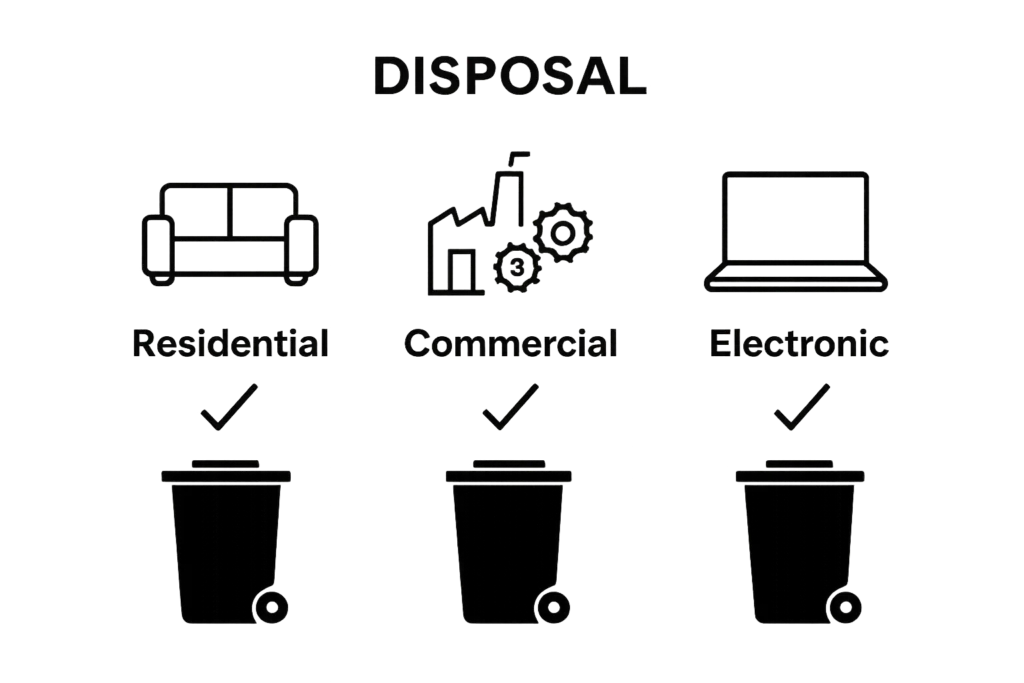
Local junk disposal laws encompass a wide range of waste categories, each requiring unique handling and disposal protocols. Understanding these classifications is crucial for residents and businesses to ensure compliance and environmental responsibility.
Residential and Household Waste Categories
Residential waste represents the most common type of junk regulated by local disposal laws. According to the U.S. Fish & Wildlife Service, bulky waste includes substantial items that complicate standard waste collection, such as:
- Large household appliances
- Furniture and oversized items
- Yard waste like tree branches and stumps
- Seasonal items and renovation debris
These items often require special handling due to their size, potential environmental impact, and complex disposal requirements. Municipalities typically establish specific guidelines for collecting, sorting, and removing such materials to minimize environmental contamination and maximize recycling opportunities.
Commercial and Industrial Waste Classifications
Commercial and industrial waste categories present more complex disposal challenges. Different waste types demand specialized disposal methods to prevent environmental harm and comply with local regulations. Explore our comprehensive guide on waste management strategies to understand the nuanced world of waste disposal.
Industrial waste can include materials from manufacturing processes, construction sites, and commercial operations. These may encompass:
- Electronic waste
- Construction and demolition debris
- Chemical byproducts
- Metals and industrial materials
Each waste category requires unique disposal protocols, with potential legal and environmental consequences for improper handling. Property owners and businesses must stay informed about local regulations to ensure responsible waste management and avoid potential fines or legal complications.
Key Regulations and Responsibilities for Homeowners and Businesses
Local junk disposal laws establish clear expectations and legal obligations for both residential and commercial property owners. Understanding these regulations is crucial for maintaining community standards, protecting environmental health, and avoiding potential legal consequences.
Residential Property Owner Responsibilities
Homeowners bear significant responsibility in managing waste disposal according to local regulations. According to the Environmental Protection Agency, property owners must adhere to specific guidelines that include:
- Properly sorting different types of waste
- Following scheduled collection timelines
- Ensuring appropriate containment of disposal materials
- Avoiding prohibited items in standard waste streams
Failure to comply with local disposal regulations can result in fines, penalties, and potential legal action. Municipalities often require residents to separate recyclables, hazardous materials, and standard waste to facilitate efficient waste management processes.
Business and Commercial Waste Management Obligations
Commercial entities face more complex regulatory requirements compared to residential properties. Learn more about effective waste management strategies to ensure full compliance with local regulations.
Businesses must navigate intricate waste disposal protocols that often involve additional documentation, specialized disposal methods, and potential environmental impact assessments. Key responsibilities include:
- Documenting waste generation and disposal processes
- Implementing comprehensive waste reduction strategies
- Maintaining detailed records of hazardous material handling
- Conducting regular waste management audits
The Resource Conservation and Recovery Act (RCRA) provides a comprehensive framework for waste management, emphasizing the importance of responsible disposal practices across residential and commercial sectors. Property owners and business managers must remain vigilant and proactive in understanding and implementing local junk disposal regulations to protect both their immediate environment and broader community interests.
To help clarify the distinctions between residential and commercial waste responsibilities, the following table summarizes key obligations for each group under local junk disposal laws.
| Responsibility Type | Residential Property Owners | Business & Commercial Entities |
|---|---|---|
| Sorting Waste | Must sort recyclables, hazardous, and standard waste | Must document and segregate all waste types |
| Collection Schedule | Follow municipal collection timelines | May require private hauler coordination or special pickups |
| Record Keeping | Not typically required beyond local permits | Required for hazardous and bulk wastes |
| Special Disposal Protocols | Required for bulky/hazardous items (e.g., appliances, chemicals) | Required for industrial, hazardous, and electronic waste |
| Penalties for Non-Compliance | Fines, education, possible property liens | Fines up to $25,000, business license suspension, legal action |
Common Penalties for Non-compliance with Local Junk Disposal Laws
Local junk disposal laws are not merely guidelines but enforceable regulations with significant consequences for violations. Understanding the potential penalties is crucial for homeowners and businesses to avoid substantial financial and legal risks associated with improper waste management.
Residential Penalty Structures
Municipalities implement graduated penalty systems designed to encourage compliance and discourage repeated violations. According to Vermont’s solid waste ordinances, penalties can escalate quickly for residential property owners who repeatedly disregard local disposal regulations:
- Initial warning citations
- Monetary fines ranging from $100 to $500
- Potential daily additional penalties for continuous violations
- Mandatory waste management education programs
Repeated non-compliance can lead to more severe consequences, including potential liens on property or mandatory waste management interventions by local authorities.
Commercial and Business Violation Consequences
Businesses face substantially more stringent penalties due to the potential environmental and public health implications of their waste disposal practices. Discover how to navigate complex waste management requirements to minimize legal risks.
Commercial entities may encounter more comprehensive penalty structures that include:
- Significant monetary fines up to $25,000 per violation
- Mandatory environmental impact assessments
- Potential suspension of business operating licenses
- Criminal charges for severe or repeated environmental violations
Local governments prioritize these penalties to ensure businesses maintain responsible waste management practices, protecting community environmental standards and public health. Property owners and business managers must proactively understand and comply with local junk disposal regulations to avoid these potentially devastating financial and legal repercussions.
The table below compares common penalties for residential and commercial non-compliance with local junk disposal laws, highlighting the escalating consequences and their implications.
| Violation Type | Residential Penalties | Commercial Penalties |
|---|---|---|
| First Offense | Warning, $100-$500 fine | Significant fine, potential warning |
| Continued/Repeated Violations | Daily fines, mandatory education, property liens | Up to $25,000 per violation, impact assessments |
| Severe or Hazardous Violations | Legal action, waste interventions by authorities | License suspension, criminal charges |
How Local Junk Disposal Laws Affect Emergency and Same-Day Services
Local junk disposal laws have significant implications for emergency and same-day waste removal services, creating complex operational frameworks that service providers must navigate carefully. These regulations fundamentally shape how quickly and efficiently waste can be collected and processed across different scenarios.
Emergency Waste Removal Constraints
Emergency situations demand swift waste removal, but local disposal laws still impose critical compliance requirements. According to federal waste management guidelines, service providers must adhere to strict protocols even during urgent circumstances:
- Immediate documentation of waste type and origin
- Rapid sorting and categorization of materials
- Compliance with hazardous material handling regulations
- Obtaining necessary emergency disposal permits
Emergency waste removal services must balance speed with regulatory compliance, which can potentially slow down response times. Municipalities often require specialized documentation and tracking for materials removed during urgent situations, adding layers of complexity to immediate disposal needs.
Same-Day Service Operational Challenges
Explore the intricacies of rapid waste removal services to understand the regulatory landscape that impacts quick disposal options.
Same-day junk removal services face unique challenges created by local disposal laws. These regulations directly influence operational strategies by:
- Restricting types of materials that can be immediately removed
- Mandating specific transportation and processing routes
- Requiring real-time waste tracking and reporting
- Implementing zone-specific disposal guidelines
Service providers must invest significant resources in understanding and implementing local regulations to maintain the rapid response capabilities that customers expect. The intersection of legal compliance and swift service creates a complex operational environment that requires continuous adaptation and specialized knowledge.
Stay Compliant and Stress-Free With Local Junk Disposal Experts
Are you feeling overwhelmed by the maze of local junk disposal laws and the threat of penalties for non-compliance? Whether you are a homeowner or a business owner, understanding what can and cannot go out with the trash is complicated and can lead to unexpected fines or wasted time. With rules around proper sorting, collection schedules, and special requirements for bulky or hazardous items, the pressure to keep up can make decluttering feel impossible. You do not need to handle these headaches alone. When you trust a reliable local partner, you protect your property, your wallet, and your peace of mind.
Let the team at CMC Carting Solutions help you make sense of disposal regulations while keeping your cleanup process smooth and efficient. Our services cover everything from emergency and same-day junk removal to detailed waste sorting, guiding you through every step so you never worry about compliance again. Take control of your space and avoid costly mistakes. Request your free quote today and make responsible junk removal simple—act now to stay ahead of local requirements and protect what matters most.
Frequently Asked Questions
What are local junk disposal laws?
Local junk disposal laws are regulations that govern how residents and businesses manage and dispose of unwanted materials. They aim to ensure environmental safety, public health, and community cleanliness.
Why are local junk disposal laws important?
Local junk disposal laws are essential for preventing environmental contamination, protecting public health, managing waste efficiently, and reducing illegal dumping practices. They help maintain community standards and promote responsible waste management.
What types of waste do local junk disposal laws cover?
Local junk disposal laws cover a variety of waste types, including residential waste, bulky items, commercial waste, industrial waste, hazardous materials, and electronic waste. Each category has specific disposal protocols to ensure compliance and protect the environment.
What are the penalties for not complying with local junk disposal laws?
Penalties for non-compliance can range from warning citations and monetary fines to mandatory waste management programs. Commercial entities may face even harsher penalties, including hefty fines, suspension of business licenses, and potential criminal charges for severe violations.