


Most people toss out old furniture or plastic bottles without a second thought, believing it is all just trash headed for the same place. Yet the story behind recycling and junk removal is far more surprising than it seems. What if the real difference is not about hauling away junk but about the hidden process that creates new jobs, shrinks your carbon footprint, and lets your broken lamp or empty can become something completely new?
Table of Contents
- What Is Recycling And Junk Removal?
- Why Recycling Matters In Waste Management
- How Recycling Works: Processes And Benefits
- Understanding Junk Removal Services And Their Role
- Comparing Environmental Impact: Recycling Vs Junk Removal
Quick Summary
| Takeaway | Explanation |
|---|---|
| Recycling transforms waste into new products | It systematically processes materials to conserve resources and reduce landfill waste. |
| Junk removal efficiently clears unwanted items | Provides immediate disposal of large debris without sorting, supporting quick cleanouts. |
| Recycling reduces greenhouse gas emissions | The process lowers energy consumption and minimizes ecological disruptions associated with manufacturing raw materials. |
| Both services support environmental sustainability | While they approach waste management differently, each plays a vital role in promoting a healthier planet. |
| Recycling creates economic opportunities | It generates jobs in various sectors, reducing municipal waste costs and generating revenue through recycled materials. |
What is Recycling and Junk Removal?
Recycling and junk removal are two distinct yet interconnected processes that help manage waste and promote environmental sustainability. While they might seem similar at first glance, these services address different aspects of waste management and disposal.
To clarify the distinctions and roles of both approaches, the following table compares key aspects of recycling and junk removal services.
| Feature / Aspect | Recycling | Junk Removal |
|---|---|---|
| Main Purpose | Transform used materials into new products | Quickly remove unwanted items and debris |
| Focus Materials | Paper, plastic, glass, metal | Large, bulky, mixed waste, appliances, furniture |
| Sorting Required | Yes, materials must be sorted and processed | No, often mixed and unsorted |
| Environmental Impact | Reduces resource extraction and landfill waste | Primarily depends on landfill, but may divert recyclables |
| Community/Economic Benefit | Creates jobs, saves costs, generates revenue | Supports local waste management, enables fast cleanouts |
| Typical Users | Households, municipalities, businesses | Individuals, businesses needing large-scale disposal |
| End Result | Materials re-enter manufacturing loop | Items disposed, sometimes routed to special facilities |
Understanding Recycling
Recycling is a systematic process of transforming used materials into new products, reducing waste and conserving natural resources. According to the U.S. Environmental Protection Agency, recycling involves collecting and processing materials that would typically be discarded as trash and converting them into new products or raw materials.
Key characteristics of recycling include:
- Focusing on specific materials like paper, plastic, glass, and metal
- Requiring careful sorting and processing of recyclable items
- Aiming to reduce environmental impact and conserve resources
Junk Removal Explained
Junk removal, by contrast, is a comprehensive service designed to help individuals and businesses quickly and efficiently eliminate unwanted items, furniture, appliances, and other large debris. Learn more about our local junk removal process for comprehensive waste management solutions.
Unlike recycling, junk removal services typically handle:
- Large, bulky items that cannot be processed through standard recycling
- Mixed waste from residential and commercial cleanouts
- Immediate removal of items without extensive sorting requirements
While recycling focuses on material transformation, junk removal prioritizes swift and responsible disposal, often working with local transfer stations and waste management facilities to ensure proper handling of discarded items.
Why Recycling Matters in Waste Management
Recycling plays a critical role in modern waste management, offering significant environmental and economic benefits that extend far beyond simple waste reduction. Understanding its importance helps individuals and communities make more informed decisions about resource consumption and disposal.
Environmental Impact and Resource Conservation
At its core, recycling serves as a powerful mechanism for environmental protection. Research from the National Renewable Energy Laboratory demonstrates that recycling directly reduces the need for raw material extraction, which in turn minimizes ecological disruption and preserves natural habitats.
Key environmental benefits include:
- Reducing greenhouse gas emissions associated with manufacturing processes
- Conserving natural resources like timber, water, and mineral reserves
- Decreasing energy consumption required for producing new materials
Economic and Community Benefits
Beyond environmental advantages, recycling generates substantial economic value. Recycling creates jobs, supports local economies, and reduces municipal waste management costs. Learn more about renovation debris recycling in Connecticut to understand how sustainable practices can benefit communities.
Economic advantages of recycling encompass:
- Creating employment opportunities in collection, processing, and manufacturing sectors
- Reducing waste management expenses for local governments
- Generating revenue through the sale of recycled materials
By transforming waste into valuable resources, recycling represents a fundamental strategy for sustainable development, bridging environmental responsibility with economic opportunity.
How Recycling Works: Processes and Benefits
Recycling transforms waste materials into new products through a sophisticated, multi-stage process that involves collection, sorting, processing, and manufacturing. Understanding these stages helps individuals and businesses appreciate the complexity and importance of recycling efforts.
Here is a concise overview of the main stages in the recycling process and their respective purposes, helping readers understand the systematic journey of recyclable materials.
| Process Stage | Purpose |
|---|---|
| Collection | Gather recyclable materials from homes and businesses |
| Sorting | Separate materials into categories for further processing |
| Processing | Clean, break down, or melt materials for reuse |
| Manufacturing | Create new products from recycled raw materials |
| Purchasing Recycled | Consumers buy goods made from recycled materials |
The Recycling Collection Process
The recycling journey begins with careful collection and separation of recyclable materials. Learn more about our appliance removal process to understand how professionals handle different types of waste materials.
The initial collection stage involves:
- Residential and commercial waste collection
- Sorting materials into specific categories
- Preparing materials for processing at recycling facilities
Material Processing and Transformation
According to research from the U.S. Environmental Protection Agency, the recycling process is a three-step loop involving collection, manufacturing, and purchasing recycled products. Each material type requires a unique processing approach to ensure effective transformation.
Processing techniques vary by material:
- Paper recycling involves breaking down fibers and creating new paper products
- Plastic recycling requires cleaning, shredding, and melting materials into new forms
- Metal recycling includes melting and reforming materials with minimal quality loss
By converting waste into valuable resources, recycling demonstrates an innovative approach to resource management and environmental conservation.
Understanding Junk Removal Services and Their Role
Junk removal services represent a critical solution for efficiently managing large volumes of waste that traditional municipal collection systems cannot handle. These specialized services bridge the gap between household or business waste disposal needs and responsible waste management practices.
Comprehensive Waste Management Solutions
Learn more about local junk hauling in Connecticut to understand the nuanced approach these services provide. Junk removal professionals offer targeted solutions for disposing of items that are too large, heavy, or complex for standard waste collection methods.
Key characteristics of professional junk removal services include:
- Handling oversized furniture and appliances
- Managing construction and renovation debris
- Providing quick and efficient removal of accumulated waste
Environmental and Logistical Benefits
Beyond simple waste elimination, junk removal services play a significant role in responsible waste management. According to waste management research, these services often collaborate with recycling facilities to ensure that appropriate materials are diverted from landfills.
Environmental advantages of professional junk removal encompass:
- Reducing landfill waste through strategic material sorting
- Minimizing potential environmental contamination
- Supporting local waste management infrastructure
By offering a comprehensive approach to waste disposal, junk removal services provide an essential link between individual waste generation and sustainable environmental practices.

Comparing Environmental Impact: Recycling vs Junk Removal
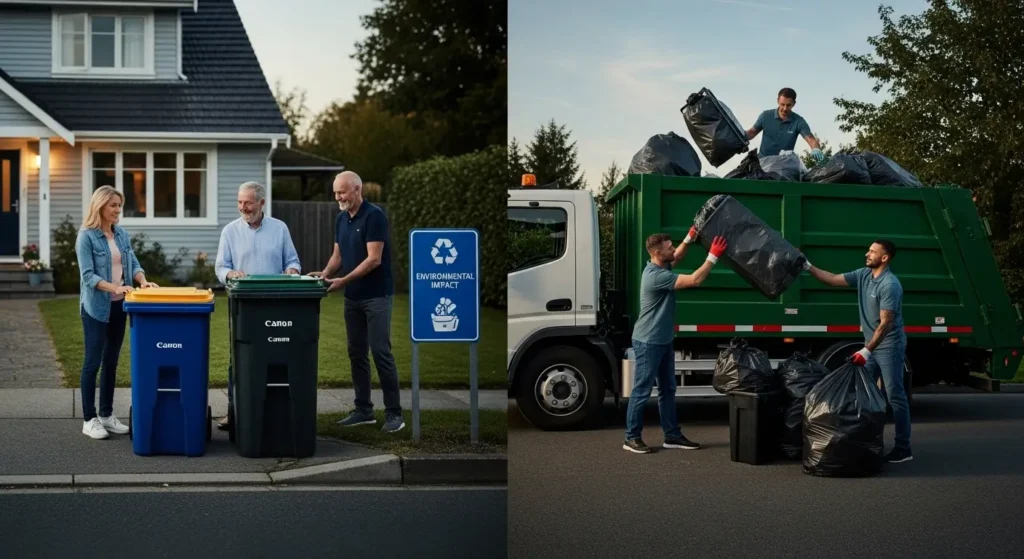
While both recycling and junk removal aim to manage waste effectively, they have distinctly different environmental implications. Understanding their unique approaches helps consumers and businesses make more informed waste management decisions.
Waste Processing and Resource Conservation
Explore our guide on local trash versus junk removal to understand the nuanced environmental considerations of different waste management strategies. Recycling focuses on transforming materials into new products, while junk removal primarily concentrates on waste elimination.
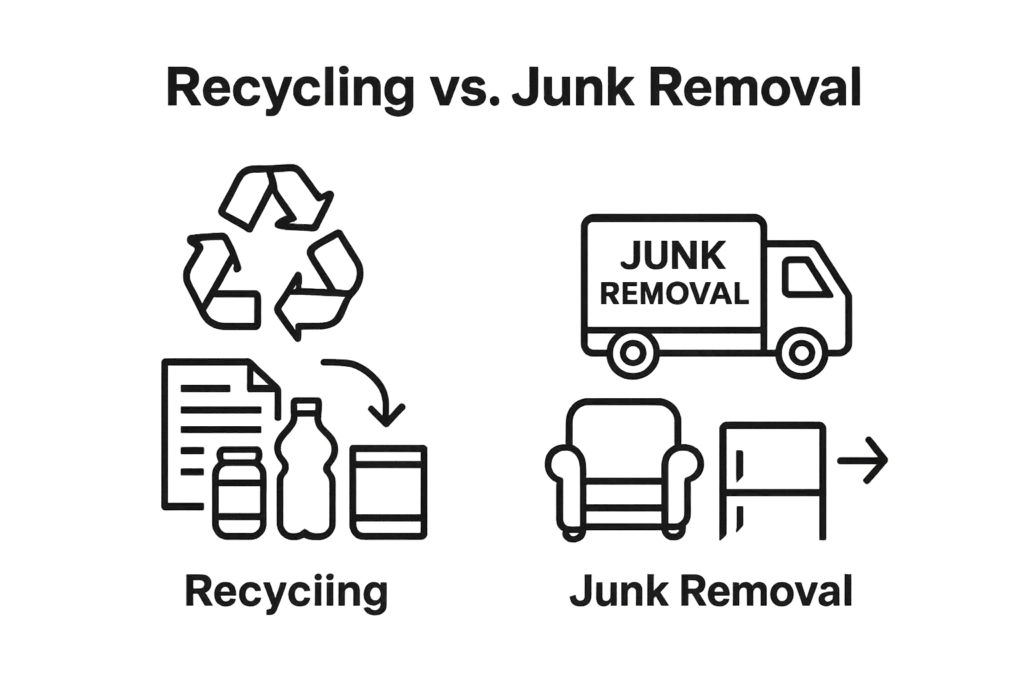
Key environmental processing differences include:
- Recycling actively reduces raw material extraction
- Junk removal prioritizes immediate waste displacement
- Recycling requires more complex material sorting and processing
Carbon Footprint and Emission Considerations
According to environmental research from the U.S. Environmental Protection Agency, recycling consistently demonstrates lower carbon emissions compared to traditional waste removal methods. The process of converting waste materials into new products significantly reduces greenhouse gas production.
Environmental impact comparisons reveal:
- Recycling can reduce energy consumption by up to 30% for certain materials
- Junk removal often results in higher landfill contributions
- Recycling supports circular economy principles more effectively
Ultimately, while both services play important roles in waste management, recycling offers more comprehensive environmental benefits by transforming waste into valuable resources.
Take the Guesswork Out of Decluttering: Recycle or Remove Junk with Local Experts
Are you stuck deciding between recycling and junk removal for your home or business in Litchfield County? From confusing sorting guidelines to the stress of hauling heavy, unwanted items, proper waste management can feel overwhelming. The article highlighted how recycling calls for sorting and processing specific materials, while junk removal solves the challenge of eliminating bulky or mixed waste quickly and responsibly. Many struggle with finding a service that is both eco-friendly and reliable, especially when time and convenience matter most.
Let our team make it simple for you. We handle the hard work of separating recyclables from waste, ensuring your items are managed sustainably and in line with the latest best practices. Whether you are clearing out an entire property or just need a few old appliances removed, our local junk removal and cleanup experts provide safe, responsible, and prompt service. Ready for a cleaner space with no added stress? Get your personalized quote today and see how easy responsible disposal can be with a trusted, community-focused company on your side.
Frequently Asked Questions
What is the primary difference between recycling and junk removal?
Recycling focuses on transforming used materials into new products, while junk removal is a service that helps eliminate unwanted items quickly and efficiently without the extensive sorting required in recycling.
Why is recycling important for the environment?
Recycling helps reduce the need for raw material extraction, conserves natural resources, decreases energy consumption, and lowers greenhouse gas emissions associated with manufacturing processes.
How does the recycling process work?
The recycling process involves collection, sorting, processing, and manufacturing. Materials like paper, plastic, and metal are sorted and transformed into new products through specialized techniques for each material type.
What types of items do junk removal services typically handle?
Junk removal services typically handle large, bulky items such as furniture and appliances, as well as mixed waste from residential and commercial cleanouts that cannot be processed through standard recycling methods.