


Dumpsters do way more than just sit out back behind stores or job sites. Most people do not realize that dumpsters can range from just 2 cubic yards all the way up to massive 40-cubic yard containers. And while it seems like a simple choice, picking the wrong dumpster for your project can lead to surprise expenses and lots of wasted time.
Table of Contents
- What Are Dumpsters And Their Primary Functions?
- Why Choosing The Right Dumpster Matters For Disposal
- How Different Types Of Dumpsters Cater To Varied Needs
- Key Factors Influencing Dumpster Size And Type Selection
Quick Summary
| Takeaway | Explanation |
|---|---|
| Choosing the right dumpster is crucial. | Selecting the right dumpster affects project efficiency, cost, and compliance with regulations. |
| Different waste requires different dumpsters. | Various types of projects generate unique waste, necessitating specialized containers for effective disposal. |
| Size impacts costs and logistics. | Dumpster size affects rental fees, transportation costs, and site accessibility, impacting overall project budget and efficiency. |
| Environmental concerns are significant. | Proper dumpster selection helps with recycling and reduces landfill waste, enhancing environmental sustainability efforts. |
| Understand local regulations. | Different areas have specific rules regarding waste disposal, making awareness of local ordinances essential for compliance. |
What Are Dumpsters and Their Primary Functions?
Dumpsters are large, industrial-strength containers designed for collecting, storing, and transporting substantial amounts of waste or debris across residential, commercial, and construction settings. These robust metal containers serve critical waste management roles, enabling efficient disposal of materials that would be challenging to remove through standard garbage collection methods.
Structural Components and Basic Functionality
At their core, dumpsters are engineered with specific design features to maximize waste collection efficiency. They typically feature sturdy steel or reinforced metal construction, allowing them to withstand significant weight and rough handling. Most dumpsters include key design elements such as:
- Robust side walls capable of handling multiple tons of waste
- Hinged or sliding doors for easy loading and unloading
- Wheels or mounting points for convenient transportation
- Standardized sizes ranging from 2 to 40 cubic yards
The dumpster rental solutions offered by waste management companies are strategically designed to accommodate diverse waste disposal needs across different sectors.
Waste Management and Environmental Considerations
According to the U.S. Fish & Wildlife Service, dumpsters play a crucial role in managing “bulky waste” that traditional garbage collection cannot handle. This includes large items like appliances, furniture, construction debris, and oversized materials that require specialized disposal methods.
Beyond mere waste collection, modern dumpsters contribute significantly to environmental sustainability. Many waste management services now offer specialized containers for recyclable materials, helping businesses and communities reduce their environmental footprint by separating and processing different types of waste more effectively.
Whether for a home renovation project, commercial construction site, or large-scale community cleanup, dumpsters provide an essential infrastructure for responsible and efficient waste management.
Why Choosing the Right Dumpster Matters for Disposal
Selecting the appropriate dumpster is far more than a simple waste management decision. It directly impacts project efficiency, cost-effectiveness, environmental sustainability, and regulatory compliance. The wrong choice can lead to unnecessary expenses, potential legal complications, and inefficient waste disposal.
Waste Type and Volume Considerations
Different projects generate varying types and quantities of waste, making precise dumpster selection critical. Construction sites, residential renovations, commercial cleanouts, and landscaping projects each require unique waste management strategies. Understanding the specific waste characteristics helps prevent overloading, additional fees, or incomplete waste removal.
Key considerations for waste type selection include:
- Density and weight of materials
- Potential for hazardous or restricted waste
- Anticipated total volume of debris
- Potential for recycling or specialized disposal
Our comprehensive dumpster size guide can help you make an informed selection tailored to your specific project requirements.
Environmental and Economic Implications
According to the General Services Administration’s Sustainable Facilities Tool, choosing the right dumpster extends beyond immediate project needs. Proper selection can significantly reduce environmental impact by enabling more effective waste sorting, recycling, and responsible disposal. Compact dumpsters with volume reduction capabilities, for instance, can decrease transportation emissions and minimize landfill contributions.
Economically, precise dumpster selection prevents unnecessary rental fees, multiple delivery charges, and potential overweight penalties. A well-chosen dumpster ensures you pay only for the waste management capacity you genuinely require, optimizing both budget and operational efficiency.
Ultimately, selecting the right dumpster is a strategic decision that balances practical needs, environmental responsibility, and cost-effectiveness.
How Different Types of Dumpsters Cater to Varied Needs
Dumpsters are not a one-size-fits-all solution. Different industries, projects, and waste management scenarios require specialized containers with unique characteristics and capabilities. Understanding these variations ensures efficient, compliant, and cost-effective waste disposal across diverse contexts.
Residential and Commercial Dumpster Variations
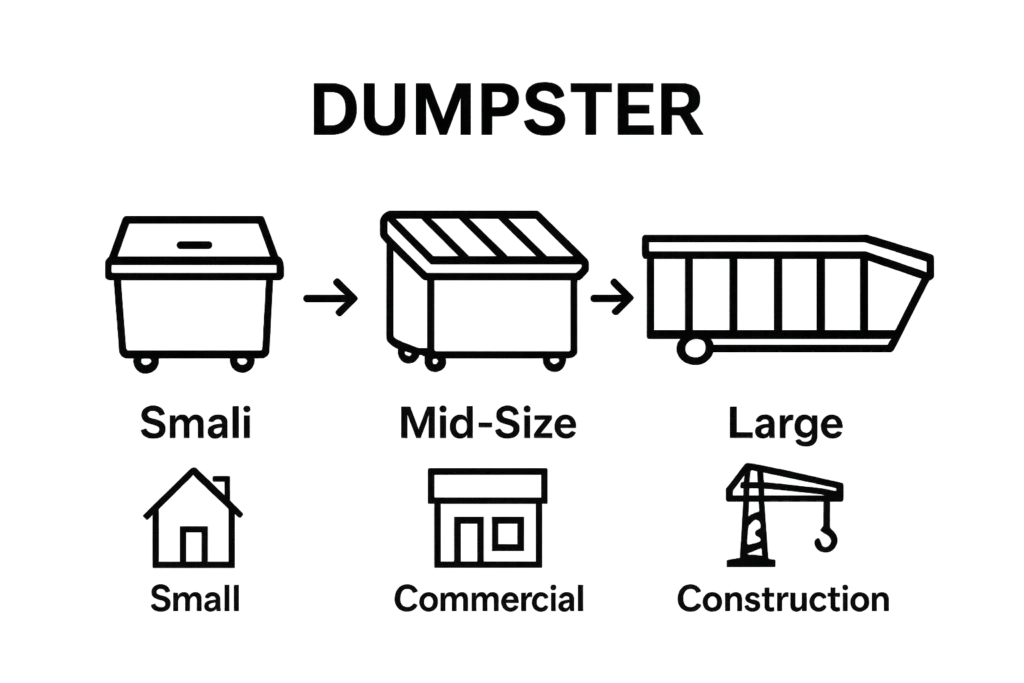
Residential and commercial settings demand distinct dumpster types tailored to their specific waste generation patterns. Homeowners and small businesses typically require smaller, more manageable containers, while large commercial operations need robust solutions capable of handling substantial waste volumes.
Below is a comparison table outlining the main types of dumpsters discussed in the article, highlighting their typical uses and features to help you choose the best option for your project.
| Dumpster Type | Typical Use Cases | Key Features |
|---|---|---|
| Front-load Dumpster | Regular waste collection for businesses | Compact size, lid on top, frequent pickups |
| Rear-load Dumpster | Tight urban/commercial spaces | Narrow design, slanted rear, suited for limited access |
| Roll-off Dumpster | Construction, large cleanouts | Open top, available in multiple large sizes, easy loading |
| Recycling Container | Segregated recyclable materials | Labeled, dedicated for recyclables, various sizes |
| Compactor Dumpster | High-volume, dense waste generation | Compresses waste, reduces volume, lowers transportation costs |
Key dumpster variations include:
- Front-load dumpsters for regular waste collection
- Rear-load containers for tight urban spaces
- Roll-off dumpsters for construction and large-scale projects
- Specialized recycling containers for environmentally conscious disposal
Our local dumpster rental solutions provide customized options designed to meet these diverse needs.
Specialized Waste Management Containers
According to the General Services Administration’s Sustainable Facilities Tool, dumpster types range from compact 2-cubic-yard units to expansive 40-cubic-yard containers. Construction sites require heavy-duty roll-off dumpsters capable of managing dense, heavy materials like concrete, lumber, and metal debris. In contrast, landscaping projects might need smaller containers designed for organic waste and yard trimmings.
Industrial facilities often utilize compactor dumpsters that reduce waste volume, minimizing transportation costs and environmental impact. These specialized units are particularly valuable for businesses generating large quantities of consistent waste types.
Ultimately, selecting the right dumpster is about matching container specifications to unique waste management requirements, ensuring efficiency, compliance, and sustainability across different operational contexts.
Key Factors Influencing Dumpster Size and Type Selection
Selecting the right dumpster involves careful consideration of multiple interconnected factors. The choice goes far beyond simple volume requirements, encompassing project specifics, waste characteristics, logistical constraints, and environmental considerations.
Waste Volume and Composition Analysis
Understanding the precise nature and quantity of waste is fundamental to dumpster selection. Different materials have varying densities, weight distributions, and disposal requirements that directly impact container choice. Construction debris differs significantly from household waste, necessitating specialized container solutions.
Key considerations for waste assessment include:
- Total anticipated waste volume
- Material density and weight
- Potential for hazardous or restricted materials
- Frequency of waste generation
- Space limitations at disposal site
Our comprehensive dumpster size guide provides detailed insights into matching project needs with appropriate container specifications.
Logistical and Regulatory Constraints
According to the General Services Administration’s Sustainable Facilities Tool, container selection involves more than just waste characteristics. Site accessibility, local regulations, and environmental considerations play crucial roles in determining the most appropriate dumpster type.
Spatial restrictions can significantly limit dumpster options, particularly in urban environments or sites with complex access points. Narrow driveways, overhead obstacles, and weight-bearing limitations might require specialized compact or lightweight containers.
Additionally, different waste types may be subject to specific disposal regulations. Contractors and property managers must consider local ordinances governing waste segregation, recycling requirements, and permitted disposal methods.
Ultimately, successful dumpster selection requires a holistic approach that balances practical needs, regulatory compliance, and environmental responsibility.
This table summarizes the main factors to consider when choosing a dumpster, providing an at-a-glance guide to support your selection process.
| Factor | Explanation |
|---|---|
| Waste Volume | Estimate the total amount of debris for disposal |
| Waste Type & Density | Identify material type: household, construction, organic, hazardous |
| Site Space & Accessibility | Consider driveway width, urban setting, overhead clearance |
| Local Regulations | Check city/county rules on waste segregation and types allowed |
| Environmental Considerations | Assess recycling needs and opportunities for volume reduction |
Ready to Choose the Right Dumpster for Your Project?
Sorting out waste efficiently can feel overwhelming, especially when faced with so many dumpster types, sizes, and rules. You read about the risks of choosing the wrong container including wasted money, regulatory headaches, and project slowdowns. Our local expertise at C&M Carting Solutions turns confusion into clarity. Whether you are cleaning out your home, clearing yard debris, or tackling a commercial remodel, our team will walk you through the key issues like waste volume, density, and project restrictions. You deserve a partner that understands terms like roll-off, front-load, and compactor dumpsters, and can recommend what really fits your job.
Take control of your cleanout with hands-on support and transparent pricing. Visit our dumpster rental services for Sharon, CT and use our dumpster size selection guide to make a stress-free choice. Still have questions? Start your hassle-free dumpster rental by getting a fast quote on our website today. Your project deserves the right solution right now.
Frequently Asked Questions
What are the different types of dumpsters available?
Dumpsters vary in type based on their use and the waste they collect. Common types include front-load dumpsters for regular waste collection, rear-load containers for tight spaces, roll-off dumpsters for construction projects, and specialized recycling containers for environmentally-friendly disposal.
How do I determine the right dumpster size for my project?
To determine the right dumpster size, assess the volume and type of waste you expect to generate. Consider factors like total waste volume, material density, space limitations at the disposal site, and any specific waste types that may require unique disposal methods.
What factors influence dumpster selection apart from size?
In addition to size, key factors influencing dumpster selection include waste composition (such as hazardous materials), site accessibility, local regulations, and logistical constraints like weight limits and space restrictions at the location.
How can I ensure responsible waste disposal using a dumpster?
To ensure responsible waste disposal, choose the correct dumpster type for your waste, segregate recyclable materials, and abide by local regulations regarding waste disposal and recycling practices. This approach minimizes environmental impact and promotes effective waste sorting.