

Trying to clear out clutter from your home or office in Connecticut can feel overwhelming, especially with so many rules on what can or can’t be hauled away. Surprising fact: Connecticut law requires strict separation of recyclables and even bans certain common materials from standard junk pickup. Most people think junk removal is as simple as tossing everything out, but local mandates actually make it trickier and more technical. What you can and cannot send out might shock you—and knowing the difference can save you from hefty fines and a big headache.
Table of Contents
- Common Items Junk Removal Services Accept
- Restrictions: What Junk Removal Will Not Take
- Special Considerations For CT Clients
- How To Prepare Your Junk For Pickup
Quick Summary
| Takeaway | Explanation |
|---|---|
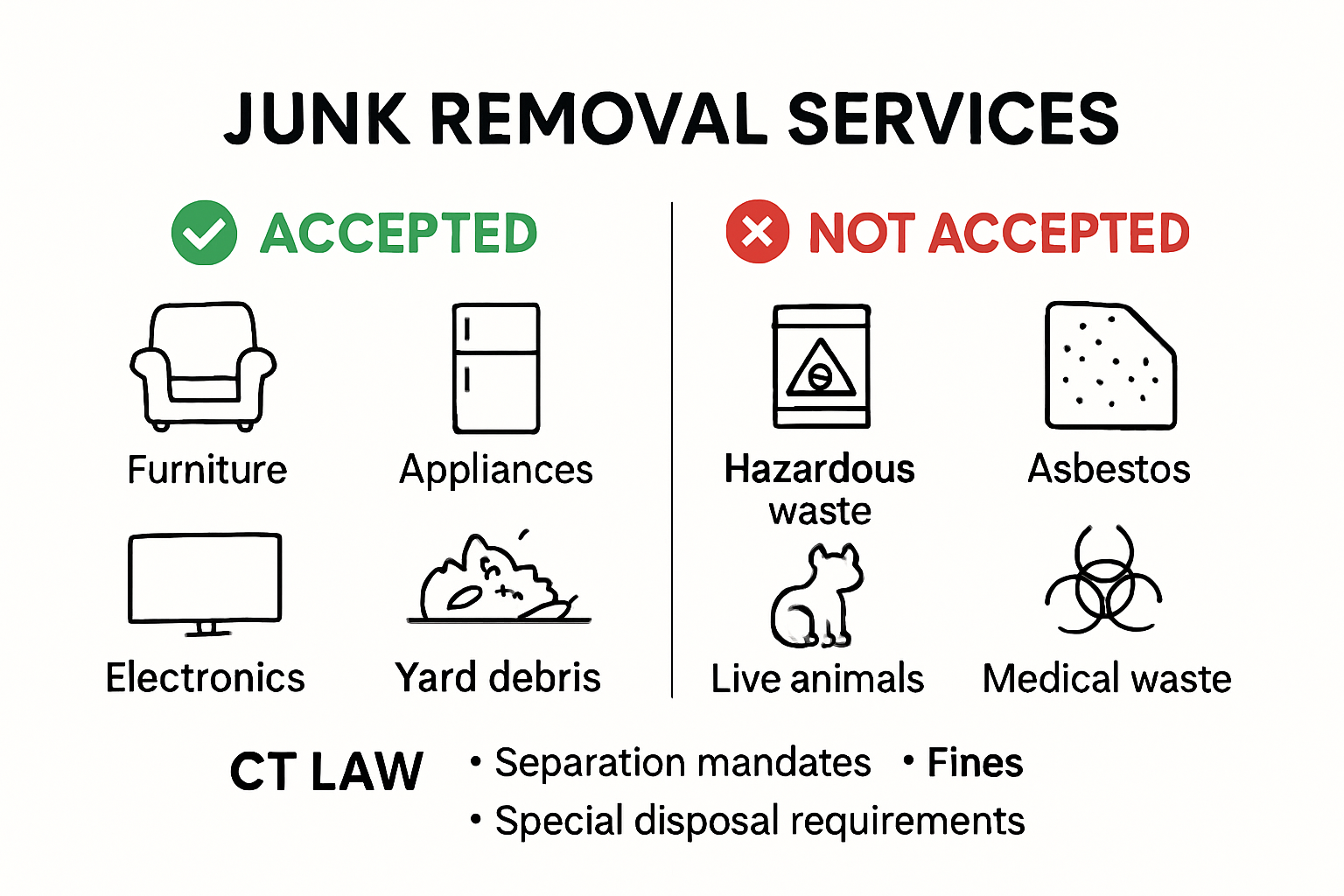
| Junk removal services accept various items. | Services typically take furniture, appliances, electronics, and yard debris, making them ideal for cleanouts. |
| Certain hazardous materials cannot be accepted. | Items like chemicals, batteries, and medical waste require specialized disposal methods, not standard junk removal. |
| Connecticut has strict recycling mandates. | State laws necessitate the separation of recyclables, increasing the complexity of junk disposal in Connecticut. |
| Preparation enhances the pickup process. | Organizing and properly placing items before pickup ensures a smoother removal and can reduce overall costs. |
| Check with your local provider for restrictions. | Since acceptance can vary by service, confirm specific items with your chosen junk removal company to avoid issues. |
Common Items Junk Removal Services Accept
Junk removal services provide essential support for homes and businesses looking to clear out unwanted items efficiently and responsibly. Understanding what these services typically accept can help you plan your cleanup and disposal strategy effectively.
Furniture and Large Household Items
Most junk removal services handle a wide range of furniture and household items. Sofas, chairs, tables, bed frames, and mattresses are common items that can be quickly removed. Homeowners frequently need to dispose of old furniture during moves, renovations, or when upgrading their living spaces. According to the District of Columbia’s Department of Public Works, bulk items like household furniture, bed frames, and large toys are typically acceptable for removal.
Beyond standard furniture, these services often take office furniture including desks, filing cabinets, shelving units, and conference room equipment. This makes them particularly valuable for businesses undergoing office redesigns or downsizing.
Appliances and Electronic Equipment
Junk removal services are equipped to handle various appliances and electronic items. Major appliances like refrigerators, washers, dryers, stoves, and dishwashers can typically be removed. Research from municipal guidelines suggests that appliances often need to be properly prepared for removal, such as ensuring refrigerators are drained of fluids and compressors are removed.
Electronic equipment is also commonly accepted, including:
- Computers and laptops
- Televisions
- Printers and monitors
- Audio equipment
For businesses and homes with accumulated electronic waste, this service provides a convenient solution for responsibly disposing of outdated or non-functioning equipment.

Yard and Construction Debris
Outdoor and construction-related items are another significant category for junk removal services. Yard waste like tree limbs, branches, and landscaping debris can be quickly cleared. Municipal guidelines indicate that services often accept yard waste including leaves, grass, sod, and tree limbs (typically cut to specific lengths).
Construction and renovation debris is also commonly handled, such as:
- Wooden materials
- Pipes and metal scraps
- Old fencing
- Concrete and brick remnants
If you’re curious about the full junk removal process for your specific needs, our comprehensive guide can provide more detailed insights into what to expect.
Remember that while these are typical items accepted, specific restrictions can vary between service providers. Always confirm the exact guidelines with your chosen junk removal company to ensure a smooth and efficient disposal experience.
Below is a summary table outlining the most common items that junk removal services typically accept, helping you quickly determine what you can include in your next pickup.
| Item Category | Examples | Notes |
|---|---|---|
| Furniture & Large Items | Sofas, chairs, tables, bed frames, mattresses, office desks | May require disassembly |
| Major Appliances | Refrigerators, washers, dryers, stoves, dishwashers | Must be drained/disconnected |
| Electronics & E-Waste | Computers, TVs, monitors, printers, audio equipment | Often accepted for responsible disposal |
| Yard Waste | Tree limbs, branches, leaves, grass, sod | Typically cut/bundled as required |
| Construction Debris | Wood, metal pipes, old fencing, concrete, brick | Limits may apply; confirm with provider |
| Office Furniture & Equipment | File cabinets, shelving units, conference room equipment | Useful for business cleanouts |
Restrictions: What Junk Removal Will Not Take
While junk removal services offer extensive disposal solutions, not all items can be hauled away. Understanding these restrictions is crucial for homeowners and businesses to ensure safe, legal, and environmentally responsible waste management.
Hazardous and Potentially Dangerous Materials
Certain materials are strictly prohibited due to their dangerous nature. The Connecticut Department of Energy & Environmental Protection (DEEP) emphasizes that specialized handling is required for hazardous waste. Items typically not accepted include:
- Chemicals and solvents
- Pesticides
- Motor oils and automotive fluids
- Paint and paint thinners
- Batteries
- Medical waste
- Radioactive materials
These materials require specialized disposal methods and cannot be mixed with regular junk removal. Improper disposal can lead to environmental contamination and potential legal consequences.
Regulated Construction and Environmental Hazards
Certain construction and environmental materials face strict disposal guidelines. DEEP regulations highlight specific restrictions:
- Asbestos-containing materials
- Treated wood with toxic chemicals
- Materials with heavy metal contamination
- Unexploded ordinances
- Biohazardous materials
Professional abatement or specialized disposal facilities are often required for these items. For instance, asbestos-containing materials in good condition should be left undisturbed, while damaged materials need professional handling.
Living and Organic Materials
Junk removal services typically do not handle living or organic materials that require specialized care:
- Live animals
- Plants with root systems
- Uncontained organic waste
- Human or animal remains
- Large tree stumps
While yard waste might be acceptable, living organisms and extensive organic materials exceed standard junk removal capabilities.
Learn more about navigating complex disposal requirements to ensure you’re following local regulations and environmental guidelines.
Remember, illegal dumping can result in significant fines. According to DEEP regulations, penalties can reach up to $25,000 per day, with potential vehicle confiscation. Always consult your local junk removal service for specific guidelines and proper disposal methods.
This checklist table summarizes typical restrictions for junk removal in Connecticut, helping you identify which items are not accepted and require specialized disposal.
| Item/Material | Accepted by Junk Removal? | Special Notes |
|---|---|---|
| Chemicals & Solvents | No | Hazardous; requires special disposal facilities |
| Paints, Thinners & Batteries | No | Not accepted due to environmental hazards |
| Medical & Biohazardous Waste | No | Strictly prohibited |
| Asbestos & Treated Wood | No | Must follow specialized abatement protocols |
| Large Tree Stumps/Organic Waste | No | Excessive organic waste not handled |
| Electronic Waste | Yes | Typically accepted; check provider’s process |
| Recyclable Items (properly sorted) | Yes | Must comply with CT recycling mandates |
Special Considerations for CT Clients
Connecticut residents and businesses face unique waste management challenges that require careful navigation. Understanding local regulations and specialized disposal requirements can help ensure efficient and environmentally responsible junk removal.
Recycling and Waste Separation Mandates
Connecticut state law mandates strict recycling guidelines for homes and businesses. The state requires comprehensive separation of recyclable materials, making waste disposal more complex than in many other regions. Mandatory recyclables include:
- Glass and metal food containers
- Corrugated cardboard
- Newspapers
- Office paper
- Certain plastics
- Batteries
- Organic materials like leaves
This requirement means that junk removal services in Connecticut must often employ more sophisticated sorting processes. Clients should be prepared to help separate materials to comply with these regulations and support environmental sustainability.
Construction and Demolition Waste Management
For contractors and property owners involved in renovation or demolition projects, Connecticut has specific waste management protocols. State environmental guidelines recommend advanced waste handling strategies:
- Commingling waste into roll-off containers
- Using separate dumpsters for different materials
- Mandatory recycling of corrugated cardboard and scrap metal
- Routing materials to specialized recovery facilities
These guidelines aim to maximize material recovery and minimize environmental impact. Clients undertaking construction or renovation projects should work closely with junk removal services that understand these intricate local requirements.
Hazardous Waste and Specialized Disposal
Connecticut maintains rigorous hazardous waste regulations that go beyond federal standards. Recent regulatory updates provide specific exemptions and management requirements for materials like solvent-contaminated wipes. Key considerations include:
- Specific management protocols for contaminated materials
- Specialized disposal routes for different waste types
- Strict documentation and tracking requirements
Learn more about navigating Connecticut’s complex waste management landscape to ensure you’re meeting all local regulatory requirements.
Navigating these specialized disposal requirements can be challenging. Working with a local junk removal service familiar with Connecticut’s unique regulations ensures not just efficient removal, but also compliance with state environmental standards. Always consult with professional services to understand the most current guidelines and disposal methods specific to your project and location.
How to Prepare Your Junk for Pickup
Preparing your junk for professional removal requires strategic planning and attention to detail. Proper preparation ensures a smooth, efficient pickup process while helping junk removal services work more effectively and safely.
Sorting and Organizing Your Items
Before the pickup day, create a systematic approach to organizing your unwanted items. Municipal guidelines from Albuquerque Public Schools emphasize the importance of clear identification and separation. Start by categorizing items into groups:
- Furniture and large items
- Electronics
- Recyclable materials
- Metal scraps
- Miscellaneous debris
This preliminary sorting helps streamline the removal process. Separate items that can be donated from those requiring disposal. Clean items when possible, and remove any personal belongings or attachments. For furniture, disassemble larger pieces if feasible to make transportation easier.
Placement and Accessibility Considerations
Guidelines from the City of Springfield, TN provide critical insights into proper item placement. Your junk should be strategically positioned to facilitate easy pickup:
- Place items at the edge of your property
- Ensure clear access for removal trucks
- Avoid placing items against stationary objects like utility poles or fences
- Keep items within a reasonable distance from the curb
- Do not block driveways or walkways
Timing is also crucial. The City of Sacramento recommends placing items out no earlier than 24 hours before the scheduled pickup and ensuring they are visible by 6:00 AM on the collection day. Loose items should be contained in disposable containers like cardboard boxes to prevent scattering.
Preparing Specific Types of Junk
Different items require unique preparation methods. For furniture, remove cushions and detachable parts. Clean electronic devices and ensure they are unplugged. For yard waste, bundle branches and cut them to manageable lengths. Metal items should be free of attached non-metal components when possible.
Check out our comprehensive guide for more detailed junk removal preparation tips to ensure a seamless removal experience.
Remember that proper preparation not only makes the removal process smoother but can also potentially reduce your overall removal costs. Some junk removal services charge based on the complexity of the pickup and the amount of work required. By presenting well-organized, easily accessible items, you can help minimize potential additional fees and ensure a more efficient service.
The following process table outlines recommended steps to prepare your junk for pickup, ensuring efficiency and compliance with local guidelines.
| Preparation Step | Key Actions |
|---|---|
| Sort & Organize | Group items (furniture, electronics, recyclables, metal, debris); clean/disassemble as needed |
| Separate for Donation | Identify and set aside items suitable for donation |
| Place for Easy Access | Position items at property edge with clear path for trucks; avoid obstructions |
| Contain Loose Items | Use boxes or bags for small items to prevent scattering |
| Prepare Yard/Metal Waste | Bundle branches, cut to length; remove non-metal parts from metal items |
| Time Pickup Appropriately | Place items out within allowed window before scheduled pickup |
Frequently Asked Questions
What types of furniture can junk removal services take?
Junk removal services typically accept a variety of furniture items, including sofas, chairs, tables, bed frames, and office furniture such as desks and filing cabinets.
Are there items that junk removal services cannot take?
Yes, junk removal services cannot accept hazardous materials such as chemicals, paints, medical waste, or asbestos-containing materials. It’s important to check with your service provider for specific restrictions.
How should I prepare my junk for pickup?
To prepare your junk for pickup, sort and organize your items by category, place larger items at the edge of your property for easy access, and ensure that loose items are contained in boxes or bags to prevent scattering.
What are Connecticut’s recycling mandates for junk removal?
Connecticut law requires the separation of recyclables from general waste. Mandatory recyclables include glass, metal containers, cardboard, paper, and specific plastics, which must be handled properly during junk removal.
Ready to Clear Out Clutter and Comply with Connecticut Regulations?
Tackling junk removal in Connecticut is never just about tossing items out. The article makes it clear that complex state mandates around recycling, hazardous waste, and what junk services will and will not haul can leave homeowners and businesses feeling stuck. You want an easy solution that keeps you in line with local rules, saves you from potential fines, and gives you peace of mind your space will be cleared effectively.
Stop guessing about what you can or cannot dispose of. Turn to a trusted local service that knows Connecticut’s requirements inside and out. The team at CM Carting Solutions offers convenient junk removal for homes and businesses across Litchfield County. We handle the sorting, comply with every regulation, and adapt our service to your situation, whether you need to clear old furniture, electronics, yard debris, or construction waste. If you want detailed preparation help or insights into our process, check out our connecticut junk removal process guide as well.
Get your clutter under control and avoid headaches from regulations. Request your free quote now and discover how simple responsible junk removal can be for your Connecticut property.
Recommended
- Junk Removal Process for CT Homes & Businesses 2025
- Junk Hauling Services Explained: What Connecticut Clients Need (2025) – C&M Carting Solutions
- Junk Removal Basics: Easy Guide for Connecticut in 2025 – C&M Carting Solutions
- Local Trash vs Junk Removal: A 2025 Guide for Connecticut – C&M Carting Solutions