


Storms in Connecticut can turn a peaceful backyard into a mess overnight and it happens more often than you think. In fact, Connecticut faces an average of ten severe storms every year, each leaving homeowners scrambling to restore order. Most people rush outside with a rake and a trash bag but that quick fix can end up causing more harm than good. The truth is a smart post-storm yard cleanup starts long before you ever pick up a tool.
Table of Contents
- Assessing Storm Damage And Setting Priorities
- Effective Debris Removal And Safe Disposal
- When To Call Emergency Yard Cleanup Services
- Preventing Future Storm Damage In Your Yard
Quick Summary
| Takeaway | Explanation |
|---|---|
| Document all storm damage. | Capture photos and videos for insurance claims and restoration planning. |
| Prioritize safety hazards first. | Address immediate risks like downed power lines and structural damage before cleanup. |
| Use proper protective gear. | Equip yourself with gloves, masks, and safety glasses to prevent injuries during debris removal. |
| Call professionals for complex issues. | Seek emergency cleanup services for large debris, hazardous materials, or complicated storm damage situations. |
| Implement preventive measures beforehand. | Design a resilient landscape and maintain your yard to minimize future storm damage risk. |
Assessing Storm Damage and Setting Priorities
After a severe storm sweeps through Connecticut, homeowners face a critical challenge: systematically evaluating yard damage and strategically planning cleanup efforts. Understanding the extent of destruction helps prioritize tasks and prevent further property complications.
Documenting Initial Storm Impact
The first crucial step in yard cleanup after storms involves comprehensive damage documentation. The Federal Emergency Management Agency (FEMA) recommends taking detailed photographs and videos of all impacted areas. This visual evidence serves multiple purposes: insurance claims, potential disaster relief applications, and creating a clear restoration roadmap.
Capture images that showcase:
- Fallen trees and large branches
- Damaged structures like fences or sheds
- Uprooted landscaping elements
- Debris scattered across your property
Ensure your documentation includes close-up and wide-angle shots that provide comprehensive context about the storm’s impact. Digital timestamps on these images can further validate your documentation.
Prioritizing Safety and Immediate Hazards
Before beginning any cleanup operation, safety must be your primary concern. According to the Connecticut Department of Public Health, homeowners should meticulously check for potential hazards such as:
- Loose or downed power lines
- Structural damage to buildings
- Gas line integrity
- Electrical system compromises
- Tree branches precariously positioned near structures
If you detect any significant risks, contact local authorities or professional services immediately. Do not attempt to resolve dangerous situations independently, especially those involving electrical or structural threats.
Strategic Cleanup Sequencing
Effective yard cleanup after storms requires a systematic approach. The Connecticut Department of Energy and Environmental Protection’s Disaster Debris Management Plan emphasizes the importance of organized recovery efforts.
Prioritize your cleanup tasks in this recommended sequence:
To help you prioritize your storm cleanup efforts, here is a table outlining the recommended sequence of tasks and their main purpose.
| Cleanup Step | Purpose |
|---|---|
| Remove immediate safety hazards | Eliminate threats to people and property |
| Clear pathways and access routes | Ensure safe movement around your yard |
| Address large debris blocking driveways/structures | Prevent property damage and restore access |
| Sort recyclable vs. non-recyclable materials | Support proper disposal and recycling efforts |
| Manage organic waste (tree branches, leaves) | Prevent pest infestation and promote healthy landscaping |
- Remove immediate safety hazards
- Clear pathways and access routes
- Address large debris blocking driveways or structures
- Sort recyclable versus non-recyclable materials
- Manage organic waste like tree branches and leaves
While addressing these tasks, consider our comprehensive debris removal services that can streamline your post-storm recovery process. Professional assistance can significantly reduce stress and expedite your property’s restoration.
Remember, thorough assessment and strategic planning transform a potentially overwhelming storm cleanup into a manageable, systematic process. By documenting damage, prioritizing safety, and methodically addressing cleanup tasks, Connecticut homeowners can efficiently restore their yards and minimize long-term property impacts.
Effective Debris Removal and Safe Disposal
After assessing storm damage, the next critical phase of yard cleanup involves systematic debris removal and safe disposal. Proper handling ensures property restoration, prevents potential environmental hazards, and minimizes risks to personal safety.
Personal Safety and Protective Equipment
The Environmental Protection Agency (EPA) emphasizes the importance of personal safety during disaster debris cleanup. Before starting any removal process, equip yourself with appropriate protective gear. This includes sturdy work gloves, safety glasses, closed-toe shoes with good traction, long pants, and a dust mask or respirator.
Additionally, be aware of potential hidden dangers. Storm debris can conceal sharp objects, broken glass, or contaminated materials. Proceed with caution and systematically clear areas, always maintaining awareness of your surroundings.
Sorting and Categorizing Debris
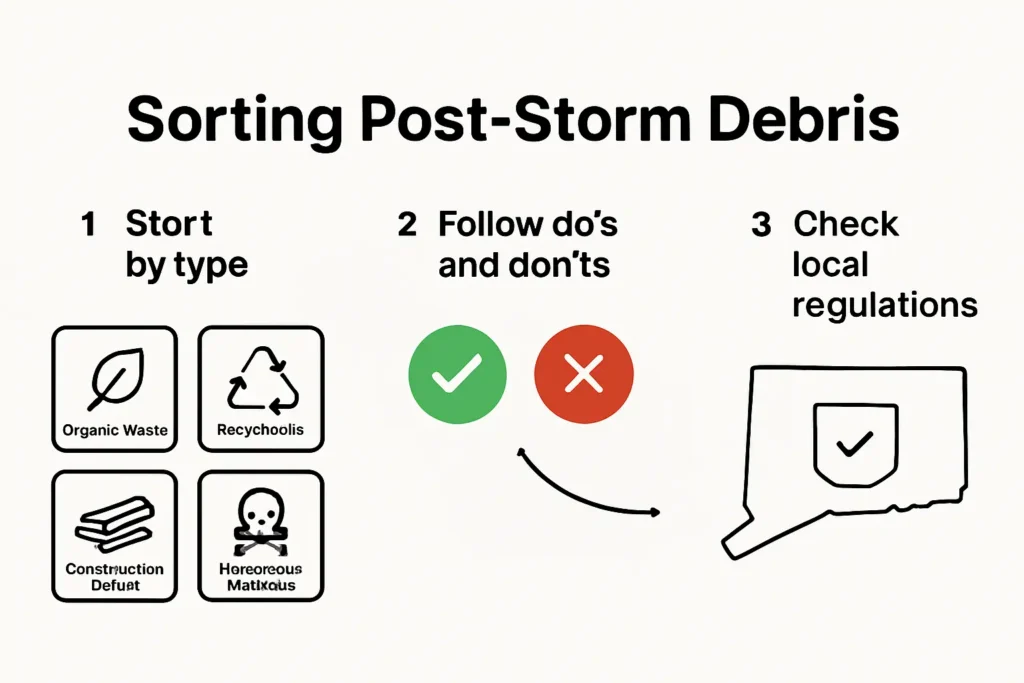
According to the Connecticut Department of Energy and Environmental Protection, effective debris management involves careful sorting. Separate materials into distinct categories:
Here is a helpful summary table showing how to categorize and handle various types of storm debris mentioned in the article.
| Debris Type | Description/Examples | Handling Recommendation |
|---|---|---|
| Organic waste | Tree branches, leaves | Consider recycling (mulch/firewood) or composting |
| Recyclable materials | Metal, some plastics | Place in recycling bins per local guidelines |
| Construction debris | Damaged fences, shed parts | Separate for bulk pick-up or designated disposal sites |
| Hazardous items | Chemicals, electronics, appliances | Consult local waste centers for special disposal needs |
- Organic waste (tree branches, leaves)
- Recyclable materials
- Construction debris
- Potentially hazardous items
For wood debris, consider recycling options. Clean wood can be transformed into mulch or firewood, reducing waste and supporting local recycling efforts. Our comprehensive debris removal services can help streamline this complex process, ensuring efficient and environmentally responsible disposal.
Disposal Guidelines and Local Regulations
FEMA provides critical guidance for homeowners removing storm debris from private property. Before disposal, contact local municipal authorities to understand specific guidelines and potential scheduled pickup services.
Key disposal recommendations include:
- Do not mix different types of debris
- Place sorted materials in designated areas
- Avoid blocking public roads or emergency access points
- Follow local waste management regulations
- Consider professional removal for large or complex debris
For hazardous materials like chemicals, electronics, or large appliances, consult local waste management centers. These items often require specialized disposal to prevent environmental contamination.
Remember, effective debris removal is more than just clearing your yard. It’s about ensuring safety, supporting community recovery, and maintaining environmental responsibility. By approaching storm cleanup methodically and with proper precautions, Connecticut homeowners can transform a challenging situation into a successful restoration effort.
When to Call Emergency Yard Cleanup Services
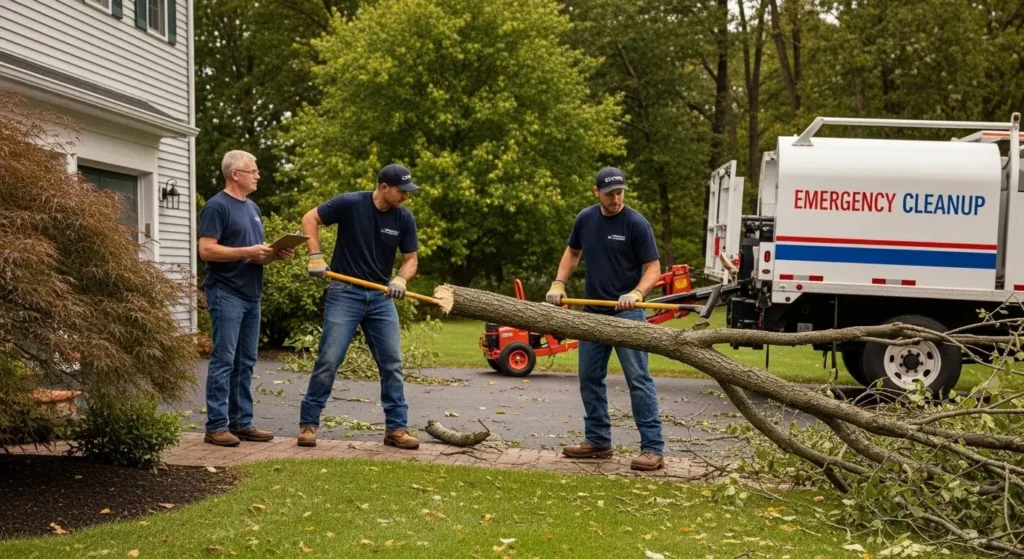
Some storm damage situations demand immediate professional intervention. Understanding when to transition from personal cleanup efforts to emergency yard cleanup services can prevent further property damage, ensure personal safety, and expedite recovery.
Critical Safety Hazards
The Connecticut Department of Emergency Services and Public Protection emphasizes the critical importance of recognizing situations that require professional assistance. Immediate professional intervention becomes necessary when you encounter:
- Large trees fallen near power lines
- Extensive structural damage to buildings
- Massive debris blocking access routes
- Potential gas or electrical line compromises
- Hazardous materials exposed during storm damage
In these scenarios, attempting personal cleanup can lead to severe personal injury or additional property destruction. Professional emergency services have specialized equipment and trained personnel to manage complex and dangerous cleanup scenarios safely.
Assessing Complexity and Scale
The Connecticut Division of Emergency Management and Homeland Security recommends evaluating cleanup complexity through several key indicators. Consider professional services when:
- Debris volume exceeds your personal removal capabilities
- Required equipment is specialized or industrial-grade
- Cleanup involves potential environmental contamination
- Insurance documentation and systematic removal are critical
Our comprehensive yard debris removal services can efficiently manage large-scale storm cleanup, ensuring thorough and responsible debris management.
Navigating Insurance and Municipal Guidelines
According to the Connecticut Department of Energy & Environmental Protection, storm cleanup involves intricate coordination between homeowners, insurance providers, and local authorities. Emergency yard cleanup services become essential when:
- Municipal guidelines require professional debris management
- Insurance claims necessitate documented, professional removal
- Complex waste sorting and disposal are required
- Multiple property zones need synchronized cleanup
Professional services understand local regulations, can provide detailed documentation for insurance purposes, and ensure environmentally responsible debris disposal. They transform a potentially overwhelming cleanup process into a streamlined, efficient recovery operation.
Remember, emergency yard cleanup is not about admitting defeat but making a smart, strategic decision to protect your property, personal safety, and long-term recovery prospects. When storm damage overwhelms your personal capabilities, professional services stand ready to help Connecticut homeowners restore their yards and peace of mind.
Preventing Future Storm Damage in Your Yard
Preventing storm damage requires proactive planning and strategic landscaping approaches. Connecticut homeowners can significantly reduce potential yard destruction by implementing targeted preventative measures before severe weather strikes.
Strategic Landscape Design
The Federal Emergency Management Agency (FEMA) recommends comprehensive landscape preparation to minimize potential storm damage. This involves creating a resilient yard environment that can withstand extreme weather conditions.
Key landscape design strategies include:
- Planting wind-resistant trees native to Connecticut
- Creating natural drainage channels
- Selecting vegetation with strong root systems
- Maintaining appropriate distance between trees and structures
- Implementing strategic grading to direct water flow
Native Connecticut tree species like Red Maple, White Oak, and Eastern Red Cedar offer superior wind resistance and adaptability to local climate conditions. These trees not only provide aesthetic value but also serve as natural barriers against storm impacts.
Proactive Maintenance and Preparation
Regular yard maintenance plays a crucial role in storm damage prevention. Implement a systematic approach to yard management that includes:
- Quarterly tree and shrub inspections
- Removing dead or weakened branches
- Pruning trees to reduce wind resistance
- Securing potential projectile items
- Installing proper drainage systems
Our comprehensive yard debris management services can help you develop a strategic maintenance plan tailored to your specific property requirements.
Infrastructure and Equipment Preparation
Beyond landscaping, protecting yard infrastructure requires careful planning. Consider installing:
- Robust fencing with flexible materials
- Anchored outdoor furniture
- Removable or securable decorative elements
- Wind-resistant garden structures
- Protective coverings for sensitive equipment
Utilize hurricane straps, ground anchors, and professional-grade securing mechanisms to prevent outdoor items from becoming potential hazards during intense storms. Create a dedicated storage area for lightweight items that can be easily relocated during severe weather warnings.
Effective storm damage prevention is an ongoing process that requires consistent attention and strategic investment. By understanding your yard’s unique characteristics and implementing targeted protective measures, Connecticut homeowners can create a resilient outdoor environment capable of withstanding nature’s most challenging conditions.
Remember, prevention is always more cost-effective and less stressful than extensive post-storm cleanup and repair. Invest time and resources in preparing your yard, and you’ll significantly reduce the potential for storm-related damage.
Frequently Asked Questions
How should I document storm damage in my yard?
It’s important to take detailed photographs and videos of all impacted areas, including fallen trees and damaged structures. This documentation can support insurance claims and help plan your restoration efforts.
What safety precautions should I take during yard cleanup after a storm?
Before beginning cleanup, prioritize safety by assessing for immediate hazards like downed power lines and structural damage. Wear protective gear like gloves, safety glasses, and dust masks while removing debris to prevent injuries.
When is it necessary to call professional yard cleanup services?
You should call professionals when encountering critical safety hazards, such as large trees fallen near power lines or significant structural damage. If the debris volume exceeds your ability to manage it safely, professional help is recommended.
What types of debris should I sort during storm cleanup?
Sort debris into categories such as organic waste (tree branches, leaves), recyclable materials (metals, plastics), construction debris (damaged fences), and hazardous items (chemicals, electronics). This ensures proper disposal and supports recycling efforts.
Connecticut’s Fastest Yard Cleanup Solution After the Storm
After reading about the overwhelming steps involved in yard cleanup after storms, you might be feeling the weight of safety concerns, disposal challenges, and the frustration of mountains of debris crowding your property. Many Connecticut homeowners struggle to manage these complex tasks without the right equipment or expertise. If you are worried about hazardous branches, confusing disposal rules, and the physical toll storm debris cleanup can take, you do not have to face it alone.
Our team at C&M Carting Solutions understands the urgency that comes after a storm hits. We offer professional yard debris clearance and junk removal services tailored for Connecticut homes. Whether you are dealing with downed trees, blocked driveways, or heavy waste, we handle sorting, hauling, and responsible disposal for you. Restore your yard and peace of mind with our easy online scheduling and transparent pricing. Ready to reclaim your space safely and quickly? Get a free quote now and let local experts take the stress out of storm debris removal.
Recommended
- Top Yard Debris Removal Tips for Connecticut in 2025 – C&M Carting Solutions
- Yard Debris Disposal in Connecticut | Easy 2025 Guide
- Yard Waste Disposal Guide 2025: Easy Options for Connecticut – C&M Carting Solutions
- Home Renovation Debris Cleanup in CT | 2025 Guide
- Yard Cleanup for Events: Fast, Easy Solutions in Connecticut