


Getting rid of an old refrigerator or washing machine in Connecticut is not as simple as dragging it to the curb. Think you can just dump it and walk away? Not even close. Connecticut imposes fines up to $25,000 for improper disposal of thermostats containing mercury, and more than 90 percent of an appliance’s materials can actually be recycled. So while tossing that bulky appliance feels like a hassle, the real surprise is that responsible disposal could save you money, steer you clear of legal trouble, and help the environment all at once.
Table of Contents
- Understanding Appliance Removal Options
- Step-By-Step Safe Appliance Disposal
- Emergency And Same-Day Junk Removal Services
- Connecticut Rules And Recycling Tips
Quick Summary
| Takeaway | Explanation |
|---|---|
| Understand Local Regulations | Familiarize yourself with your municipality’s disposal policies, such as Hartford’s free bulky waste collections and requirements regarding refrigerant evacuation before disposal. |
| Consider Professional Services for Safety | While DIY disposal may seem cheaper, professional junk removal services ensure safe handling, compliance with regulations, and proper recycling of hazardous components. |
| Utilize Recycling Options | Explore local transfer stations and recycling centers that accept appliances. Also, consider donating functional items or using manufacturer take-back programs for responsible disposal. |
| Emergency Removal Needs | Be aware of scenarios that may require immediate appliance removal and select a service that offers 24/7 availability and knowledge of emergency protocols. |
| Follow Best Practices for Electronics | Before disposing of electronic items, ensure data protection by wiping devices, and separate components to facilitate efficient recycling, adhering to state regulations. |
Understanding Appliance Removal Options
Getting rid of old appliances isn’t as straightforward as tossing them in the trash. Connecticut residents face multiple considerations when planning appliance removal, from environmental regulations to disposal logistics. Understanding your options can save you time, money, and potential legal headaches.
Municipal Disposal Policies and Local Regulations
Connecticut municipalities have specific guidelines for appliance disposal. Explore our transparent removal pricing to understand local requirements. According to Hartford City Guidelines, residents can schedule two free bulky waste collections annually. These collections typically include large appliances like refrigerators, washers, and dryers. The process requires calling Hartford 311 at (860) 757-9311 to arrange pickup, with additional collections available for a $75 fee.
Most Connecticut municipalities require appliances to be completely drained of refrigerants before disposal. Refrigerators, air conditioners, and other cooling units contain chemicals that can harm the environment if not properly handled. Professional junk removal services understand these regulations and can ensure compliance during the disposal process.
Recycling and Environmental Considerations
Appliance disposal isn’t just about removing an unwanted item. The environmental impact matters significantly. According to the Environmental Protection Agency, approximately 90% of appliance materials can be recycled. Steel, copper, aluminum, and other metals from old appliances can be reclaimed and repurposed, reducing waste and conserving natural resources.
Connecticut offers several recycling options for residents. Many local transfer stations and recycling centers accept appliances for proper disposal. Some even provide monetary incentives for certain appliance types. Before disposal, consider these eco-friendly alternatives:
- Donate functional appliances to local charities or community organizations
- Sell working appliances through online marketplaces
- Contact manufacturer take-back programs for responsible recycling
Professional Removal Services
While DIY disposal seems cost-effective, professional junk removal services offer comprehensive solutions. These services handle the entire process, from assessment to transportation and environmentally responsible disposal. They understand local regulations, have proper equipment, and can quickly remove multiple appliances without requiring homeowners to navigate complex disposal requirements.
Professional services also mitigate potential risks associated with appliance removal. Heavy appliances like refrigerators and washing machines can cause injury if not handled correctly. Trained professionals use proper lifting techniques and specialized equipment to ensure safe removal.
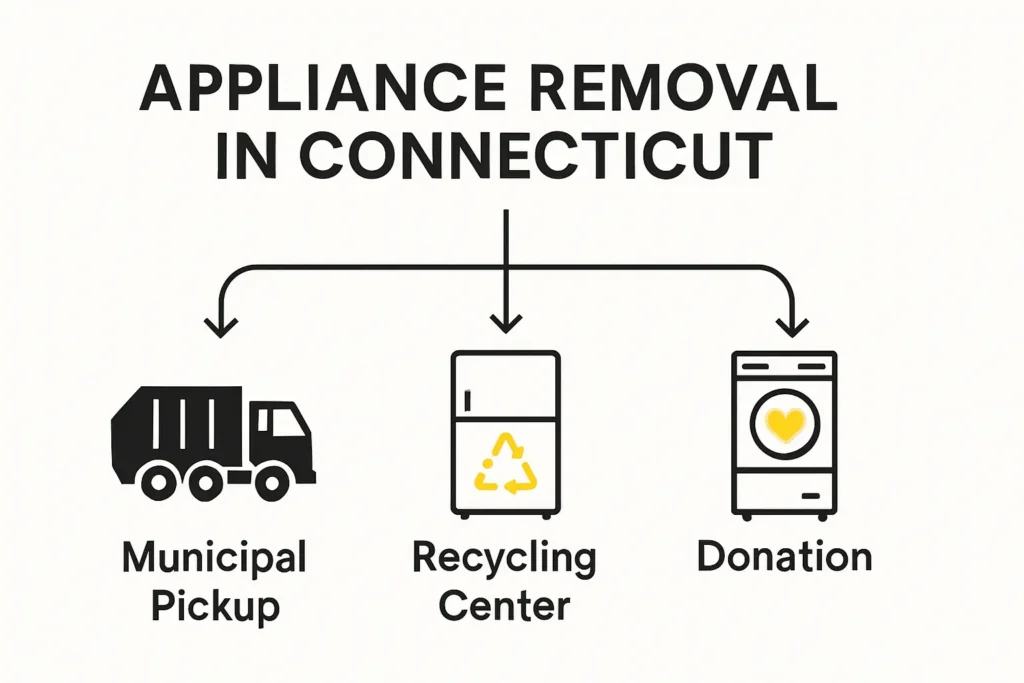
Ultimately, understanding your appliance removal options requires considering local regulations, environmental impact, and practical logistics. Whether you choose municipal pickup, recycling centers, or professional removal services, prioritize safe, responsible disposal that protects both your property and the environment.
To help readers compare the three main appliance removal options described above, below is a table summarizing their features, requirements, and considerations.
| Removal Option | Key Features | Requirements | Typical Costs |
|---|---|---|---|
| Municipal Pickup | Scheduled collections (often free or low-cost), limited number per year | Must schedule; appliances drained of refrigerant | Often free or nominal fee |
| Recycling Center/Transfer Station | Accepts appliances for recycling, may offer incentives, environmentally focused | Transport item yourself; centers may vary in acceptance | Usually free/small fee, may earn incentive |
| Professional Removal Service | Handles all aspects, safe/expert handling, complies with regulations | Contact for quote, arrange pickup time | $$ (service fees apply) |
Step-By-Step Safe Appliance Disposal
Safe appliance disposal requires careful planning and precise execution. Homeowners must navigate multiple steps to ensure environmental responsibility, legal compliance, and personal safety when removing large household equipment.
Preparing Your Appliance for Removal
Before disposing of any appliance, thorough preparation is critical. The U.S. Environmental Protection Agency’s Responsible Appliance Disposal (RAD) program recommends several crucial preparatory steps. First, disconnect the appliance completely from power sources. For refrigerators and freezers, remove all food items and shelving. Defrost cooling appliances at least 24 hours before removal to prevent water damage and potential slip hazards.
Special attention must be given to mercury-containing devices. According to Connecticut state regulations, thermostats and certain electronic appliances containing mercury require specialized disposal. Learn more about property cleanouts to understand the intricacies of safe equipment removal.
Handling Hazardous Components
Many appliances contain potentially harmful substances that demand careful handling. Refrigerators, air conditioners, and dehumidifiers typically contain refrigerants and other chemicals that can damage the environment if released improperly. The Connecticut Department of Energy & Environmental Protection emphasizes the importance of professional handling for these items.
Connecticut law is particularly strict about mercury disposal. Thermostat recycling regulations mandate that HVAC contractors recycle mercury-containing thermostats, with potential fines up to $25,000 for noncompliance. This underscores the critical nature of proper appliance disposal.
Professional Removal and Recycling Options
While DIY removal might seem tempting, professional services offer the most comprehensive and safe disposal method. Trained technicians understand the complex requirements for different appliance types. They can:
- Safely drain refrigerants from cooling appliances
- Remove hazardous components without environmental risk
- Transport heavy items using specialized equipment
- Ensure proper recycling of metal and electronic components
Professional removal services also understand local regulations and can provide documentation of proper disposal. This is particularly important for businesses and property managers who need to maintain precise disposal records.
Ultimately, safe appliance disposal is about more than just removing an unwanted item. It’s a responsible process that protects the environment, complies with local regulations, and ensures the safety of your property and community. By following these steps and considering professional assistance, you can dispose of appliances efficiently and conscientiously.
Here’s a step-by-step table outlining the safe appliance disposal process recommended in the article.
| Step | Action Required | Important Notes |
|---|---|---|
| 1 | Disconnect from power/water/gas sources | Prevent accidents and electrical hazards |
| 2 | Remove contents (e.g., food, shelves from fridges) | Helps lighten load and prevents spoilage/mess |
| 3 | Defrost refrigerators/freezers 24 hours in advance | Prevents water damage and slip hazards |
| 4 | Identify hazardous components (e.g., refrigerants, mercury) | Dispose per CT law, may require professional |
| 5 | Arrange for proper disposal (pickup, recycling, or service) | Choose municipal, recycling center, or professional |
| 6 | Obtain documentation as needed (esp. for businesses) | Proof of compliant, safe disposal |
Emergency and Same-Day Junk Removal Services
Emergency appliance removal isn’t just a convenience it’s often a critical necessity for Connecticut residents facing unexpected challenges. Whether triggered by property damage, sudden relocation, or urgent living space transformations, same-day junk removal services provide a lifeline during stressful situations.
Understanding Emergency Disposal Protocols
Connecticut’s waste management regulations recognize the unique challenges of emergency appliance disposal. Explore our full junk removal services to understand the comprehensive support available during urgent scenarios. According to the Connecticut Department of Energy and Environmental Protection, emergency waste management requires specific protocols to ensure environmental safety and regulatory compliance.
The state’s Universal Waste Rule provides flexible guidelines for managing hazardous waste components during emergency removals. This regulation allows for extended storage times and simplified record-keeping, enabling residents and businesses to handle urgent disposal needs more efficiently. Professional removal services understand these nuanced regulations and can navigate complex disposal requirements quickly and legally.
Scenarios Requiring Immediate Appliance Removal
Certain situations demand immediate appliance disposal. These include:
- Property damage from natural disasters like flooding or storm damage
- Sudden property foreclosures or evictions
- Emergency home renovations
- Rapid estate cleanouts
Hoarder and eviction cleanout specialists recognize that these scenarios often require more than standard removal services. They demand sensitive handling, rapid response, and comprehensive waste management solutions.
Selecting the Right Emergency Removal Service
Choosing an emergency junk removal service requires careful consideration. Look for providers who offer:
- 24/7 availability
- Rapid response times
- Comprehensive waste management
- Compliance with state environmental regulations
- Specialized equipment for difficult removals
The Connecticut General Statutes authorize specific emergency waste management procedures, underscoring the importance of working with professional services that understand local legal requirements.
Professional emergency removal services do more than simply haul away appliances. They provide a structured, safe, and legally compliant solution during high-stress situations. By understanding your options and selecting a reputable service, you can transform a potentially overwhelming challenge into a manageable process.
Remember that emergency appliance removal is about more than quick disposal. It’s about protecting your property, ensuring environmental safety, and maintaining peace of mind during unexpected transitions.
Connecticut Rules and Recycling Tips
Connecticut’s approach to appliance and electronic waste disposal represents a sophisticated blend of environmental responsibility and regulatory precision. Residents must navigate a complex landscape of state regulations, recycling guidelines, and sustainable disposal practices to ensure compliance and minimize environmental impact.
Electronic Waste Recycling Regulations
Connecticut leads the nation in electronic waste management through its comprehensive Electronic Recycling Law. Find the most cost-effective junk removal solution while understanding these critical regulations. According to the Connecticut Department of Energy & Environmental Protection, manufacturers are now required to finance the transportation and recycling of electronic devices including computers, printers, televisions, and monitors.
The law mandates that retailers inform customers about recycling options, creating a transparent ecosystem for responsible electronic waste disposal. Residents can leverage the state’s RecycleCT Wizard tool to determine precise disposal methods for various electronic and appliance components.
State Recycling and Disposal Guidelines
In 2025, Connecticut introduced Senate Bill 1496, a landmark legislation reforming the state’s recycling and solid waste management framework. The bill grants the Commissioner of Energy and Environmental Protection expanded authority to streamline recycling facility regulations while maintaining stringent environmental protections.
Key recycling guidelines for appliances and electronic waste include:
- Mandatory separation of electronic components from general waste
- Free manufacturer-sponsored recycling programs
- Prohibition of electronic waste in landfills
- Requirement for proper hazardous material handling
Explore dumpster rental options to support large-scale appliance and electronic waste removal projects that align with these regulatory requirements.
Best Practices for Responsible Disposal
Successful appliance recycling in Connecticut goes beyond mere compliance. Residents should consider these best practices:
- Data protection: Completely wipe electronic devices before disposal
- Component separation: Disassemble appliances to facilitate more efficient recycling
- Manufacturer take-back programs: Utilize manufacturer-specific recycling initiatives
- Local recycling centers: Verify facility capabilities before disposal
Professional junk removal services can provide invaluable guidance in navigating these complex regulations. They understand the nuanced requirements of Connecticut’s waste management landscape and can ensure that your appliance disposal meets all environmental and legal standards.
Ultimately, responsible appliance disposal is a shared commitment between residents, manufacturers, and local authorities. By staying informed and following state guidelines, Connecticut residents contribute to a more sustainable and environmentally conscious waste management ecosystem.
Frequently Asked Questions
How do I properly dispose of old appliances in Connecticut?
To properly dispose of old appliances in Connecticut, you can schedule pickup through your municipality’s bulky waste collection service or take them to a local recycling center. Ensure appliances are emptied and, if necessary, drained of refrigerants before disposal.
What are the fines for improper appliance disposal in Connecticut?
Improper disposal of appliances containing hazardous materials, such as certain thermostats with mercury, can lead to hefty fines up to $25,000 in Connecticut. It’s crucial to follow local regulations to avoid legal penalties.
Can I recycle my old appliances in Connecticut?
Yes, approximately 90% of appliance materials can be recycled in Connecticut. Many local transfer stations and recycling centers accept appliances, and you can also consider donating working appliances or utilizing manufacturer take-back programs.
What should I do if I need same-day appliance removal?
If you require same-day appliance removal, look for professional junk removal services that offer emergency assistance. Ensure they have 24/7 availability and comply with Connecticut’s environmental regulations.
Take the Stress Out of Appliance Removal With Local Experts
Is appliance removal in Connecticut starting to feel overwhelming? If you are worried about hefty fines or confused by all the disposal regulations, you are not alone. Old refrigerators and hazardous thermostats cannot just be left by the curb. You want an easy, safe solution that protects both your home and the environment. That is exactly what our team at CM Carting Solutions delivers.
Let our professionals handle every step for you. We know how to prepare appliances, manage hazardous components, and coordinate with local recycling requirements so you stay fully compliant. We offer quick junk removal services, even for emergency situations, to help you avoid fines and unnecessary hassles. Ready to reclaim your space with no risk? Get your fast, no-obligation quote today. Let us make appliance removal simple and stress-free for you.
Recommended
- What’s The Cheapest Way to Get Rid of Junk?
- Furniture and Appliance Removal – C&M Carting Solutions
- Junk Removal vs. Dumpster Rental: What to Choose
- Sofa Removal Solutions | C&M Carting Solutions
- How To Get Rid Of Yard Waste – C&M Carting Solutions
- Comprehensive Guide to Transparent Junk Removal Pricing